Loading...
Lansana Conte vs Napoleon Bonaparte
Napoleon Bonaparte leads by 27.0 pts · 2 figures compared
…
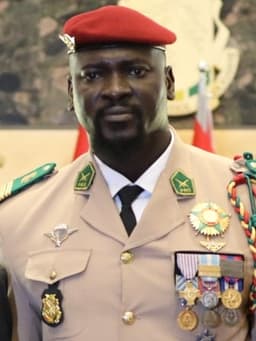
Lansana Conte
General · Modern
43.9Total

Napoleon Bonaparte
General · Modern
70.9Total
Basic Information
Born
1934
1769
Died
—
1821
Era
Modern
Modern
Nationality
Guinea
France
Occupation
General
General
Civilization
Other
Western
Score Comparison
Military (10%)
22.6
94.0
Political (20%)
33.6
72.0
Influence (20%)
50.2
40.0
Legacy (20%)
41.7
80.0
Leadership (15%)
74.0
78.0
Strategy (15%)
25.0
90.0
TOTAL
43.9
70.9
Lansana Conte — Complete Timeline
1984 AD
Seized Power in 1984 Coup d'EtatPolitical Action◆ Major
Lansana Conte led a military coup on April 3, 1984, overthrowing the interim government after the death of President Ahmed Sekou Toure. Conte became head of state, promising to end corruption and improve the economy.
CoupMilitary RuleGuinea
Impact: nationaldestructive
1990 AD
Economic Decline and CorruptionPolitical Action◆ Major
Conte's rule was marked by economic mismanagement, corruption, and declining living standards. Guinea, despite rich mineral resources, remained impoverished. Conte's government was accused of embezzlement and failing to deliver basic services.
CorruptionEconomic DeclineGuinea
Impact: nationaldestructive
1993 AD
Transition to Civilian Rule and ElectionPolitical Action◆ Major
Under pressure from international donors, Conte oversaw a transition to civilian rule. He won the 1993 presidential election, which was marred by allegations of fraud and opposition boycotts. He remained in power through subsequent flawed elections.
ElectionDemocracyGuinea
Impact: national
2008 AD
Death in OfficePolitical Action◆ Major
Conte died on December 22, 2008, after a long illness. His death ended 24 years of authoritarian rule. A military junta led by Captain Moussa Dadis Camara seized power the following day, plunging Guinea into further instability.
DeathSuccession CrisisGuinea
Impact: national
Napoleon Bonaparte — Complete Timeline
1799 AD
Coup of 18 BrumaireOther◆ Major
Napoleon Bonaparte, with support from his brother Lucien and key political figures, overthrew the Directory in a bloodless coup. He established the Consulate with himself as First Consul, effectively becoming the ruler of France. This event ended the French Revolution's most unstable period.
French RevolutionCoupRise to Power
Impact: regional
1804 AD
Promulgation of the Napoleonic CodeOther◆ Major
Napoleon enacted the Civil Code of the French, known as the Napoleonic Code, a comprehensive set of laws that replaced the fragmented feudal legal systems. The code established legal equality, protected property rights, and secularized law. It became the basis for legal systems in many European and world countries.
Legal ReformNapoleonic CodeCivil Law
Impact: globalconstructive
1805 AD
Battle of AusterlitzWar◆ Major
Napoleon's Grande Arm
Napoleonic WarsBattleDecisive Victory
Impact: global
1812 AD
Invasion of RussiaWar◆ Major
Napoleon led the Grande Arm
Napoleonic WarsInvasionDisaster
Impact: globaldestructive
1815 AD
Battle of WaterlooWar◆ Major
Napoleon's French army was defeated by the combined forces of the Duke of Wellington's Anglo-Allied army and Gebhard Leberecht von Bl
Napoleonic WarsBattleFinal Defeat
Impact: globaldestructive
Expert Analysis
lansana-conte-vs-napoleon-bonaparte
# The Emperor and the Autocrat
On a cold December morning in 1805, Napoleon Bonaparte stood on the frozen fields of Austerlitz, watching his Grand Army shatter the combined forces of Russia and Austria. The sun rose brilliantly over the carnage—a celestial blessing, his soldiers would later say, for their emperor. Two centuries later, on a humid April night in 1984, Lansana Conté slipped into the presidential palace in Conakry, Guinea, as easily as a thief. The old dictator Sékou Touré had died, and the army, led by this quiet colonel, simply took what was left. One man conquered a continent; the other inherited a broken country. Both were generals. Both seized power. But the paths they walked could not have been more different.
Origins
Napoleon was born in 1769 on the island of Corsica, a Mediterranean rock that France had only recently purchased. His family was minor nobility, poor and proud. He spoke Italian before French, and his accent would mark him as an outsider in Paris. Yet the French Revolution, that great leveler, opened doors that would otherwise have stayed shut. A young artillery officer with a mathematical mind and a hunger for glory, Napoleon rose because the old order had collapsed.
Lansana Conté, born in 1934 in the village of Mankouyah, was the son of a farmer. Guinea was then a French colony, and the opportunities for a black African boy were narrow. He joined the French army, fought in Indochina and Algeria, and returned home when Guinea won independence in 1958. He was a soldier in a poor country—nothing more. The revolution that shaped him was not French but African: the brutal dictatorship of Sékou Touré, who ruled Guinea for 26 years with a mixture of socialist slogans and secret police.
Rise to Power
Napoleon’s ascent was meteoric. At 24, he recaptured Toulon from the British and was promoted to brigadier general. At 26, he saved the revolutionary government from a royalist uprising with a "whiff of grapeshot"—a cannonade that cleared the streets of Paris. By 30, he had conquered Italy and Egypt, and his dispatches read like epic poems. The coup of 18 Brumaire in 1799 was not a desperate grab but a calculated gamble. "I am the revolution," he told the French people, and they believed him.
Conté’s rise was quieter, more accidental. When Sékou Touré died in 1984 after a heart surgery, a civilian government took over—but it was weak, divided, and corrupt. On April 3, 1984, Conté and a handful of junior officers marched into the radio station. "The army has taken power," he announced, his voice flat. There was no battle, no heroism. The coup was bloodless because no one was willing to die for the old regime. Conté became president not because he was brilliant, but because he was there.
Leadership & Governance
Napoleon governed as he fought: with energy, ambition, and a relentless desire to order the world. He centralized the French state, created the Napoleonic Code—a legal system that influenced Europe for generations—and reformed education, banking, and the church. He was a military genius, winning 60 of his 70 battles. At Austerlitz in 1805, he destroyed a larger army by luring the enemy into a trap. At Jena in 1806, he crushed Prussia in a single day. His political wisdom, however, was flawed. He crowned himself emperor in 1804, alienated the republicans, and made enemies of every major power in Europe.
Conté ruled like a tired manager of a failing business. He promised democracy but rigged elections. He signed agreements with the International Monetary Fund but allowed corruption to eat the economy. Guinea has vast mineral wealth—bauxite, diamonds, gold—but under Conté, the country grew poorer. His military score of 20.7 reflects no major campaigns, no victories. His political score of 50.0 shows a man who survived but never thrived. He was not a reformer like Napoleon; he was a caretaker, and a poor one at that.
Triumph & Tragedy
Napoleon’s greatest triumph was Austerlitz, where he destroyed the Third Coalition. His greatest tragedy was the invasion of Russia in 1812. He marched 600,000 men into the frozen emptiness and returned with fewer than 100,000. The disaster broke his aura of invincibility. Exiled to Elba, he escaped and ruled for a Hundred Days—a final, desperate gamble that ended at Waterloo in 1815. "The bullet that will kill me has not yet been cast," he once said. But it had. He died in exile on Saint Helena in 1821, alone and bitter.
Conté’s triumph was simply staying in power for 24 years. He survived coup attempts, strikes, and international pressure. His tragedy was that he left Guinea poorer and more repressive than he found it. When he died in 2008, after a long illness, a military junta immediately took over. The cycle of poverty and dictatorship continued. Conté had no Waterloo, but he also had no Austerlitz.
Character & Destiny
Napoleon was driven by an insatiable hunger for glory. "Impossible is a word to be found only in the dictionary of fools," he said. He believed that he could shape history with his will alone. This belief made him great, but it also destroyed him. He could not stop. He could not compromise. He had to conquer everything, and everything eventually conquered him.
Conté was driven by survival. He was not a visionary; he was a pragmatist. He kept power by balancing ethnic groups, buying off rivals, and suppressing dissent. He was not cruel for the sake of cruelty—his political repression was more lazy than sadistic. But he lacked the imagination to build anything lasting. "I am not a politician," he once told a reporter. "I am a soldier." It was both an excuse and a confession.
Legacy
Napoleon’s legacy is enormous. The Napoleonic Code still shapes civil law in Europe and beyond. His military tactics are studied at West Point and Sandhurst. He changed the map of Europe, ended feudalism, and spread nationalism. His scores—Military 94, Political 75, Influence 82, Legacy 78—reflect a man who reshaped the world, for better and worse.
Conté’s legacy is small. He is remembered in Guinea as a man who could have done more. His scores—Military 20.7, Political 50.0, Influence 66.1, Legacy 54.5—show a leader who left no mark beyond his borders. He did not build an empire or write a code. He simply held on.
Conclusion
Napoleon and Conté were both generals who became rulers, but they lived in different worlds. Napoleon had the French Revolution, a continent to conquer, and a mind hungry for glory. Conté had a poor country, a legacy of colonialism, and a desire to survive. One sought to change history; the other sought to endure it. Their stories remind us that leadership is not just about power—it is about purpose. And without purpose, even a general is just a man holding a gun.
Rankings
🥇
Napoleon BonaparteLeader
Mil: 94.0Pol: 72.0Inf: 40.0
70.9
🥈
Lansana Conte
Mil: 22.6Pol: 33.6Inf: 50.2
43.9
+27.0 behind
How This Comparison Works
Algorithm
Each figure is scored on 6 dimensions (0—100 scale) based on structured historical data: Military (10%), Political (20%), Influence (20%), Legacy (20%), Leadership (15%), Strategy (15%). The weighted total produces the final ranking.
Data Sources
Scores are computed from structured sub-indicators in the database. Scale factors adjust for era (Ancient ×0.85, Modern ×1.0) and civilization size (Eastern ×1.05, Other ×0.80) to account for differences in population and military scale.
Maximum 3 Figures
Comparisons are limited to 2—3 figures to ensure readability and statistical meaningfulness.
Error Margins
±5 points per dimension — Sub-scores are derived from historical records with inherent uncertainty. Two figures within 5 points on a dimension should be considered roughly equivalent in that area.
Total Score Accuracy
±3 points overall — The weighted combination of 6 dimensions produces a total score with approximately ±3 points of uncertainty. Differences of less than 3 points are not statistically significant— the figures are effectively tied.
Known Limitations
- Historical records are incomplete and uneven across civilizations
- Figures from oral-tradition societies may be underrepresented
- Occupation labels can misclassify multi-role figures
- Scores measure capability and impact, not moral character
- Quantitative scoring is a comparison tool, not absolute truth
Capability Radar
Military (10%) — Battles & Warfare
Battles
10
95
Win Rate
10
90
Expansion
5
95
Political (20%) — Governance & Reform
Reform
15
95
Diplomacy
30
80
Economy
10
85
Influence (20%) — Cultural & Global Reach
Cultural
15
85
Global
15
90
Legacy (20%) — Historical Impact
Historical
20
95
Longevity
20
90
Leadership (15%) — Power & Stability
Tenure
70
85
Stability
20
70
Strategy (15%) — Tactics & Innovation
Strategy
10
95
Tactics
10
98
Reform
15
92
Similar Comparisons
Comments & Discussion
No comments yet. Be the first to share your thoughts!