Loading...
Kofi Annan vs Wladyslaw Gomulka
Kofi Annan leads by 12.7 pts · 2 figures compared
…
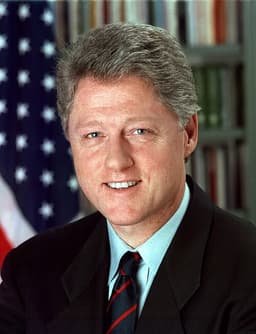
Kofi Annan
Politician · Modern
57.7Total

Wladyslaw Gomulka
Politician · Modern
45.0Total
Basic Information
Born
1938
1905
Died
—
1982
Era
Modern
Modern
Nationality
Ghana
Poland
Occupation
Politician
Politician
Civilization
Other
Western
Score Comparison
Military (10%)
46.6
13.1
Political (20%)
70.0
46.6
Influence (20%)
55.0
51.8
Legacy (20%)
52.0
42.5
Leadership (15%)
78.0
65.0
Strategy (15%)
40.8
34.1
TOTAL
57.7
45.0
Kofi Annan — Complete Timeline
1997 AD
Elected Secretary-General of the United NationsPolitical Action◆ Major
Kofi Annan became the seventh Secretary-General of the United Nations, the first from sub-Saharan Africa. His election followed the US veto of Boutros-Ghali, and he pledged to reform the UN and strengthen peacekeeping.
UN Secretary-GeneralReformPeacekeeping
Impact: globalconstructive
2000 AD
Launched the Millennium Development GoalsReform◆ Major
Annan spearheaded the adoption of the Millennium Development Goals at the UN Millennium Summit, setting targets for poverty reduction, education, health, and environmental sustainability by 2015.
MDGsDevelopmentGlobal Goals
Impact: globalconstructive
2001 AD
Awarded the Nobel Peace PrizeCultural◆ Major
Kofi Annan and the United Nations were jointly awarded the Nobel Peace Prize for their work in promoting peace, human rights, and global cooperation. The prize recognized Annan's leadership in UN reform and conflict resolution.
Nobel PrizePeaceUN
Impact: globalconstructive
2004 AD
Investigated the Oil-for-Food Programme scandalPolitical Action◆ Major
Annan faced criticism over the UN Oil-for-Food Programme in Iraq, which was marred by corruption and mismanagement. An independent inquiry found no direct evidence of Annan's involvement but cited systemic failures.
CorruptionIraqUN Scandal
Impact: globaldestructive
2005 AD
Advocated for the Responsibility to Protect doctrinePolitical Action◆ Major
Annan promoted the Responsibility to Protect doctrine, endorsed by the UN World Summit, asserting that states have a responsibility to protect populations from genocide, war crimes, and crimes against humanity.
R2PHuman RightsUN Doctrine
Impact: globalconstructive
Wladyslaw Gomulka — Complete Timeline
1956 AD
Election as First Secretary of the Polish United Workers' PartyPolitical Action
Gomulka was elected First Secretary of the Polish United Workers' Party on October 21, 1956, during the Polish October. He replaced Stalinist leader Edward Ochab and promised reforms, including de-Stalinization, greater autonomy from the Soviet Union, and improved living standards.
Polish OctoberDe-StalinizationReform
Impact: nationalconstructive
1957 AD
Implementation of the Gomulka reformsReform◆ Major
Gomulka's government implemented a series of reforms, including the release of political prisoners, relaxation of censorship, and a shift from heavy industry to consumer goods production. Agricultural collectivization was halted, and private farming was allowed. These reforms marked a liberalization of the Polish communist system.
ReformLiberalizationConsumer Goods
Impact: nationalprogressive
1968 AD
Suppression of the 1968 Polish political crisisPolitical Action◆ Major
In March 1968, Gomulka's government cracked down on student protests in Warsaw and other cities. The protests were sparked by the banning of a play by Adam Mickiewicz. The government used police force, arrested hundreds of students, and launched an anti-Semitic campaign that forced thousands of Polish Jews to emigrate.
RepressionAnti-Semitic CampaignStudent Protests
Impact: nationaldestructive
1970 AD
Signing of the Treaty of Warsaw with West GermanyPolitical Action◆ Major
Gomulka signed the Treaty of Warsaw on December 7, 1970, with West German Chancellor Willy Brandt. The treaty recognized the Oder-Neisse line as the border between Poland and Germany, normalizing relations between the two countries. This was a major achievement in Polish foreign policy.
TreatyBorder RecognitionOder-Neisse
Impact: globalconstructive
Resignation after the 1970 Polish protestsPolitical Action
In December 1970, Gomulka's government announced sharp increases in food prices, triggering widespread strikes and protests in Gda
ResignationProtestsPrice Hikes
Impact: nationaltragic
Expert Analysis
Origins
Kofi Annan was born on April 8, 1938, in Kumasi, Gold Coast (now Ghana), into a prominent family; his father was a provincial governor and his mother a homemaker. He attended the elite Mfantsipim School, then studied economics at the University of Science and Technology in Kumasi, and later completed a master's in management at MIT. His formative experiences included witnessing Ghana's independence in 1957, which shaped his commitment to international cooperation.
Wladyslaw Gomulka was born on February 6, 1905, in Krosno, Poland (then part of the Austro-Hungarian Empire), into a working-class family. His father was a socialist activist. Gomulka left school early and became a metalworker, joining the Communist Party of Poland in 1926. He was imprisoned for political activities, which hardened his revolutionary resolve. His background in the labor movement defined his later policies.
Rise to Power
Annan rose through the ranks of the United Nations, starting as a budget officer in 1962. He served in various roles, including Assistant Secretary-General for Human Resources Management and Undersecretary-General for Peacekeeping. His appointment as UN Secretary-General in 1997 was historic as the first from sub-Saharan Africa. Key turning points included his handling of the Rwandan genocide while head of peacekeeping (though criticized) and his reform efforts.
Gomulka rose to prominence in the Polish communist movement, becoming secretary of the Communist Party in Silesia. He was a leader of the Polish Workers' Party after WWII but fell out of favor in 1948 due to his nationalist stance. He was purged and imprisoned. His comeback came during the Polish October 1956, when he was elected First Secretary of the Polish United Workers' Party on October 21, 1956, riding a wave of anti-Stalinist sentiment.
Leadership & Governance
Annan's leadership was diplomatic and consensus-driven. He championed the Millennium Development Goals (2000), focusing on poverty reduction, education, and health. He advocated for the Responsibility to Protect doctrine, which argued for international intervention to prevent genocide. However, his tenure was marred by the Oil-for-Food Programme scandal; an independent inquiry found no direct wrongdoing but criticized his management. His political score of 70.0 reflects his effectiveness in global diplomacy.
Gomulka's leadership was initially reformist but turned authoritarian. He released political prisoners, relaxed censorship, and shifted from heavy industry to consumer goods. However, after 1965, he became more repressive, cracking down on student protests in 1968 and purging Jews from the party. His governance score of 46.6 reflects his mixed record. He signed the Treaty of Warsaw with West Germany in 1970, recognizing the Oder-Neisse line, a diplomatic success.
Triumph & Tragedy
Annan's triumphs include winning the Nobel Peace Prize in 2001 with the UN for promoting peace and human rights, and launching the Millennium Development Goals, which set global targets for development. His tragedies include the failure to prevent the Rwandan genocide (1994) while he headed peacekeeping, and the Oil-for-Food scandal that tarnished his reputation.
Gomulka's triumphs include stabilizing Poland after the 1956 uprising, implementing reforms that improved living standards, and securing the Oder-Neisse border with the Treaty of Warsaw. His tragedies include the suppression of the 1968 student protests, leading to a brain drain, and the 1970 price hikes that sparked protests and forced his resignation. His legacy score of 42.5 reflects these failures.
Character & Destiny
Annan was known for his calm, diplomatic demeanor and integrity. He scored 78.0 in leadership, indicating his ability to navigate complex international politics. His character—patient, consensus-seeking—allowed him to advance global norms but also led to criticism for inaction in crises. His destiny was shaped by his role as a symbol of multilateralism.
Gomulka was pragmatic but increasingly dogmatic. He was a nationalist communist who initially resisted Soviet control but later compromised. His character—stubborn and suspicious—led to his downfall. He scored 34.1 in strategy, reflecting his poor handling of economic crises. His fate was tied to his inability to adapt to changing conditions.
Legacy
Annan's legacy endures through the Millennium Development Goals, the Responsibility to Protect doctrine, and his model of diplomatic leadership. He scored 52.0 in legacy, reflecting his lasting impact on international norms. He is remembered as a moral voice for global justice.
Gomulka's legacy is mixed. He is credited with a brief liberalization but criticized for his later repression and economic mismanagement. His legacy score of 42.5 indicates a weaker long-term impact. The Treaty of Warsaw remains a significant achievement, but his authoritarian turn overshadows it.
Conclusion
Kofi Annan had a greater impact than Wladyslaw Gomulka. Annan's total score of 57.7 versus Gomulka's 45.0 reflects his broader influence on global governance and human rights. While Gomulka's reforms were significant in Poland's context, Annan's work shaped international norms that continue to guide policy. Annan's leadership score of 78.0 and political score of 70.0 underscore his effectiveness on the world stage, whereas Gomulka's lower scores highlight his limitations. Thus, Annan's legacy is more enduring and globally significant.
Rankings
🥇
Kofi AnnanLeader
Mil: 46.6Pol: 70.0Inf: 55.0
57.7
🥈
Wladyslaw Gomulka
Mil: 13.1Pol: 46.6Inf: 51.8
45.0
+12.7 behind
How This Comparison Works
Algorithm
Each figure is scored on 6 dimensions (0—100 scale) based on structured historical data: Military (10%), Political (20%), Influence (20%), Legacy (20%), Leadership (15%), Strategy (15%). The weighted total produces the final ranking.
Data Sources
Scores are computed from structured sub-indicators in the database. Scale factors adjust for era (Ancient ×0.85, Modern ×1.0) and civilization size (Eastern ×1.05, Other ×0.80) to account for differences in population and military scale.
Maximum 3 Figures
Comparisons are limited to 2—3 figures to ensure readability and statistical meaningfulness.
Error Margins
±5 points per dimension — Sub-scores are derived from historical records with inherent uncertainty. Two figures within 5 points on a dimension should be considered roughly equivalent in that area.
Total Score Accuracy
±3 points overall — The weighted combination of 6 dimensions produces a total score with approximately ±3 points of uncertainty. Differences of less than 3 points are not statistically significant— the figures are effectively tied.
Known Limitations
- Historical records are incomplete and uneven across civilizations
- Figures from oral-tradition societies may be underrepresented
- Occupation labels can misclassify multi-role figures
- Scores measure capability and impact, not moral character
- Quantitative scoring is a comparison tool, not absolute truth
Capability Radar
Military (10%) — Battles & Warfare
Battles
19
20
Win Rate
27
28
Expansion
28
28
Political (20%) — Governance & Reform
Reform
70
40
Diplomacy
85
45
Economy
60
30
Influence (20%) — Cultural & Global Reach
Cultural
55
20
Global
75
30
Legacy (20%) — Historical Impact
Historical
70
40
Longevity
60
25
Leadership (15%) — Power & Stability
Tenure
75
55
Stability
65
25
Strategy (15%) — Tactics & Innovation
Strategy
33
33
Tactics
32
33
Reform
38
37
Similar Comparisons
Comments & Discussion
No comments yet. Be the first to share your thoughts!