Loading...
This comparison has not been analyzed yet.
One-time AI generation (~1 minute). Scores and timeline are already available below.
Kofi Annan vs M. A. Jinnah
M. A. Jinnah leads by 6.4 pts · 2 figures compared
…
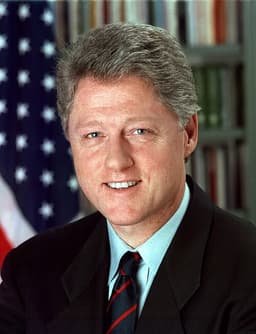
Kofi Annan
Politician · Modern
57.7Total

M. A. Jinnah
Politician · Modern
64.1Total
Basic Information
Born
1938
1876
Died
—
1948
Era
Modern
Modern
Nationality
Ghana
Pakistan
Occupation
Politician
Politician
Civilization
Other
Indian
Score Comparison
Military (10%)
46.6
44.8
Political (20%)
70.0
70.0
Influence (20%)
55.0
65.0
Legacy (20%)
52.0
68.0
Leadership (15%)
78.0
66.0
Strategy (15%)
40.8
60.0
TOTAL
57.7
64.1
Kofi Annan — Complete Timeline
1997 AD
Elected Secretary-General of the United NationsPolitical Action◆ Major
Kofi Annan became the seventh Secretary-General of the United Nations, the first from sub-Saharan Africa. His election followed the US veto of Boutros-Ghali, and he pledged to reform the UN and strengthen peacekeeping.
UN Secretary-GeneralReformPeacekeeping
Impact: globalconstructive
2000 AD
Launched the Millennium Development GoalsReform◆ Major
Annan spearheaded the adoption of the Millennium Development Goals at the UN Millennium Summit, setting targets for poverty reduction, education, health, and environmental sustainability by 2015.
MDGsDevelopmentGlobal Goals
Impact: globalconstructive
2001 AD
Awarded the Nobel Peace PrizeCultural◆ Major
Kofi Annan and the United Nations were jointly awarded the Nobel Peace Prize for their work in promoting peace, human rights, and global cooperation. The prize recognized Annan's leadership in UN reform and conflict resolution.
Nobel PrizePeaceUN
Impact: globalconstructive
2004 AD
Investigated the Oil-for-Food Programme scandalPolitical Action◆ Major
Annan faced criticism over the UN Oil-for-Food Programme in Iraq, which was marred by corruption and mismanagement. An independent inquiry found no direct evidence of Annan's involvement but cited systemic failures.
CorruptionIraqUN Scandal
Impact: globaldestructive
2005 AD
Advocated for the Responsibility to Protect doctrinePolitical Action◆ Major
Annan promoted the Responsibility to Protect doctrine, endorsed by the UN World Summit, asserting that states have a responsibility to protect populations from genocide, war crimes, and crimes against humanity.
R2PHuman RightsUN Doctrine
Impact: globalconstructive
M. A. Jinnah — Complete Timeline
1940 AD
Lahore ResolutionPolitical Action
M. A. Jinnah presided over the All-India Muslim League session in Lahore on March 23, 1940, where the Lahore Resolution was passed. This resolution demanded independent states for Muslims in northwestern and eastern zones of India, laying the foundation for Pakistan.
Pakistan MovementLahore ResolutionMuslim League
Impact: globalconstructive
1947 AD
Independence of PakistanPolitical Action
On August 14, 1947, Pakistan gained independence from British rule, with Jinnah becoming its first Governor-General. He delivered a famous speech to the Constituent Assembly, outlining a vision of a democratic and inclusive Pakistan.
IndependencePakistanGovernor-General
Impact: globalconstructive
1948 AD
Death of M. A. JinnahPolitical Action◆ Major
Jinnah died on September 11, 1948, in Karachi due to tuberculosis. His death left Pakistan without its founding leader, leading to political instability and struggles over the country's identity and governance.
DeathFounding FatherPolitical Vacuum
Impact: nationaltragic
This comparison has not been analyzed yet.
One-time AI generation (~1 minute). Scores and timeline are already available below.
Rankings
🥇
M. A. JinnahLeader
Mil: 44.8Pol: 70.0Inf: 65.0
64.1
🥈
Kofi Annan
Mil: 46.6Pol: 70.0Inf: 55.0
57.7
+6.4 behind
How This Comparison Works
Algorithm
Each figure is scored on 6 dimensions (0—100 scale) based on structured historical data: Military (10%), Political (20%), Influence (20%), Legacy (20%), Leadership (15%), Strategy (15%). The weighted total produces the final ranking.
Data Sources
Scores are computed from structured sub-indicators in the database. Scale factors adjust for era (Ancient ×0.85, Modern ×1.0) and civilization size (Eastern ×1.05, Other ×0.80) to account for differences in population and military scale.
Maximum 3 Figures
Comparisons are limited to 2—3 figures to ensure readability and statistical meaningfulness.
Error Margins
±5 points per dimension — Sub-scores are derived from historical records with inherent uncertainty. Two figures within 5 points on a dimension should be considered roughly equivalent in that area.
Total Score Accuracy
±3 points overall — The weighted combination of 6 dimensions produces a total score with approximately ±3 points of uncertainty. Differences of less than 3 points are not statistically significant— the figures are effectively tied.
Known Limitations
- Historical records are incomplete and uneven across civilizations
- Figures from oral-tradition societies may be underrepresented
- Occupation labels can misclassify multi-role figures
- Scores measure capability and impact, not moral character
- Quantitative scoring is a comparison tool, not absolute truth
Capability Radar
Military (10%) — Battles & Warfare
Battles
19
42
Win Rate
27
49
Expansion
28
48
Political (20%) — Governance & Reform
Reform
70
85
Diplomacy
85
90
Economy
60
40
Influence (20%) — Cultural & Global Reach
Cultural
55
70
Global
75
70
Legacy (20%) — Historical Impact
Historical
70
85
Longevity
60
75
Leadership (15%) — Power & Stability
Tenure
75
60
Stability
65
55
Strategy (15%) — Tactics & Innovation
Strategy
33
51
Tactics
32
54
Reform
38
57
Similar Comparisons
Comments & Discussion
No comments yet. Be the first to share your thoughts!