Loading...
Analysis will be generated on first visit.
Scores and timeline are available below. The page will refresh automatically when ready.
Klemens von Metternich vs Napoleon Bonaparte
Napoleon Bonaparte leads by 14.5 pts · 2 figures compared
…

Klemens von Metternich
Politician · Modern
67.9Total
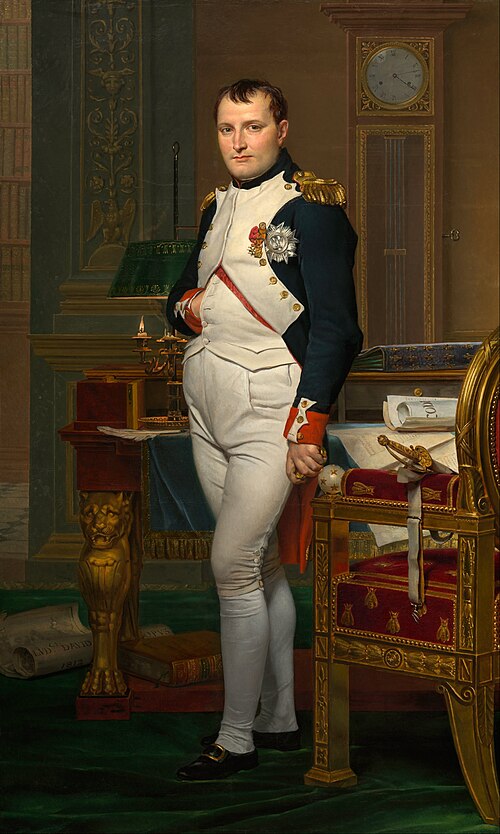
Napoleon Bonaparte
General · Modern
82.4Total
Basic Information
Born
1773
1769
Died
1859
1821
Era
Modern
Modern
Nationality
Austria
France
Occupation
Politician
General
Civilization
Western
Western
Score Comparison
Military (10%)
24.7
94.0
Political (20%)
79.1
75.0
Influence (20%)
71.4
82.0
Legacy (20%)
72.0
78.0
Leadership (15%)
84.9
80.0
Strategy (15%)
54.7
93.0
TOTAL
67.9
82.4
Rankings
🥇
Napoleon BonaparteLeader
Mil: 94.0Pol: 75.0Inf: 82.0
82.4
🥈
Klemens von Metternich
Mil: 24.7Pol: 79.1Inf: 71.4
67.9
+14.5 behind
How This Comparison Works
Algorithm
Each figure is scored on 6 dimensions (0—100 scale) based on structured historical data: Military (10%), Political (20%), Influence (20%), Legacy (20%), Leadership (15%), Strategy (15%). The weighted total produces the final ranking.
Data Sources
Scores are computed from structured sub-indicators in the database. Scale factors adjust for era (Ancient ×0.85, Modern ×1.0) and civilization size (Eastern ×1.05, Other ×0.80) to account for differences in population and military scale.
Maximum 3 Figures
Comparisons are limited to 2—3 figures to ensure readability and statistical meaningfulness.
Error Margins
±5 points per dimension — Sub-scores are derived from historical records with inherent uncertainty. Two figures within 5 points on a dimension should be considered roughly equivalent in that area.
Total Score Accuracy
±3 points overall — The weighted combination of 6 dimensions produces a total score with approximately ±3 points of uncertainty. Differences of less than 3 points are not statistically significant— the figures are effectively tied.
Known Limitations
- Historical records are incomplete and uneven across civilizations
- Figures from oral-tradition societies may be underrepresented
- Occupation labels can misclassify multi-role figures
- Scores measure capability and impact, not moral character
- Quantitative scoring is a comparison tool, not absolute truth
Capability Radar
Military (10%) — Battles & Warfare
Battles
5
95
Win Rate
5
90
Expansion
5
95
Political (20%) — Governance & Reform
Reform
80
95
Diplomacy
95
80
Economy
60
85
Influence (20%) — Cultural & Global Reach
Cultural
60
85
Global
75
90
Legacy (20%) — Historical Impact
Historical
85
95
Longevity
70
90
Leadership (15%) — Power & Stability
Tenure
85
85
Stability
85
70
Strategy (15%) — Tactics & Innovation
Strategy
10
95
Tactics
5
98
Reform
5
92
Analysis will be generated on first visit.
Scores and timeline are available below. The page will refresh automatically when ready.
Klemens von Metternich — Complete Timeline
1815 AD
Congress of ViennaPolitical Action
Metternich hosted and dominated the Congress of Vienna, which redrew the map of Europe after Napoleon's defeat. He established a conservative order based on legitimacy, balance of power, and suppression of liberal nationalism.
CongressDiplomacyRestoration
Impact: globalconstructive
Formation of the Holy AlliancePolitical Action◆ Major
Metternich helped create the Holy Alliance between Austria, Prussia, and Russia. This alliance committed the monarchs to rule according to Christian principles and became a tool for suppressing revolutions across Europe.
AllianceConservatismMonarchy
Impact: regional
1819 AD
Carlsbad DecreesPolitical Action◆ Major
Metternich orchestrated the Carlsbad Decrees, a set of repressive measures in the German Confederation. They imposed censorship, dissolved student fraternities, and placed universities under surveillance to suppress liberal and nationalist ideas.
RepressionCensorshipGerman Confederation
Impact: regionaldestructive
1820 AD
Troppau ProtocolPolitical Action◆ Major
Metternich convened the Congress of Troppau, which issued the Troppau Protocol. This declared the right of great powers to intervene militarily in states threatened by revolution, justifying Austrian intervention in Italy.
InterventionCongressRevolution
Impact: regionaldestructive
1848 AD
Revolutions of 1848 and Fall of MetternichPolitical Action
The outbreak of revolutions in Vienna forced Metternich to resign and flee to England. His conservative system collapsed as liberal and nationalist uprisings swept across Europe, ending his 39-year dominance of Austrian politics.
RevolutionResignationExile
Impact: regionaldestructive
Similar Comparisons
Comments & Discussion
No comments yet. Be the first to share your thoughts!