Loading...
Kirtivarman II vs Qin Shi Huang
Qin Shi Huang leads by 48.8 pts · 2 figures compared
…
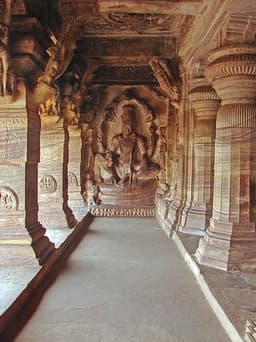
Kirtivarman II
Emperor · Medieval
36.4Total
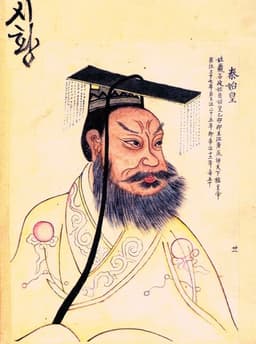
Qin Shi Huang
Emperor · Ancient
85.2Total
Basic Information
Born
746
-259
Died
757
-210
Era
Medieval
Ancient
Nationality
India
China
Occupation
Emperor
Emperor
Civilization
Indian
Eastern
Score Comparison
Military (10%)
21.2
80.0
Political (20%)
30.7
90.0
Influence (20%)
46.3
85.0
Legacy (20%)
37.5
90.0
Leadership (15%)
33.6
78.0
Strategy (15%)
36.8
82.0
TOTAL
36.4
85.2
Kirtivarman II — Complete Timeline
753 AD
Defeat by DantidurgaWar◆ Major
Kirtivarman II, the last Badami Chalukya king, was defeated by the Rashtrakuta chief Dantidurga. This battle ended the Badami Chalukya dynasty and established Rashtrakuta rule over the Deccan region.
Impact: regionaldestructive
Qin Shi Huang — Complete Timeline
246 BC
Construction of the Mausoleum and Terracotta ArmyOther◆ Major
Qin Shi Huang commissioned a vast mausoleum complex near Xi'an, guarded by thousands of life-sized terracotta soldiers, horses, and chariots. The project employed hundreds of thousands of workers and reflected his obsession with immortality and imperial power.
Impact: global
230 BC
Conquest of the Six Warring StatesWar
From 230 to 221 BCE, Ying Zheng led the Qin state in a series of campaigns that conquered the Han, Zhao, Wei, Chu, Yan, and Qi states. This unified China under a single ruler for the first time, ending the Warring States period.
Impact: global
221 BC
Standardization of Writing, Currency, and MeasurementsReform◆ Major
Qin Shi Huang ordered the standardization of Chinese script, currency, and weights and measures across the unified empire. This facilitated administration, trade, and cultural integration, laying a foundation for future dynasties.
Impact: globalconstructive
Proclamation of the Qin DynastyPolitical Action
After conquering the last independent state, Ying Zheng declared himself Shi Huangdi (First Emperor), founding the Qin Dynasty. He adopted a new title to signify his supreme authority and initiated centralized imperial rule.
Impact: global
214 BC
Initiation of the Great Wall ConstructionOther◆ Major
Qin Shi Huang ordered the connection and extension of existing northern fortifications to create a unified defensive wall against nomadic Xiongnu raids. This project involved massive conscripted labor and became the precursor to the later Great Wall.
Impact: regional
213 BC
Burning of Books and Burying of ScholarsPolitical Action◆ Major
On the advice of Li Si, Qin Shi Huang ordered the burning of historical records and philosophical texts not aligned with Legalist doctrine. He also had 460 Confucian scholars buried alive to suppress dissent and consolidate ideological control.
Impact: nationaldestructive
Expert Analysis
kirtivarman-ii-vs-qin-shi-huang
# The First Emperor and the Last Chalukya: Two Paths to Historical Judgment
On a spring morning in 221 BC, Ying Zheng stood before his assembled generals in the newly conquered city of Xianyang. The last independent kingdom of Qi had fallen, and for the first time in centuries, the lands between the Yellow River and the Yangtze belonged to a single ruler. He declared himself Shi Huangdi—the First Emperor—and set in motion reforms that would echo across millennia. Less than a thousand years later and thousands of miles to the southwest, another ruler faced his own moment of truth. Kirtivarman II, the last king of the Badami Chalukya dynasty, watched from his palace as the armies of the Rashtrakuta chief Dantidurga gathered on the plains below. One emperor would forge an empire that defined a civilization; the other would be the final page of a dynasty’s story. What separated these two fates? The answer lies not in destiny, but in the choices, circumstances, and characters of the men who made them.
Origins
Qin Shi Huang was born in 259 BC into a world of chaos. The Warring States period had torn China apart for two centuries, with seven kingdoms locked in endless conflict. His father, King Zhuangxiang of Qin, ruled a state that had already begun to consolidate power through ruthless efficiency and legalist philosophy. Young Ying Zheng grew up surrounded by court intrigue—his mother’s lover, Lao Ai, staged a rebellion when the boy was just twenty-two. From these violent beginnings, he absorbed two lessons: that power must be absolute, and that trust was a dangerous luxury.
Kirtivarman II, born in 746 AD, inherited a different world. The Badami Chalukya dynasty had ruled the Deccan plateau for over two centuries, building magnificent cave temples and maintaining a stable administration. His predecessors had fought off the Pallavas to the south and kept the rising Rashtrakutas at bay. But by the time Kirtivarman took the throne, the dynasty’s foundations had begun to crack. The Chalukyas had grown complacent, their military outdated, their alliances frayed. Where Qin Shi Huang faced external chaos and forged internal strength, Kirtivarman faced internal decay and external pressure—and lacked the tools to respond.
Rise to Power
Qin Shi Huang’s path to supremacy was methodical and brutal. From 230 to 221 BC, he unleashed a series of campaigns that historians still study for their tactical brilliance. His generals, led by the legendary Wang Jian, devoured one kingdom after another: Han fell first, then Zhao, Wei, Chu, Yan, and finally Qi. Each conquest brought new resources, new soldiers, and new territories to integrate. By the age of thirty-eight, Ying Zheng had accomplished what no Chinese ruler had ever achieved—total unification.
Kirtivarman II’s rise was quieter. He inherited the throne in 746 AD, probably in his early twenties, with little military experience and a court divided by factionalism. The Rashtrakuta chief Dantidurga had already begun expanding his territory, raiding Chalukya borders with impunity. Where Qin Shi Huang actively shaped his destiny through conquest, Kirtivarman seemed to drift into crisis, responding to events rather than creating them. The contrast could not be starker: one man built an empire through relentless aggression; the other watched his inheritance slip away.
Leadership & Governance
As emperor, Qin Shi Huang transformed China. He standardized writing, currency, and measurements across his domain—reforms that made unified administration possible for the first time. He connected existing northern fortifications into what would become the Great Wall, a project that required hundreds of thousands of laborers. His legalist advisor Li Si helped create a centralized bureaucracy that replaced the old feudal system, appointing officials based on merit rather than birth. But this efficiency came at a terrible cost: the Burning of Books and Burying of Scholars in 213 BC, when he ordered the destruction of all historical records and philosophical texts that contradicted his ideology. Scholars were executed, libraries burned, and dissent crushed.
Kirtivarman II’s governance, by contrast, left little mark on history. The Chalukya administration, once efficient, had grown corrupt and stagnant. He attempted no major reforms, launched no ambitious building projects, and developed no new military strategies. His leadership style appears to have been reactive and passive—a king content to maintain the status quo while his enemies sharpened their swords. Where Qin Shi Huang’s ruthlessness built an empire, Kirtivarman’s caution lost one.
Triumph & Tragedy
Qin Shi Huang’s greatest triumph was also his most haunting legacy: the Terracotta Army. In 246 BC, even before his conquests began, he commissioned a mausoleum complex near Xi’an that would guard his tomb for eternity. Thousands of life-sized soldiers, each with unique facial features, stand in battle formation—a testament to his obsession with immortality and control. The tragedy came in his final years, as he searched desperately for an elixir of eternal life, consuming mercury pills that likely hastened his death in 210 BC at the age of forty-nine. His dynasty collapsed within four years of his passing.
Kirtivarman’s tragedy was simpler and more complete. In 753 AD, Dantidurga’s Rashtrakuta army met the Chalukya forces in battle. The details are lost to history, but the result is clear: the Badami Chalukya dynasty ended that day. Kirtivarman II vanished from the historical record, his fate unknown. He had no magnificent tomb, no lasting monument—only the memory of a kingdom that had once been great.
Character & Destiny
These two rulers embody opposite ends of the historical spectrum. Qin Shi Huang was a visionary tyrant, driven by an almost pathological need for control and permanence. His paranoia and cruelty destroyed lives, but his reforms created the template for Chinese imperial governance that would last two thousand years. Kirtivarman II was a caretaker king, content to preserve what his ancestors had built. In a stable era, he might have been remembered as a competent administrator. But history judges harshly those who fail to rise to their moment.
Legacy
Qin Shi Huang remains one of the most controversial figures in Chinese history. To some, he is the unifier, the founder of China as a nation. To others, he is the burner of books, the destroyer of knowledge. His Terracotta Army draws millions of visitors each year, a silent army guarding a tomb that has never been fully opened. His name is synonymous with both greatness and tyranny.
Kirtivarman II is remembered, if at all, as a footnote—the last of his line. The Rashtrakutas who defeated him would go on to build their own empire, while the Chalukya dynasty faded into the dust of the Deccan. His legacy is a warning: that even the mightiest dynasties can fall when their leaders lack vision.
Conclusion
Standing before the Terracotta Warriors, one feels the weight of ambition and power. Walking through the ruins of Badami, one senses the melancholy of lost glory. Qin Shi Huang and Kirtivarman II were both kings, both conquerors in their own way, but they inhabited different worlds of possibility. The First Emperor shaped his era with an iron fist; the Last Chalukya was shaped by it. In the end, history remembers not those who merely rule, but those who dare to change the world—for better or for worse.
Rankings
🥇
Qin Shi HuangLeader
Mil: 80.0Pol: 90.0Inf: 85.0
85.2
🥈
Kirtivarman II
Mil: 21.2Pol: 30.7Inf: 46.3
36.4
+48.8 behind
How This Comparison Works
Algorithm
Each figure is scored on 6 dimensions (0—100 scale) based on structured historical data: Military (10%), Political (20%), Influence (20%), Legacy (20%), Leadership (15%), Strategy (15%). The weighted total produces the final ranking.
Data Sources
Scores are computed from structured sub-indicators in the database. Scale factors adjust for era (Ancient ×0.85, Modern ×1.0) and civilization size (Eastern ×1.05, Other ×0.80) to account for differences in population and military scale.
Maximum 3 Figures
Comparisons are limited to 2—3 figures to ensure readability and statistical meaningfulness.
Error Margins
±5 points per dimension — Sub-scores are derived from historical records with inherent uncertainty. Two figures within 5 points on a dimension should be considered roughly equivalent in that area.
Total Score Accuracy
±3 points overall — The weighted combination of 6 dimensions produces a total score with approximately ±3 points of uncertainty. Differences of less than 3 points are not statistically significant— the figures are effectively tied.
Known Limitations
- Historical records are incomplete and uneven across civilizations
- Figures from oral-tradition societies may be underrepresented
- Occupation labels can misclassify multi-role figures
- Scores measure capability and impact, not moral character
- Quantitative scoring is a comparison tool, not absolute truth
Capability Radar
Military (10%) — Battles & Warfare
Battles
15
85
Win Rate
10
90
Expansion
5
90
Political (20%) — Governance & Reform
Reform
10
95
Diplomacy
10
75
Economy
15
90
Influence (20%) — Cultural & Global Reach
Cultural
10
95
Global
5
85
Legacy (20%) — Historical Impact
Historical
15
95
Longevity
10
95
Leadership (15%) — Power & Stability
Tenure
20
70
Stability
10
65
Strategy (15%) — Tactics & Innovation
Strategy
10
85
Tactics
15
80
Reform
5
95
Similar Comparisons
Comments & Discussion
EmperorScribe6/17/2026
Qin Shi Huang's standardized script and measures were genuinely revolutionary—unifying China's diverse cultures under a single administrative system. Without his ruthlessness, China might have fragmented like Europe. Kirtivarman II just inherited a crumbling empire and lacked the vision to adapt. The First Emperor built an enduring legacy; the last Chalukya is a footnote.
兵马俑观察员6/17/2026
Kirtivarman II输在运气和地理上。他面对的是冉冉升起的Rashtrakuta帝国,而Qin Shi Huang打的是已经精疲力竭的六国。不过话说回来,统一度量衡和文字是硬功夫,巴达米王朝最后连本地的卡纳达语文学都没保护好,输了就是输了。
DataSkeptic6/17/2026
Let's be real: Qin Shi Huang's "empire" lasted only 15 years after his death before collapsing into civil war. Kirtivarman II's dynasty ruled nearly 600 years. Who's really the "footnote"? Short-term unification doesn't equal long-term success. The First Emperor's tyranny burnt out quickly, while the Chalukyas built something sustainable.
古典学者批评家6/17/2026
把秦始皇和Kirtivarman II放一起比本身就是病态的比较。一个是开创者,一个是终结者;一个要统一文字,一个要抵抗外敌。唯一共同点是他们都用了铁腕手段——但动机完全不同。Kirtivarman II是在保卫家园,秦始皇是在扩张野心。历史不看动机只看结果,这公平吗?
HistoryBuff6/17/2026
Actually, Kirtivarman II might have had a worse strategic position. The Rashtrakutas under Dantidurga were genius tacticians who exploited internal divisions—sound familiar? Qin's enemies were already exhausted from centuries of war. Plus, the First Emperor had Shang Yang's Legalist reforms brewing for generations before he took power. Kirtivarman inherited a mess and got crushed by a rising power. Context matters.