Loading...
King Yeonsangun of Joseon vs Napoleon Bonaparte
Napoleon Bonaparte leads by 31.8 pts · 2 figures compared
…
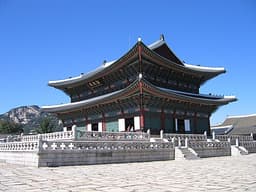
King Yeonsangun of Joseon
Emperor · Medieval
39.1Total

Napoleon Bonaparte
General · Modern
70.9Total
Basic Information
Born
1476
1769
Died
1506
1821
Era
Medieval
Modern
Nationality
Korea
France
Occupation
Emperor
General
Civilization
Eastern
Western
Score Comparison
Military (10%)
20.0
94.0
Political (20%)
32.1
72.0
Influence (20%)
48.6
40.0
Legacy (20%)
41.7
80.0
Leadership (15%)
34.6
78.0
Strategy (15%)
45.0
90.0
TOTAL
39.1
70.9
King Yeonsangun of Joseon — Complete Timeline
1498 AD
First Literati Purge of 1498Political Action◆ Major
Yeonsangun ordered the execution and exile of many scholar-officials from the Sarim faction, accusing them of criticizing his rule. This purge intensified factional conflict and established his reputation for tyranny.
Political PurgeFactionalismTyranny
Impact: nationaldestructive
1504 AD
Second Literati Purge of 1504Political Action◆ Major
Yeonsangun launched a second, more brutal purge, executing hundreds of officials and their families. He targeted those involved in his mother's death and anyone who opposed his excesses, further destabilizing the court.
Political PurgeMassacreTyranny
Impact: nationaldestructive
Destruction of the Office of Special CounselorsPolitical Action
Yeonsangun abolished the Office of Special Counselors (Hongmungwan) and other advisory bodies, centralizing power in his own hands. This act removed checks on royal authority and allowed his tyranny to go unchecked.
Institutional DestructionAutocracy
Impact: nationaldestructive
1506 AD
Deposition by the Jungjong CoupPolitical Action
A group of officials and military leaders staged a coup, deposing Yeonsangun and exiling him to Ganghwa Island. He was the first Joseon king to be forcibly removed from power, and his half-brother Jungjong was installed as king.
CoupDepositionJoseon Dynasty
Impact: nationaldestructive
Napoleon Bonaparte — Complete Timeline
1799 AD
Coup of 18 BrumaireOther◆ Major
Napoleon Bonaparte, with support from his brother Lucien and key political figures, overthrew the Directory in a bloodless coup. He established the Consulate with himself as First Consul, effectively becoming the ruler of France. This event ended the French Revolution's most unstable period.
French RevolutionCoupRise to Power
Impact: regional
1804 AD
Promulgation of the Napoleonic CodeOther◆ Major
Napoleon enacted the Civil Code of the French, known as the Napoleonic Code, a comprehensive set of laws that replaced the fragmented feudal legal systems. The code established legal equality, protected property rights, and secularized law. It became the basis for legal systems in many European and world countries.
Legal ReformNapoleonic CodeCivil Law
Impact: globalconstructive
1805 AD
Battle of AusterlitzWar◆ Major
Napoleon's Grande Arm
Napoleonic WarsBattleDecisive Victory
Impact: global
1812 AD
Invasion of RussiaWar◆ Major
Napoleon led the Grande Arm
Napoleonic WarsInvasionDisaster
Impact: globaldestructive
1815 AD
Battle of WaterlooWar◆ Major
Napoleon's French army was defeated by the combined forces of the Duke of Wellington's Anglo-Allied army and Gebhard Leberecht von Bl
Napoleonic WarsBattleFinal Defeat
Impact: globaldestructive
Expert Analysis
king-yeonsangun-of-joseon-vs-napoleon-bonaparte
# The Tyrant and the Conqueror: Two Paths to Absolute Power
On a winter morning in 1504, King Yeonsangun of Joseon stood in the throne hall of Changdeokgung Palace, watching as his guards dragged away scholar-officials by their hair. The men had dared to criticize his mother’s treatment, and now they would die—along with their families, their students, anyone who had ever shared a meal with them. Across the world and three centuries later, another man would stand atop the Great St. Bernard Pass in the Alps, leading 40,000 soldiers through snow and ice to strike at Austria. One man ruled through terror and shriveled into exile; the other remade a continent and died on a remote island. What separates a tyrant from a titan? The answer lies not in their ambition, but in what they did with it.
Origins
Napoleon Bonaparte was born in 1769 on Corsica, an island that had just been sold to France by Genoa. His family was minor nobility—impoverished, resentful, and fiercely independent. Young Napoleon spoke Italian at home, not French, and was mocked by classmates at military school for his accent and small stature. But the French Revolution, erupting when he was twenty, shattered the old order. A Corsican outsider could now rise through merit alone. The revolution gave him a stage; his genius did the rest.
Yeonsangun was born in 1476 as Prince Yunsan, the son of King Seongjong and a deposed queen. His mother, Lady Yun, had been forced to drink poison after being accused of jealousy and cursing the king’s concubines. Yeonsangun was seven years old. He grew up in a palace that whispered of his mother’s shame, surrounded by officials who had signed her death warrant. While Napoleon learned artillery mathematics, Yeonsangun learned that power was a weapon and that everyone around him was a potential traitor.
Rise to Power
Napoleon’s ascent was a whirlwind. At twenty-four, he cleared the streets of Paris of royalist rebels with a “whiff of grapeshot.” At twenty-six, he conquered Italy, turning a starving, unpaid army into a legend. At thirty, he staged a coup and made himself First Consul. At thirty-five, he crowned himself Emperor of the French. Each step was earned through victory—military brilliance that dazzled Europe and political maneuvering that silenced rivals.
Yeonsangun inherited the throne at nineteen when his father died. There was no coup, no campaign. He simply became king, surrounded by the same men who had destroyed his mother. For the first four years, he ruled quietly, perhaps even wisely. But in 1498, a scholar named Kim Jong-jik wrote a history that obliquely criticized a previous king’s actions. Yeonsangun saw his chance. He ordered the First Literati Purge, executing and exiling dozens of Sarim scholars. By 1504, after discovering the full truth of his mother’s death, he unleashed the Second Literati Purge—executing hundreds, even digging up the graves of dead officials to behead their corpses.
Leadership & Governance
Napoleon governed with a paradox: he was a dictator who built lasting institutions. The Napoleonic Code, introduced in 1804, unified French law, guaranteed property rights, and established merit-based advancement. He reformed education, created the Bank of France, and built roads and canals that connected his empire. He was ruthless with enemies but pragmatic with allies, marrying an Austrian princess to seal a peace. His military strategy was a blend of speed, deception, and overwhelming force—the corps system allowed him to outmarch and outfight larger armies.
Yeonsangun governed through fear. He abolished the Office of Special Counselors, the very body designed to advise kings, and executed anyone who spoke truth to power. He turned the palace into a pleasure ground, forcing women into his harem and musicians to play day and night. He had no vision beyond personal revenge and gratification. Where Napoleon built schools, Yeonsangun burned books. Where Napoleon reformed law, Yeonsangun destroyed the institutions that made law possible.
Triumph & Tragedy
Napoleon’s greatest moment was Austerlitz in 1805, where he crushed the combined armies of Russia and Austria in a single day. His greatest failure was the invasion of Russia in 1812, where 600,000 men marched east and fewer than 100,000 returned. The tragedy was not just the loss—it was that Napoleon could not stop. He had conquered Europe, but he could not hold it.
Yeonsangun’s only triumph was survival—for a time. In 1506, after twelve years of terror, a coalition of officials and generals stormed the palace. They did not kill him; they deposed him, stripped his title, and exiled him to Ganghwa Island. He died two months later, at thirty, alone and forgotten. His tragedy was not a failed invasion but a failed humanity.
Character & Destiny
Napoleon was driven by ambition, but also by a belief in order and glory. He saw himself as a modern Caesar, a man who would bring enlightenment to Europe even as he enslaved it. His downfall came from hubris—the belief that he could defeat winter, that he could conquer Spain and Russia simultaneously, that his star would never fade.
Yeonsangun was driven by pain. His mother’s murder festered into paranoia; his paranoia curdled into sadism. He killed not for policy but for pleasure, not to build but to destroy. His downfall came from isolation—he trusted no one, so no one trusted him. When the coup came, he had no allies left.
Legacy
Napoleon’s legacy is carved into the modern world. The Napoleonic Code influences law from Louisiana to Japan. His military tactics are still studied at war colleges. He reshaped Europe’s borders and inspired nationalism across the continent. He is remembered as both a liberator and a tyrant, a genius and a cautionary tale.
Yeonsangun is remembered as a warning. His name in Korean history is synonymous with tyranny, a king so brutal that his own dynasty erased him. No code, no monument, no reform bears his name. He is studied not for what he built, but for what he destroyed—and for the lesson that absolute power, in the hands of a wounded soul, becomes absolute poison.
Conclusion
Napoleon and Yeonsangun both seized absolute power, but one used it to conquer the world, the other to consume himself. The difference was not in cruelty—Napoleon was ruthless enough—but in vision. Napoleon wanted to remake the world; Yeonsangun only wanted to burn it. In the end, both were deposed, both died in exile. But one left behind a code that still governs millions, while the other left behind only a name whispered in shame. History does not judge ambition—it judges what ambition creates.
Rankings
🥇
Napoleon BonaparteLeader
Mil: 94.0Pol: 72.0Inf: 40.0
70.9
🥈
King Yeonsangun of Joseon
Mil: 20.0Pol: 32.1Inf: 48.6
39.1
+31.8 behind
How This Comparison Works
Algorithm
Each figure is scored on 6 dimensions (0—100 scale) based on structured historical data: Military (10%), Political (20%), Influence (20%), Legacy (20%), Leadership (15%), Strategy (15%). The weighted total produces the final ranking.
Data Sources
Scores are computed from structured sub-indicators in the database. Scale factors adjust for era (Ancient ×0.85, Modern ×1.0) and civilization size (Eastern ×1.05, Other ×0.80) to account for differences in population and military scale.
Maximum 3 Figures
Comparisons are limited to 2—3 figures to ensure readability and statistical meaningfulness.
Error Margins
±5 points per dimension — Sub-scores are derived from historical records with inherent uncertainty. Two figures within 5 points on a dimension should be considered roughly equivalent in that area.
Total Score Accuracy
±3 points overall — The weighted combination of 6 dimensions produces a total score with approximately ±3 points of uncertainty. Differences of less than 3 points are not statistically significant— the figures are effectively tied.
Known Limitations
- Historical records are incomplete and uneven across civilizations
- Figures from oral-tradition societies may be underrepresented
- Occupation labels can misclassify multi-role figures
- Scores measure capability and impact, not moral character
- Quantitative scoring is a comparison tool, not absolute truth
Capability Radar
Military (10%) — Battles & Warfare
Battles
5
95
Win Rate
5
90
Expansion
5
95
Political (20%) — Governance & Reform
Reform
10
95
Diplomacy
10
80
Economy
10
85
Influence (20%) — Cultural & Global Reach
Cultural
20
85
Global
10
90
Legacy (20%) — Historical Impact
Historical
30
95
Longevity
20
90
Leadership (15%) — Power & Stability
Tenure
30
85
Stability
10
70
Strategy (15%) — Tactics & Innovation
Strategy
5
95
Tactics
5
98
Reform
5
92
Similar Comparisons
Comments & Discussion
TYRANT_TAMER6/17/2026
Give me a break comparing a petulant king who threw temper tantrums with a military genius who redrew Europe’s map. Yeonsangun purged literati over his mommy issues; Napoleon defeated five coalitions, reformed law codes, and built modern bureaucracy. One’s a footnote in Korean history, the other still shapes geopolitics. Stalin had more in common with Yeonsangun than Napoleon ever did.|
数据侦探6/17/2026
数据不会说谎!拿破仑统治了法国16年,发动了超过60场战役,征服了欧洲大部分地区。而燕山君在位仅12年,主要成就是杀了不到100个官员和宫女。按照"暴政效率"计算,拿破仑每秒造成的死亡人数是燕山君的几十倍。所以谁更"暴虐"?历史排名完全被叙事偏见扭曲了。|
REVISIONIST_HAMMER6/17/2026
Let’s stop romanticizing Napoleon. He restored slavery in French colonies, executed 30,000 royalists during the White Terror, and invaded Russia for personal glory—losing 500,000 lives. Yeonsangun was a paranoid despot, sure, but Napoleon was a mass-murdering imperialist who just had better PR. The real difference is that Western historians gave one a statue and the other a footnote.|
丝路漫步者6/17/2026
本质差异在于文明逻辑。燕山君是东亚专制体系的终极产物——权力来自血统,合法性依赖儒家礼教,暴政只能向内消耗。拿破仑则是欧洲革命时代的矛盾体:他既延续了绝对君主制,又输出了民法典和民族国家理念。一个把朝鲜半岛变成了个人情绪的实验场,另一个把整个大陆扔进了现代性的熔炉。论影响,燕山君连拿破仑的鞋带都比不上。|
CLASSICS_SCHOLAR6/17/2026
Reading Suetonius taught me this: every tyrant is a mirror of his era's anxieties. Yeonsangun’s literary purges mirror Caligula’s senatorial massacres—both fear intellectual opposition. Napoleon, however, played Augustus—centralizing power while codifying laws and patronizing arts. The first burns books; the second writes them. That’s the line between destructive and transformative tyranny. Yeonsangun is a Nero without a lyre; Napoleon is a Caesar with a codex.