Loading...
This comparison has not been analyzed yet.
One-time AI generation (~1 minute). Scores and timeline are already available below.
King Jungjong of Joseon vs Yejong of Goryeo
King Jungjong of Joseon leads by 2.8 pts · 2 figures compared
…

King Jungjong of Joseon
Emperor · Medieval
50.4Total
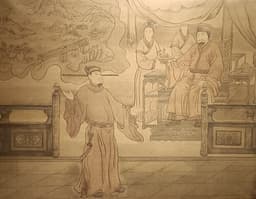
Yejong of Goryeo
Emperor · Medieval
47.6Total
Basic Information
Born
1488
1079
Died
1544
1122
Era
Medieval
Medieval
Nationality
Korea
Korea
Occupation
Emperor
Emperor
Civilization
Eastern
Eastern
Score Comparison
Military (10%)
20.0
53.8
Political (20%)
68.0
39.4
Influence (20%)
53.3
54.1
Legacy (20%)
45.8
44.2
Leadership (15%)
53.2
45.0
Strategy (15%)
54.6
50.0
TOTAL
50.4
47.6
King Jungjong of Joseon — Complete Timeline
1506 AD
Accession to the throne after the Jungjong CoupPolitical Action◆ Major
Jungjong was installed as king of Joseon after the deposition of his half-brother Yeonsangun. His reign began with promises of reform, but he soon faced factional struggles between the officials who had placed him on the throne.
SuccessionCoupJoseon Dynasty
Impact: national
1510 AD
Implementation of the 'Hyangyak' local self-governance systemReform
Jungjong promoted the Hyangyak system, a set of Confucian community compacts that encouraged local self-governance and moral education. This reform aimed to strengthen social order at the village level but had limited success due to factional opposition.
Local GovernanceConfucian Reform
Impact: nationalconstructive
1519 AD
Third Literati Purge of 1519Political Action◆ Major
Jungjong ordered a purge of the Sarim faction, executing or exiling many reform-minded officials. This event, known as the Gimyo Literati Purge, reversed earlier reforms and deepened factional divisions in the court.
Political PurgeFactionalismReform Reversal
Impact: nationaldestructive
1520 AD
Failed attempt to restore the Royal LectureCultural
Jungjong attempted to revive the Royal Lecture (Gyeongyeon) system, where the king studied Confucian texts with scholars. The effort was undermined by factional infighting and never fully restored, limiting intellectual exchange at court.
Cultural PolicyConfucianismFactionalism
Impact: national
Yejong of Goryeo — Complete Timeline
1105 AD
Promotion of Confucian educationCultural◆ Major
King Yejong expanded the Gukjagam (National Academy) and established the Seodang (village schools) to promote Confucian learning. He invited scholars from Song China and increased the number of civil service examination passers, strengthening the scholar-official class.
EducationConfucianismGoryeo
Impact: nationalconstructive
1106 AD
Diplomatic missions to Song ChinaPolitical Action
Yejong sent multiple diplomatic missions to the Song dynasty to import books, art, and technology. These exchanges introduced Neo-Confucian texts and Chinese musical instruments to Goryeo, influencing Korean culture for centuries.
DiplomacyCultural ExchangeSong China
Impact: regionalconstructive
This comparison has not been analyzed yet.
One-time AI generation (~1 minute). Scores and timeline are already available below.
Rankings
🥇
King Jungjong of JoseonLeader
Mil: 20.0Pol: 68.0Inf: 53.3
50.4
🥈
Yejong of Goryeo
Mil: 53.8Pol: 39.4Inf: 54.1
47.6
+2.8 behind
How This Comparison Works
Algorithm
Each figure is scored on 6 dimensions (0—100 scale) based on structured historical data: Military (10%), Political (20%), Influence (20%), Legacy (20%), Leadership (15%), Strategy (15%). The weighted total produces the final ranking.
Data Sources
Scores are computed from structured sub-indicators in the database. Scale factors adjust for era (Ancient ×0.85, Modern ×1.0) and civilization size (Eastern ×1.05, Other ×0.80) to account for differences in population and military scale.
Maximum 3 Figures
Comparisons are limited to 2—3 figures to ensure readability and statistical meaningfulness.
Error Margins
±5 points per dimension — Sub-scores are derived from historical records with inherent uncertainty. Two figures within 5 points on a dimension should be considered roughly equivalent in that area.
Total Score Accuracy
±3 points overall — The weighted combination of 6 dimensions produces a total score with approximately ±3 points of uncertainty. Differences of less than 3 points are not statistically significant— the figures are effectively tied.
Known Limitations
- Historical records are incomplete and uneven across civilizations
- Figures from oral-tradition societies may be underrepresented
- Occupation labels can misclassify multi-role figures
- Scores measure capability and impact, not moral character
- Quantitative scoring is a comparison tool, not absolute truth
Capability Radar
Military (10%) — Battles & Warfare
Battles
5
48
Win Rate
5
46
Expansion
5
52
Political (20%) — Governance & Reform
Reform
55
40
Diplomacy
50
35
Economy
45
30
Influence (20%) — Cultural & Global Reach
Cultural
40
45
Global
20
10
Legacy (20%) — Historical Impact
Historical
45
35
Longevity
40
30
Leadership (15%) — Power & Stability
Tenure
60
30
Stability
40
25
Strategy (15%) — Tactics & Innovation
Strategy
5
54
Tactics
5
56
Reform
10
59
Similar Comparisons
Comments & Discussion
No comments yet. Be the first to share your thoughts!