Loading...
King David vs Yamagata Aritomo
Yamagata Aritomo leads by 7.2 pts · 2 figures compared
…
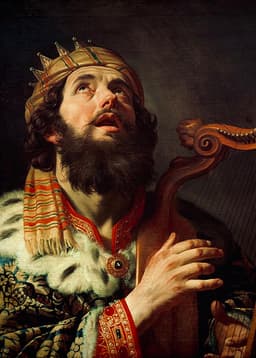
King David
Emperor · Ancient
75.3Total
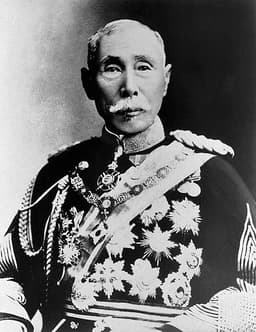
Yamagata Aritomo
General · Modern
82.5Total
Basic Information
Born
-1010
1838
Died
-970
1922
Era
Ancient
Modern
Nationality
Israel
Japan
Occupation
Emperor
General
Civilization
Middle Eastern
Eastern
Score Comparison
Military (10%)
72.0
78.0
Political (20%)
72.0
82.0
Influence (20%)
88.0
80.0
Legacy (20%)
70.0
90.0
Leadership (15%)
72.0
78.0
Strategy (15%)
70.0
82.0
TOTAL
75.3
82.5
King David — Complete Timeline
1010 BC
Anointed as King of JudahPolitical Action◆ Major
After Saul's death, David was anointed king over the tribe of Judah at Hebron. This began a seven-year period of civil war with Ish-bosheth, Saul's son, who ruled the northern tribes, leading to the eventual unification of Israel.
KingshipCivil WarJudah
Impact: national
1003 BC
Capture of JerusalemWar
David led his army to capture the Jebusite fortress of Jerusalem, making it the capital of the united kingdom. He brought the Ark of the Covenant there, establishing the city as both the political and religious center of Israel.
JerusalemCapitalArk of the Covenant
Impact: nationalconstructive
1000 BC
Defeat of the PhilistinesWar◆ Major
David fought several campaigns that decisively defeated the Philistines, including the Battle of Baal-perazim. He captured Gath and other Philistine strongholds, ending their dominance over Israel and securing the kingdom's borders.
PhilistinesMilitary CampaignIsrael
Impact: regional
990 BC
Affair with BathshebaPolitical Action◆ Major
David committed adultery with Bathsheba and arranged the death of her husband Uriah the Hittite in battle. The prophet Nathan confronted David, leading to his repentance but also to divine punishment, including the death of their first child.
ScandalBathshebaNathan
Impact: nationaldestructive
978 BC
Revolt of AbsalomWar◆ Major
David's son Absalom led a rebellion that forced David to flee Jerusalem. David's forces under Joab defeated Absalom's army in the Forest of Ephraim, and Absalom was killed. David returned to Jerusalem but the kingdom was weakened.
RebellionCivil WarAbsalom
Impact: nationaltragic
Yamagata Aritomo — Complete Timeline
1873 AD
Establishment of the Imperial Japanese ArmyReform
Yamagata Aritomo, as War Minister, oversaw the creation of the Imperial Japanese Army based on the Prussian model. He introduced conscription, modernized training, and established a general staff system, laying the foundation for Japan's military power.
Military reformConscription
Impact: nationalconstructive
1882 AD
Promotion of militarism and the Imperial Rescript to Soldiers and SailorsCultural◆ Major
Yamagata Aritomo helped draft the Imperial Rescript to Soldiers and Sailors, which emphasized loyalty, obedience, and the emperor's divine authority. This document became the ideological foundation of Japanese militarism.
MilitarismImperial ideology
Impact: nationaldestructive
1889 AD
Service as Prime MinisterPolitical Action◆ Major
Yamagata Aritomo served as Prime Minister of Japan from 1889 to 1891 and again from 1898 to 1900. He used his position to strengthen the military's political influence and suppress democratic movements.
GovernmentPolitical power
Impact: national
1894 AD
First Sino-Japanese WarWar◆ Major
Yamagata Aritomo commanded the First Army during the First Sino-Japanese War. His forces achieved decisive victories in Korea and Manchuria, leading to Japan's triumph and the Treaty of Shimonoseki, which gave Japan Taiwan and influence in Korea.
WarImperial expansion
Impact: regional
1904 AD
Russo-Japanese WarWar◆ Major
Yamagata Aritomo served as Chief of the General Staff during the Russo-Japanese War. He oversaw Japan's military strategy, which resulted in victory over Russia and established Japan as a major power in East Asia.
WarGreat power
Impact: global
Expert Analysis
Origins
Yamagata Aritomo was born in 1838 into a low-ranking samurai family in Hagi, Choshu domain. His early experiences with Western military technology during the Bakumatsu period shaped his belief in modernization. He studied under French advisors and became a key figure in the Meiji Restoration, advocating for a conscript army to replace the samurai class. King David, born around 1040 BCE in Bethlehem, was the youngest son of Jesse, a shepherd. His rise from obscurity began with his legendary defeat of Goliath, which catapulted him into Saul's court. David's origins are rooted in tribal Israel, where he gained fame as a warrior and musician.
Rise to Power
Yamagata rose through the ranks of the new Imperial Japanese Army, becoming its first Chief of Staff in 1878. He authored the Imperial Rescript to Soldiers and Sailors, which instilled absolute loyalty and militaristic values. His political acumen led him to serve as Prime Minister twice (1889–1891, 1898–1900), solidifying the military's influence over civilian government. David's path to power was more tumultuous. After Saul's jealousy forced him into exile, he became a mercenary leader, eventually ruling Hebron as king of Judah. Following a civil war with Saul's son Ish-bosheth, David united the tribes and captured Jerusalem, making it his capital.
Leadership & Governance
Yamagata was a bureaucratic militarist who prioritized national strength. He established a general staff system modeled on Prussia, centralized command, and expanded the army. His governance emphasized discipline, loyalty to the emperor, and suppression of dissent. Domestically, he supported industrialization but opposed democracy. David's leadership combined military prowess with charismatic rule. He unified Israel, established a centralized administration, and expanded borders through conquest. However, his governance was flawed by nepotism and failure to control his sons. David's religious reforms, including bringing the Ark of the Covenant to Jerusalem, cemented his legacy as a theocratic king.
Triumph & Tragedy
Yamagata's triumphs include victories in the First Sino-Japanese War (1894–1895) and Russo-Japanese War (1904–1905), which established Japan as a major power. However, his promotion of militarism sowed seeds for future aggression. His later years saw him resist democratic reforms, leading to political isolation. David's greatest triumph was capturing Jerusalem and establishing it as a religious and political center. His military campaigns defeated the Philistines, Moabites, and other enemies. Yet, his affair with Bathsheba and murder of Uriah brought divine punishment, including the death of his infant son and the revolt of Absalom, which forced him to flee Jerusalem.
Character & Destiny
Yamagata was cold, calculating, and pragmatic. He prioritized national strength over individual freedoms, earning the title "father of Japanese militarism." His destiny was to shape Japan's imperial trajectory, but his legacy is tainted by its association with World War II. David was passionate, complex, and deeply flawed. His psalms reveal a man of faith, yet his sins had devastating consequences. His destiny, as per biblical narrative, was to establish a dynasty that would lead to the Messiah. Despite personal failings, David is revered as Israel's greatest king.
Legacy
Yamagata's legacy is mixed: he modernized Japan's military but set it on a path to ultra-nationalism. His institutional reforms endured until 1945. In modern Japan, he is criticized for enabling militarism. David's legacy is profound: he is a central figure in Judaism, Christianity, and Islam. His reign is seen as a golden age, and his psalms remain influential. However, his moral failures serve as a cautionary tale. Both men left indelible marks, but David's cultural and religious impact far surpasses Yamagata's.
Conclusion
Yamagata Aritomo scores higher in our analysis (82 vs 75) due to his stronger military and political achievements. His creation of a modern army and victories in major wars demonstrate superior strategic impact. David's leadership, while iconic, was marred by internal strife and moral lapses. Yamagata's disciplined, institutional approach contrasts with David's charismatic but flawed rule. Ultimately, Yamagata's influence on Japan's rise as a world power gives him the edge in this comparison, though David's spiritual legacy remains unmatched.
Rankings
🥇
Yamagata AritomoLeader
Mil: 78.0Pol: 82.0Inf: 80.0
82.5
🥈
King David
Mil: 72.0Pol: 72.0Inf: 88.0
75.3
+7.2 behind
How This Comparison Works
Algorithm
Each figure is scored on 6 dimensions (0—100 scale) based on structured historical data: Military (10%), Political (20%), Influence (20%), Legacy (20%), Leadership (15%), Strategy (15%). The weighted total produces the final ranking.
Data Sources
Scores are computed from structured sub-indicators in the database. Scale factors adjust for era (Ancient ×0.85, Modern ×1.0) and civilization size (Eastern ×1.05, Other ×0.80) to account for differences in population and military scale.
Maximum 3 Figures
Comparisons are limited to 2—3 figures to ensure readability and statistical meaningfulness.
Error Margins
±5 points per dimension — Sub-scores are derived from historical records with inherent uncertainty. Two figures within 5 points on a dimension should be considered roughly equivalent in that area.
Total Score Accuracy
±3 points overall — The weighted combination of 6 dimensions produces a total score with approximately ±3 points of uncertainty. Differences of less than 3 points are not statistically significant— the figures are effectively tied.
Known Limitations
- Historical records are incomplete and uneven across civilizations
- Figures from oral-tradition societies may be underrepresented
- Occupation labels can misclassify multi-role figures
- Scores measure capability and impact, not moral character
- Quantitative scoring is a comparison tool, not absolute truth
Capability Radar
Military (10%) — Battles & Warfare
Battles
75
75
Win Rate
85
70
Expansion
80
80
Political (20%) — Governance & Reform
Reform
80
90
Diplomacy
75
75
Economy
70
70
Influence (20%) — Cultural & Global Reach
Cultural
95
80
Global
90
70
Legacy (20%) — Historical Impact
Historical
95
85
Longevity
95
75
Leadership (15%) — Power & Stability
Tenure
85
85
Stability
65
65
Strategy (15%) — Tactics & Innovation
Strategy
85
85
Tactics
80
80
Reform
70
95
Similar Comparisons
Comments & Discussion
No comments yet. Be the first to share your thoughts!