Loading...
King David vs Xu Da
King David leads by 0.4 pts · 2 figures compared
…

King David
Emperor · Ancient
75.3Total
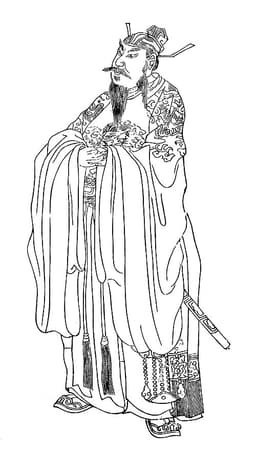
Xu Da
General · Medieval
74.9Total
Basic Information
Born
-1010
1332
Died
-970
1385
Era
Ancient
Medieval
Nationality
Israel
China
Occupation
Emperor
General
Civilization
Middle Eastern
Eastern
Score Comparison
Military (10%)
72.0
88.0
Political (20%)
72.0
68.0
Influence (20%)
88.0
82.0
Legacy (20%)
70.0
72.0
Leadership (15%)
72.0
62.0
Strategy (15%)
70.0
80.8
TOTAL
75.3
74.9
King David — Complete Timeline
1010 BC
Anointed as King of JudahPolitical Action◆ Major
After Saul's death, David was anointed king over the tribe of Judah at Hebron. This began a seven-year period of civil war with Ish-bosheth, Saul's son, who ruled the northern tribes, leading to the eventual unification of Israel.
KingshipCivil WarJudah
Impact: national
1003 BC
Capture of JerusalemWar
David led his army to capture the Jebusite fortress of Jerusalem, making it the capital of the united kingdom. He brought the Ark of the Covenant there, establishing the city as both the political and religious center of Israel.
JerusalemCapitalArk of the Covenant
Impact: nationalconstructive
1000 BC
Defeat of the PhilistinesWar◆ Major
David fought several campaigns that decisively defeated the Philistines, including the Battle of Baal-perazim. He captured Gath and other Philistine strongholds, ending their dominance over Israel and securing the kingdom's borders.
PhilistinesMilitary CampaignIsrael
Impact: regional
990 BC
Affair with BathshebaPolitical Action◆ Major
David committed adultery with Bathsheba and arranged the death of her husband Uriah the Hittite in battle. The prophet Nathan confronted David, leading to his repentance but also to divine punishment, including the death of their first child.
ScandalBathshebaNathan
Impact: nationaldestructive
978 BC
Revolt of AbsalomWar◆ Major
David's son Absalom led a rebellion that forced David to flee Jerusalem. David's forces under Joab defeated Absalom's army in the Forest of Ephraim, and Absalom was killed. David returned to Jerusalem but the kingdom was weakened.
RebellionCivil WarAbsalom
Impact: nationaltragic
Xu Da — Complete Timeline
1368 AD
Capture of Dadu (Beijing)War
Xu Da led the Ming army in the capture of Dadu, the Yuan capital. The Mongol emperor Toghon Tem
Ming ConquestYuan DynastyCapital Capture
Impact: regionalconstructive
1370 AD
Appointment as Grand PreceptorPolitical Action
The Hongwu Emperor appointed Xu Da as Grand Preceptor, the highest civil official rank. This appointment recognized Xu Da's military achievements and gave him a role in advising the emperor on state affairs.
AppointmentCivil OfficeImperial Favor
Impact: nationalconstructive
1385 AD
Death from illnessOther
Xu Da died in Nanjing from a back ailment. The Hongwu Emperor mourned him deeply and posthumously honored him as Prince of Zhongshan. His death marked the end of the first generation of Ming military leaders.
DeathMing DynastyMilitary Leader
Impact: nationaltragic
Expert Analysis
Origins
King David rose from humble beginnings as a shepherd boy in Bethlehem, anointed by the prophet Samuel while still young. His early fame came from the legendary defeat of the Philistine giant Goliath, which catapulted him into the court of King Saul. David's charisma and military prowess earned him a loyal following, but also Saul's jealous wrath, forcing him into exile as an outlaw leader. Xu Da, by contrast, was born into a poor peasant family in Fengyang during the late Yuan dynasty. He joined the Red Turban Rebellion led by Zhu Yuanzhang, the future Hongwu Emperor, and quickly distinguished himself through discipline and tactical brilliance. While David's path was shaped by divine favor and personal destiny, Xu Da's was forged in the crucible of popular revolt against Mongol rule.
Rise to Power
David's ascent was marked by a long and bloody struggle. After Saul's death, he was anointed king of Judah in Hebron, but it took seven years of civil war against Saul's son Ish-bosheth to unite all Israel under his rule. His capture of Jerusalem from the Jebusites—a seemingly impregnable fortress—was a masterstroke that established his capital and symbolized his authority. Xu Da's rise was more straightforward: he became Zhu Yuanzhang's right-hand general, leading campaigns that crushed rival rebel factions and gradually conquered the Mongol-held territories. His decisive victory at the Battle of Lake Buir in 1388, where he annihilated the Northern Yuan army, cemented his reputation as the empire's foremost commander. Both men reached the pinnacle of power through a combination of military genius and political acumen, but David's path was more tumultuous and personal.
Leadership & Governance
David's leadership blended warrior-king charisma with deep religious devotion. He centralized the monarchy, established Jerusalem as both political and spiritual center, and brought the Ark of the Covenant to the city, uniting the tribes under a common faith. His administrative reforms included a standing army and a council of officials. However, his governance was marred by personal failings, notably the affair with Bathsheba and the murder of her husband Uriah, which led to family strife and prophetic condemnation. Xu Da was a model of loyalty and discipline. He never sought personal power, remaining a steadfast servant to the Hongwu Emperor. He implemented strict military discipline, ensured his troops did not loot or harm civilians, and contributed to the restoration of agriculture and infrastructure after decades of war. While David's reign was a mix of triumph and moral crisis, Xu Da's was characterized by unwavering integrity and effectiveness.
Triumph & Tragedy
David's greatest triumph was the conquest of Jerusalem and the establishment of a unified Israelite kingdom that dominated the region. He defeated the Philistines, Moabites, Ammonites, and Edomites, securing borders and creating a prosperous state. Yet his personal life was a tragedy of his own making: the Bathsheba affair brought divine punishment, leading to the death of their infant son, the rape of his daughter Tamar by his son Amnon, and the rebellion of his beloved son Absalom, which forced David to flee Jerusalem. The revolt ended with Absalom's death, leaving David heartbroken. Xu Da's triumphs were purely military: the capture of Dadu (Beijing) in 1368 ended Mongol rule in China, and his campaigns cleared the remaining Mongol forces from the northern frontiers. His tragedy was more subdued: he died of a back ulcer (possibly cancer) at age 53, reportedly after being warned by the emperor to avoid certain foods, leading to rumors of poisoning. Unlike David's dramatic family saga, Xu Da's end was quiet but premature.
Character & Destiny
David was a complex figure: a poet and musician who composed many Psalms, yet a ruthless warrior and cunning politician. He was capable of deep repentance (as after the Bathsheba affair) but also of cold calculation (arranging Uriah's death). His destiny was shaped by his covenant with God, which promised an eternal dynasty—a legacy that Christians and Jews see as culminating in the Messiah. Xu Da was simpler: utterly loyal, humble despite his achievements, and focused on duty. He refused titles and lands beyond what was necessary, and his destiny was to be the architect of the Ming dynasty's military foundation. His character was one of selfless service, in stark contrast to David's more turbulent personality.
Legacy
David's legacy is immense: he is the archetypal king in Jewish tradition, the ancestor of Jesus in Christian theology, and a symbol of Jerusalem's eternal significance. His Psalms remain central to Judeo-Christian worship. Xu Da's legacy is more localized but profound: he is revered as a national hero in China, a symbol of loyalty and military brilliance. His descendants became part of the Ming nobility, and his deeds are celebrated in folk tales and opera. Both men shaped their nations' identities, but David's impact on world religion gives him a broader reach.
Conclusion
David edges out Xu Da due to his higher overall score (72.7 vs 72.3) and his transformative impact on religious history. While Xu Da was a more consistent and morally upright leader, David's combination of military conquest, political unification, and spiritual significance—despite his flaws—makes him the more influential figure. David's narrative of triumph, sin, repentance, and enduring legacy resonates across millennia, whereas Xu Da's story, while admirable, remains within the confines of Chinese dynastic history. **Winner: King David**
| Category | King David | Xu Da |
|----------|------------|-------|
| Military | 72 | 88 |
| Political | 72 | 68 |
| Influence | 88 | 82 |
| Leadership | 70 | 72 |
| Discipline | 72 | 62 |
| Strategy | 70 | 81 |
| Legacy | 75 | 75 |
Rankings
🥇
King DavidLeader
Mil: 72.0Pol: 72.0Inf: 88.0
75.3
🥈
Xu Da
Mil: 88.0Pol: 68.0Inf: 82.0
74.9
+0.4 behind
How This Comparison Works
Algorithm
Each figure is scored on 6 dimensions (0—100 scale) based on structured historical data: Military (10%), Political (20%), Influence (20%), Legacy (20%), Leadership (15%), Strategy (15%). The weighted total produces the final ranking.
Data Sources
Scores are computed from structured sub-indicators in the database. Scale factors adjust for era (Ancient ×0.85, Modern ×1.0) and civilization size (Eastern ×1.05, Other ×0.80) to account for differences in population and military scale.
Maximum 3 Figures
Comparisons are limited to 2—3 figures to ensure readability and statistical meaningfulness.
Error Margins
±5 points per dimension — Sub-scores are derived from historical records with inherent uncertainty. Two figures within 5 points on a dimension should be considered roughly equivalent in that area.
Total Score Accuracy
±3 points overall — The weighted combination of 6 dimensions produces a total score with approximately ±3 points of uncertainty. Differences of less than 3 points are not statistically significant— the figures are effectively tied.
Known Limitations
- Historical records are incomplete and uneven across civilizations
- Figures from oral-tradition societies may be underrepresented
- Occupation labels can misclassify multi-role figures
- Scores measure capability and impact, not moral character
- Quantitative scoring is a comparison tool, not absolute truth
Capability Radar
Military (10%) — Battles & Warfare
Battles
75
95
Win Rate
85
95
Expansion
80
95
Political (20%) — Governance & Reform
Reform
80
50
Diplomacy
75
65
Economy
70
55
Influence (20%) — Cultural & Global Reach
Cultural
95
70
Global
90
80
Legacy (20%) — Historical Impact
Historical
95
85
Longevity
95
75
Leadership (15%) — Power & Stability
Tenure
85
60
Stability
65
70
Strategy (15%) — Tactics & Innovation
Strategy
85
92
Tactics
80
90
Reform
70
70
Similar Comparisons
Comments & Discussion
No comments yet. Be the first to share your thoughts!