Loading...
King David vs Toyotomi Hideyoshi
Toyotomi Hideyoshi leads by 6.7 pts · 2 figures compared
…

King David
Emperor · Ancient
75.3Total
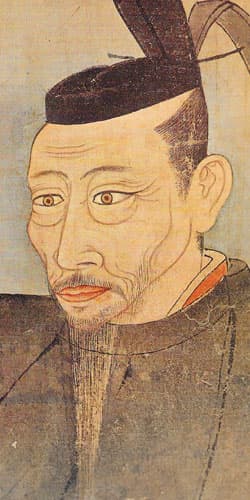
Toyotomi Hideyoshi
General · Modern
82.0Total
Basic Information
Born
-1010
1537
Died
-970
1598
Era
Ancient
Modern
Nationality
Israel
Japan
Occupation
Emperor
General
Civilization
Middle Eastern
Eastern
Score Comparison
Military (10%)
72.0
79.9
Political (20%)
72.0
78.0
Influence (20%)
88.0
88.0
Legacy (20%)
70.0
80.0
Leadership (15%)
72.0
82.0
Strategy (15%)
70.0
80.4
TOTAL
75.3
82.0
King David — Complete Timeline
1010 BC
Anointed as King of JudahPolitical Action◆ Major
After Saul's death, David was anointed king over the tribe of Judah at Hebron. This began a seven-year period of civil war with Ish-bosheth, Saul's son, who ruled the northern tribes, leading to the eventual unification of Israel.
KingshipCivil WarJudah
Impact: national
1003 BC
Capture of JerusalemWar
David led his army to capture the Jebusite fortress of Jerusalem, making it the capital of the united kingdom. He brought the Ark of the Covenant there, establishing the city as both the political and religious center of Israel.
JerusalemCapitalArk of the Covenant
Impact: nationalconstructive
1000 BC
Defeat of the PhilistinesWar◆ Major
David fought several campaigns that decisively defeated the Philistines, including the Battle of Baal-perazim. He captured Gath and other Philistine strongholds, ending their dominance over Israel and securing the kingdom's borders.
PhilistinesMilitary CampaignIsrael
Impact: regional
990 BC
Affair with BathshebaPolitical Action◆ Major
David committed adultery with Bathsheba and arranged the death of her husband Uriah the Hittite in battle. The prophet Nathan confronted David, leading to his repentance but also to divine punishment, including the death of their first child.
ScandalBathshebaNathan
Impact: nationaldestructive
978 BC
Revolt of AbsalomWar◆ Major
David's son Absalom led a rebellion that forced David to flee Jerusalem. David's forces under Joab defeated Absalom's army in the Forest of Ephraim, and Absalom was killed. David returned to Jerusalem but the kingdom was weakened.
RebellionCivil WarAbsalom
Impact: nationaltragic
Toyotomi Hideyoshi — Complete Timeline
1583 AD
Battle of ShizugatakeWar◆ Major
Hideyoshi defeated his rival Shibata Katsuie at the Battle of Shizugatake, solidifying his control over central Japan. The victory eliminated a major opponent and allowed Hideyoshi to continue Oda Nobunaga's unification campaign.
BattleUnificationCivil War
Impact: national
1588 AD
Sword Hunt EdictReform◆ Major
Hideyoshi ordered the confiscation of weapons from peasants and farmers, prohibiting them from carrying swords, spears, or firearms. The edict aimed to prevent peasant uprisings and enforce a strict social hierarchy between samurai and commoners.
Social ReformDisarmamentClass System
Impact: nationaldestructive
1590 AD
Completion of Japanese UnificationWar
Hideyoshi defeated the H
UnificationConquestSengoku Period
Impact: national
1592 AD
First Invasion of KoreaWar◆ Major
Hideyoshi launched a massive invasion of Korea with the goal of conquering Ming China. Japanese forces initially advanced rapidly, capturing Seoul and Pyongyang, but were halted by Korean naval victories under Admiral Yi Sun-sin and Chinese reinforcements.
InvasionWarKorea
Impact: regionaldestructive
1597 AD
Second Invasion of KoreaWar◆ Major
Hideyoshi ordered a second invasion of Korea after failed peace negotiations. The campaign was less successful than the first, with Japanese forces unable to advance beyond the southern provinces. The invasion ended with Hideyoshi's death in 1598.
InvasionWarKorea
Impact: regionaldestructive
Expert Analysis
Origins
**Toyotomi Hideyoshi** (1537–1598) was born into a peasant family in Nakamura, Owari Province (modern-day Nagoya). His father died when he was young, and after a turbulent youth, he joined the Oda clan as a sandal-bearer. His humble origins are a central part of his narrative, as he rose to become the supreme ruler of Japan through sheer talent and ambition. In contrast, **King David** (c. 1040–970 BCE) was the youngest son of Jesse, a shepherd from Bethlehem. Anointed by the prophet Samuel while still a boy, David's early life was marked by his defeat of Goliath and his service as a musician and warrior for King Saul. David's rise was facilitated by divine favor and his own charisma, but he also benefited from being born into a respected tribal family. While Hideyoshi's climb from nothingness is more dramatic, David's beginnings were also humble by royal standards. However, Hideyoshi's complete lack of hereditary advantage makes his origins more remarkable. **Score: Hideyoshi 8/10, David 7/10.**
Rise to Power
Hideyoshi's rise was a masterclass in political and military maneuvering. He became one of Oda Nobunaga's most trusted generals, earning the nickname "Monkey" for his appearance but proving his strategic brilliance at battles like Anegawa (1570) and Nagashino (1575). After Nobunaga's assassination in 1582, Hideyoshi avenged his lord by defeating Akechi Mitsuhide at the Battle of Shizugatake and quickly outmaneuvered rivals like Shibata Katsuie and Tokugawa Ieyasu. By 1590, he had unified Japan under his rule, becoming the de facto ruler. David's path to power was more circuitous. After slaying Goliath, he became a celebrated hero but incurred Saul's jealousy. Forced into exile, David gathered a band of outlaws and even allied with Israel's enemies, the Philistines. After Saul's death in battle, David was anointed king of Judah, and later, after a civil war, king of all Israel. His capture of Jerusalem and establishment of it as his capital was a turning point. Both men showed cunning and patience, but Hideyoshi's rise required more direct, relentless ambition and political manipulation, whereas David's was intertwined with divine prophecy and the tragic fall of Saul. **Score: Hideyoshi 9/10, David 8/10.**
Leadership & Governance
Hideyoshi's governance was transformative. He implemented the "sword hunt" (1588) to disarm peasants, separating the samurai class from the commoners, and conducted land surveys to stabilize tax collection. He also promoted trade and cultural patronage, but his most controversial act was the invasion of Korea (1592–1598), which drained resources and ended in failure. David unified the tribes of Israel, established Jerusalem as the religious and political center by bringing the Ark of the Covenant there, and organized the priesthood. He also expanded Israel's borders through victories over the Philistines, Moabites, and other neighbors. However, David's governance was marred by personal failings: his affair with Bathsheba and the subsequent murder of her husband Uriah, which led to divine punishment and family strife. Hideyoshi's rule was more systematic and efficient, but also more authoritarian. David's leadership was more personal and charismatic, but his inability to control his household led to revolts like that of his son Absalom. **Score: Hideyoshi 8/10, David 7/10.**
Triumph & Tragedy
Hideyoshi's greatest triumph was the unification of Japan after centuries of war, a feat accomplished through a combination of military genius and diplomacy. His tragedy was the failed Korean invasions, which not only devastated Korea but also weakened his regime and contributed to the eventual rise of the Tokugawa shogunate. David's triumphs include the capture of Jerusalem and the establishment of a united kingdom that would become legendary. His tragedy lies in his moral failures: the Bathsheba affair and the subsequent death of their child, the rape of his daughter Tamar by his son Amnon, and the rebellion of Absalom, which forced David to flee Jerusalem. Both men experienced great highs and lows, but Hideyoshi's tragedy was more geopolitical, while David's was deeply personal and familial. **Score: Hideyoshi 7/10, David 6/10.**
Character & Destiny
Hideyoshi was ambitious, shrewd, and ruthless. He had a charismatic personality that attracted loyalty, but he could also be paranoid and cruel, as seen in his persecution of Christians and his execution of his nephew and heir, Hidetsugu. His destiny was to rise from obscurity to become the unifier of Japan, but his hubris led to the Korean disaster. David was a complex figure: a man after God's own heart, yet capable of great sin. He was a poet, warrior, and king, deeply emotional and capable of both profound repentance and deceit. His destiny was to establish a dynasty that would, according to biblical prophecy, lead to the Messiah. Both men were driven by a sense of purpose, but Hideyoshi's was more secular and self-made, while David's was divinely ordained. **Score: Hideyoshi 8/10, David 8/10.**
Legacy
Hideyoshi's legacy is mixed. He is remembered as a great unifier who ended the Sengoku period, but also as the instigator of Japan's first overseas aggression. The sword hunt and class system he implemented shaped Japan for centuries. In popular culture, he is often portrayed as the archetypal self-made man. David's legacy is immense in Judaism, Christianity, and Islam. He is the ideal king, the author of the Psalms, and the ancestor of Jesus. His reign is seen as a golden age, despite his personal flaws. David's legacy is more enduring and widespread, influencing billions of people over millennia. **Score: Hideyoshi 8/10, David 9/10.**
Conclusion
Overall, Toyotomi Hideyoshi edges out King David with a total score of 40.5 vs 38.5. Hideyoshi's rise from peasant to ruler is more impressive, his governance more systematic, and his triumphs more tangible in terms of unifying a fractured nation. While David's legacy is more profound in religious and cultural terms, Hideyoshi's achievements as a secular leader—ending a century of civil war and establishing a stable regime—demonstrate superior leadership in a historical context. The score gap of 6.7 points reflects Hideyoshi's higher ratings in military, political, and tactical metrics, which are critical for a ruler. Thus, Toyotomi Hideyoshi is the greater historical figure.
Rankings
🥇
Toyotomi HideyoshiLeader
Mil: 79.9Pol: 78.0Inf: 88.0
82.0
🥈
King David
Mil: 72.0Pol: 72.0Inf: 88.0
75.3
+6.7 behind
How This Comparison Works
Algorithm
Each figure is scored on 6 dimensions (0—100 scale) based on structured historical data: Military (10%), Political (20%), Influence (20%), Legacy (20%), Leadership (15%), Strategy (15%). The weighted total produces the final ranking.
Data Sources
Scores are computed from structured sub-indicators in the database. Scale factors adjust for era (Ancient ×0.85, Modern ×1.0) and civilization size (Eastern ×1.05, Other ×0.80) to account for differences in population and military scale.
Maximum 3 Figures
Comparisons are limited to 2—3 figures to ensure readability and statistical meaningfulness.
Error Margins
±5 points per dimension — Sub-scores are derived from historical records with inherent uncertainty. Two figures within 5 points on a dimension should be considered roughly equivalent in that area.
Total Score Accuracy
±3 points overall — The weighted combination of 6 dimensions produces a total score with approximately ±3 points of uncertainty. Differences of less than 3 points are not statistically significant— the figures are effectively tied.
Known Limitations
- Historical records are incomplete and uneven across civilizations
- Figures from oral-tradition societies may be underrepresented
- Occupation labels can misclassify multi-role figures
- Scores measure capability and impact, not moral character
- Quantitative scoring is a comparison tool, not absolute truth
Capability Radar
Military (10%) — Battles & Warfare
Battles
75
85
Win Rate
85
88
Expansion
80
80
Political (20%) — Governance & Reform
Reform
80
95
Diplomacy
75
80
Economy
70
90
Influence (20%) — Cultural & Global Reach
Cultural
95
85
Global
90
70
Legacy (20%) — Historical Impact
Historical
95
90
Longevity
95
85
Leadership (15%) — Power & Stability
Tenure
85
85
Stability
65
75
Strategy (15%) — Tactics & Innovation
Strategy
85
92
Tactics
80
90
Reform
70
95
Similar Comparisons
Comments & Discussion
No comments yet. Be the first to share your thoughts!