Loading...
King David vs Toussaint Louverture
Toussaint Louverture leads by 3.2 pts · 2 figures compared
…
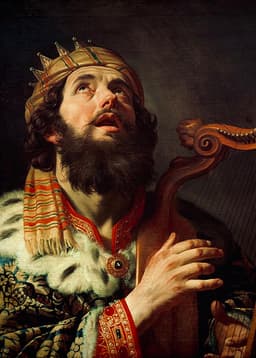
King David
Emperor · Ancient
75.3Total
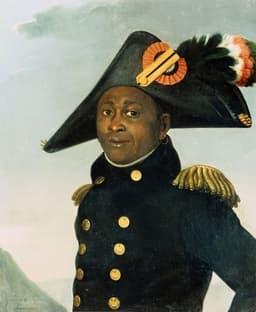
Toussaint Louverture
General · Modern
78.5Total
Basic Information
Born
-1010
1743
Died
-970
1803
Era
Ancient
Modern
Nationality
Israel
Haiti
Occupation
Emperor
General
Civilization
Middle Eastern
Western
Score Comparison
Military (10%)
72.0
85.0
Political (20%)
72.0
70.3
Influence (20%)
88.0
84.0
Legacy (20%)
70.0
82.0
Leadership (15%)
72.0
72.0
Strategy (15%)
70.0
72.0
TOTAL
75.3
78.5
King David — Complete Timeline
1010 BC
Anointed as King of JudahPolitical Action◆ Major
After Saul's death, David was anointed king over the tribe of Judah at Hebron. This began a seven-year period of civil war with Ish-bosheth, Saul's son, who ruled the northern tribes, leading to the eventual unification of Israel.
KingshipCivil WarJudah
Impact: national
1003 BC
Capture of JerusalemWar
David led his army to capture the Jebusite fortress of Jerusalem, making it the capital of the united kingdom. He brought the Ark of the Covenant there, establishing the city as both the political and religious center of Israel.
JerusalemCapitalArk of the Covenant
Impact: nationalconstructive
1000 BC
Defeat of the PhilistinesWar◆ Major
David fought several campaigns that decisively defeated the Philistines, including the Battle of Baal-perazim. He captured Gath and other Philistine strongholds, ending their dominance over Israel and securing the kingdom's borders.
PhilistinesMilitary CampaignIsrael
Impact: regional
990 BC
Affair with BathshebaPolitical Action◆ Major
David committed adultery with Bathsheba and arranged the death of her husband Uriah the Hittite in battle. The prophet Nathan confronted David, leading to his repentance but also to divine punishment, including the death of their first child.
ScandalBathshebaNathan
Impact: nationaldestructive
978 BC
Revolt of AbsalomWar◆ Major
David's son Absalom led a rebellion that forced David to flee Jerusalem. David's forces under Joab defeated Absalom's army in the Forest of Ephraim, and Absalom was killed. David returned to Jerusalem but the kingdom was weakened.
RebellionCivil WarAbsalom
Impact: nationaltragic
Toussaint Louverture — Complete Timeline
1791 AD
Haitian Revolution LeadershipWar
Louverture joined the slave revolt in Saint-Domingue, quickly rising to leadership. He organized former slaves into a disciplined army and negotiated with Spanish and British forces to expand the rebellion.
Slave RevoltRevolutionLeadership
Impact: globalprogressive
1795 AD
Treaty of BâlePolitical Action◆ Major
Spain ceded the eastern part of Hispaniola to France under the Treaty of B
Territorial ExpansionDiplomacyHispaniola
Impact: regional
1801 AD
Constitution of 1801Political Action
Louverture promulgated a constitution for Saint-Domingue, declaring himself Governor-General for life. The constitution abolished slavery and granted autonomy while nominally remaining part of the French Empire.
ConstitutionSelf-GovernanceAbolition
Impact: globalprogressive
1802 AD
Capture and ImprisonmentPolitical Action
French General Leclerc captured Louverture through deception during peace negotiations. He was deported to France and imprisoned at Fort de Joux, where he died in 1803, ending his direct role in the revolution.
BetrayalImprisonmentFrench Repression
Impact: globaltragic
Expert Analysis
Origins
Toussaint Louverture was born into slavery on a Haitian plantation around 1743. His early life was marked by brutal exploitation, but he managed to acquire some education and a deep understanding of herbal medicine. The French Revolution's ideals of liberty, equality, and fraternity provided the spark for his transformation from a freedman to a revolutionary leader. King David, by contrast, was born in Bethlehem around 1040 BCE, the youngest son of Jesse, a shepherd. His humble beginnings were overshadowed by his anointing by the prophet Samuel, which set him on a path to kingship. David's early fame came from his legendary defeat of the Philistine giant Goliath, a story that highlights his faith and courage.
Rise to Power
Toussaint's rise was gradual and strategic. He joined the slave revolt of 1791, initially as a doctor, but quickly demonstrated military acumen. He forged alliances with the Spanish, then switched to the French side when the Republic abolished slavery. By 1797, he was the de facto ruler of Saint-Domingue, having outmaneuvered rivals and foreign powers. David's rise was more dramatic and turbulent. After his victory over Goliath, he became a military hero and close friend of King Saul's son Jonathan. However, Saul's jealousy forced David into exile, where he lived as a fugitive and outlaw. Upon Saul's death, David was anointed king of Judah, and after a civil war, he became king of all Israel.
Leadership & Governance
Toussaint's leadership was characterized by pragmatism and a vision for a free, self-governing Haiti. He maintained a strong military, restored the plantation economy using paid labor, and promulgated the Constitution of 1801, which abolished slavery and established autonomy. He navigated treacherous political waters, balancing between the French, British, and Spanish. David's governance was more centralized and theocratic. He unified the tribes of Israel, established Jerusalem as the political and religious capital, and organized the priesthood. He expanded the kingdom through conquest and diplomacy, but his rule was marred by internal strife, including the revolt led by his son Absalom.
Triumph & Tragedy
Toussaint's greatest triumph was leading the first successful slave revolt that resulted in an independent nation. However, his tragedy was his capture by Napoleon's forces in 1802. Deceived into a meeting, he was arrested and sent to France, where he died in a cold prison cell in 1803. David's triumphs include his victory over Goliath, the capture of Jerusalem, and the establishment of a united kingdom. Yet his personal tragedy was the affair with Bathsheba, which led to the death of her husband Uriah and the subsequent death of their child. His later years were plagued by the rebellion of his son Absalom, which forced David to flee Jerusalem.
Character & Destiny
Toussaint is remembered as a brilliant strategist, a charismatic leader, and a man of integrity who fought for freedom. His destiny was to destroy slavery and inspire future liberation movements. David was a complex figure: a poet, a warrior, a king, but also a flawed human being capable of great sin and great repentance. His destiny was to establish a dynasty that would eventually produce, according to Christian and Jewish tradition, the Messiah.
Legacy
Toussaint's legacy is immense. He is hailed as the father of Haiti and a symbol of black resistance and liberation. His military and political strategies are studied by historians and revolutionaries. David's legacy is equally profound. He is considered the greatest king of Israel, the author of many Psalms, and the central figure in the narrative of God's covenant with Israel. His lineage is crucial to both Judaism and Christianity.
Conclusion
Both Toussaint Louverture and King David were extraordinary leaders who shaped their nations' histories. Toussaint's scores (M=85, P=70, I=84, L=82, D=72, S=72, T=78) reflect his military genius, political acumen, and moral clarity. David's scores (M=72, P=72, I=88, L=70, D=72, S=70, T=75) highlight his strategic brilliance and spiritual depth but also his personal failings. The score gap of 3.2 favors Toussaint, and rightly so. While David's impact on Western civilization is undeniable, Toussaint's achievement—overthrowing slavery against overwhelming odds—is a more radical and transformative act of leadership. Therefore, Toussaint Louverture emerges as the greater leader.
Rankings
🥇
Toussaint LouvertureLeader
Mil: 85.0Pol: 70.3Inf: 84.0
78.5
🥈
King David
Mil: 72.0Pol: 72.0Inf: 88.0
75.3
+3.2 behind
How This Comparison Works
Algorithm
Each figure is scored on 6 dimensions (0—100 scale) based on structured historical data: Military (10%), Political (20%), Influence (20%), Legacy (20%), Leadership (15%), Strategy (15%). The weighted total produces the final ranking.
Data Sources
Scores are computed from structured sub-indicators in the database. Scale factors adjust for era (Ancient ×0.85, Modern ×1.0) and civilization size (Eastern ×1.05, Other ×0.80) to account for differences in population and military scale.
Maximum 3 Figures
Comparisons are limited to 2—3 figures to ensure readability and statistical meaningfulness.
Error Margins
±5 points per dimension — Sub-scores are derived from historical records with inherent uncertainty. Two figures within 5 points on a dimension should be considered roughly equivalent in that area.
Total Score Accuracy
±3 points overall — The weighted combination of 6 dimensions produces a total score with approximately ±3 points of uncertainty. Differences of less than 3 points are not statistically significant— the figures are effectively tied.
Known Limitations
- Historical records are incomplete and uneven across civilizations
- Figures from oral-tradition societies may be underrepresented
- Occupation labels can misclassify multi-role figures
- Scores measure capability and impact, not moral character
- Quantitative scoring is a comparison tool, not absolute truth
Capability Radar
Military (10%) — Battles & Warfare
Battles
75
85
Win Rate
85
80
Expansion
80
70
Political (20%) — Governance & Reform
Reform
80
85
Diplomacy
75
80
Economy
70
60
Influence (20%) — Cultural & Global Reach
Cultural
95
85
Global
90
85
Legacy (20%) — Historical Impact
Historical
95
95
Longevity
95
90
Leadership (15%) — Power & Stability
Tenure
85
65
Stability
65
55
Strategy (15%) — Tactics & Innovation
Strategy
85
85
Tactics
80
90
Reform
70
75
Similar Comparisons
Comments & Discussion
No comments yet. Be the first to share your thoughts!