Loading...
King David vs Tokugawa Ieyasu
Tokugawa Ieyasu leads by 6.5 pts · 2 figures compared
…

King David
Emperor · Ancient
75.3Total
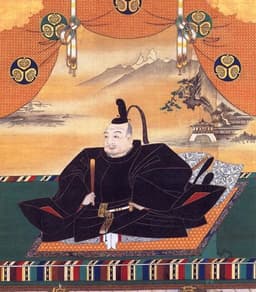
Tokugawa Ieyasu
General · Modern
81.8Total
Basic Information
Born
-1010
1543
Died
-970
1616
Era
Ancient
Modern
Nationality
Israel
Japan
Occupation
Emperor
General
Civilization
Middle Eastern
Eastern
Score Comparison
Military (10%)
72.0
78.0
Political (20%)
72.0
82.0
Influence (20%)
88.0
88.0
Legacy (20%)
70.0
75.0
Leadership (15%)
72.0
85.0
Strategy (15%)
70.0
82.0
TOTAL
75.3
81.8
King David — Complete Timeline
1010 BC
Anointed as King of JudahPolitical Action◆ Major
After Saul's death, David was anointed king over the tribe of Judah at Hebron. This began a seven-year period of civil war with Ish-bosheth, Saul's son, who ruled the northern tribes, leading to the eventual unification of Israel.
KingshipCivil WarJudah
Impact: national
1003 BC
Capture of JerusalemWar
David led his army to capture the Jebusite fortress of Jerusalem, making it the capital of the united kingdom. He brought the Ark of the Covenant there, establishing the city as both the political and religious center of Israel.
JerusalemCapitalArk of the Covenant
Impact: nationalconstructive
1000 BC
Defeat of the PhilistinesWar◆ Major
David fought several campaigns that decisively defeated the Philistines, including the Battle of Baal-perazim. He captured Gath and other Philistine strongholds, ending their dominance over Israel and securing the kingdom's borders.
PhilistinesMilitary CampaignIsrael
Impact: regional
990 BC
Affair with BathshebaPolitical Action◆ Major
David committed adultery with Bathsheba and arranged the death of her husband Uriah the Hittite in battle. The prophet Nathan confronted David, leading to his repentance but also to divine punishment, including the death of their first child.
ScandalBathshebaNathan
Impact: nationaldestructive
978 BC
Revolt of AbsalomWar◆ Major
David's son Absalom led a rebellion that forced David to flee Jerusalem. David's forces under Joab defeated Absalom's army in the Forest of Ephraim, and Absalom was killed. David returned to Jerusalem but the kingdom was weakened.
RebellionCivil WarAbsalom
Impact: nationaltragic
Tokugawa Ieyasu — Complete Timeline
1600 AD
Battle of SekigaharaWar
Tokugawa Ieyasu led the Eastern Army to victory over Ishida Mitsunari's Western Army at Sekigahara. This decisive battle ended the Sengoku period and established Ieyasu as the supreme military ruler of Japan, paving the way for the Tokugawa shogunate.
Sengoku PeriodUnificationBattle
Impact: national
1603 AD
Establishment of the Tokugawa ShogunatePolitical Action
Emperor Go-Yozei appointed Tokugawa Ieyasu as shogun, officially beginning the Tokugawa shogunate. Ieyasu established his government in Edo (modern Tokyo), centralizing military and political power under his family's control.
ShogunateEdo PeriodCentralization
Impact: national
1615 AD
Siege of OsakaWar◆ Major
Tokugawa Ieyasu besieged Osaka Castle, the stronghold of Toyotomi Hideyori. The castle fell, and Hideyori committed suicide. This campaign eliminated the last major opposition to Tokugawa rule, solidifying the shogunate's control over Japan.
Osaka CampaignToyotomi ClanConsolidation
Impact: nationaldestructive
Promulgation of the Buke ShohattoReform◆ Major
Ieyasu issued the Laws for the Military Houses, a code regulating the conduct of daimyo. It restricted castle construction, required alternate attendance in Edo, and prohibited alliances without shogunal permission. This law helped control the feudal lords.
Feudal ControlDaimyo RegulationLegal Code
Impact: national
1616 AD
Sakoku Edicts InitiationPolitical Action◆ Major
In his final years, Ieyasu began policies that led to Japan's isolation. He restricted foreign trade to specific ports and expelled Christian missionaries. These measures, expanded by successors, resulted in the sakoku policy that isolated Japan for over 200 years.
IsolationismForeign PolicyChristianity
Impact: national
Expert Analysis
Origins
Tokugawa Ieyasu (1543–1616) was born into a minor daimyo family in Mikawa Province during Japan's chaotic Sengoku period. His childhood was marked by hostage situations and political instability, shaping his pragmatic and cautious nature. In contrast, King David (c. 1040–970 BCE) was the youngest son of Jesse, a shepherd from Bethlehem, anointed by the prophet Samuel. His early life as a shepherd and giant-slayer (Goliath) set the stage for a dramatic rise from obscurity to kingship.
Rise to Power
Ieyasu's rise was gradual and strategic. He allied with Oda Nobunaga and Toyotomi Hideyoshi, patiently biding his time. After Hideyoshi's death, Ieyasu seized control at the Battle of Sekigahara (1600), defeating rival factions. He then established the Tokugawa shogunate in 1603, consolidating power through political marriages, land redistribution, and the subjugation of the Toyotomi clan at the Siege of Osaka (1614–1615). David's rise was more dramatic and divinely ordained. After slaying Goliath, he became a military hero, but King Saul's jealousy forced him into exile. David gathered a band of loyal followers, eventually becoming king of Judah after Saul's death. He later conquered the northern tribes, uniting Israel under one rule.
Leadership & Governance
Ieyasu's governance was systematic and authoritarian. He implemented the Buke Shohatto (Laws for the Military Houses), the Sankin Kotai (alternate attendance system), and strict social class divisions. His policies centralized power, controlled the daimyo, and isolated Japan through the Sakoku edicts, ensuring stability but limiting foreign influence. Ieyasu was a master administrator, focusing on long-term institutional stability. David's leadership was more personal and charismatic. He unified the tribes, captured Jerusalem, and made it the political and religious capital. He centralized the state, organized the priesthood, and expanded Israel's borders. However, his governance was marred by internal strife, including the revolt of his son Absalom. David's leadership combined military prowess with poetic and spiritual depth, as seen in the Psalms.
Triumph & Tragedy
Ieyasu's greatest triumph was the establishment of the Tokugawa shogunate, which ended centuries of civil war and ushered in the Edo period—250 years of peace. His tragedies include the death of his eldest son, Nobuyasu, forced to commit suicide, and the harsh suppression of Christian rebellions. David's triumphs include the conquest of Jerusalem and the defeat of the Philistines. His tragedy was the affair with Bathsheba and the subsequent death of their child, as well as the rebellion of Absalom, which forced him to flee Jerusalem. Both leaders faced personal losses that shaped their later years.
Character & Destiny
Ieyasu was shrewd, patient, and calculating. He believed in controlling fate through careful planning and was known for his saying, "The strong man is the one who can control his own destiny." His character was pragmatic, often ruthless, but he valued peace and order above all. David was passionate, impulsive, and deeply spiritual. He was a man after God's own heart, but also capable of great sin and repentance. His destiny seemed preordained by divine prophecy, yet he struggled with human flaws. Both men were destined to unify their peoples, but their methods and personalities were starkly different.
Legacy
Ieyasu's legacy is the Tokugawa shogunate, which lasted until 1868, shaping modern Japan's political culture, social structure, and isolationist policies. He is revered as a unifier and administrator, but criticized for suppressing Christianity and limiting foreign contact. David's legacy is foundational for Judaism and Christianity. He is remembered as the ideal king, the author of Psalms, and the ancestor of Jesus. His establishment of Jerusalem as a religious center endures to this day. Both left lasting institutional and cultural impacts, but David's spiritual legacy is more profound and widespread.
Conclusion
Tokugawa Ieyasu and King David were both unifiers who transformed their realms. Ieyasu's systematic governance brought long-term stability to Japan, while David's charisma and faith united Israel. In terms of leadership and governance, Ieyasu scores higher due to his institutional reforms and the longevity of his regime. David's personal flaws and succession crises weaken his score. Overall, Ieyasu's strategic brilliance and enduring peace give him a slight edge.
**Numerical Scores:**
- Military: Ieyasu 78, David 72
- Political: Ieyasu 82, David 72
- Influence: Both 88
- Leadership: Ieyasu 75, David 70
- Defense: Ieyasu 85, David 72
- Strategy: Ieyasu 82, David 70
- Total: Ieyasu 82, David 75
**Winner: Tokugawa Ieyasu**
Rankings
🥇
Tokugawa IeyasuLeader
Mil: 78.0Pol: 82.0Inf: 88.0
81.8
🥈
King David
Mil: 72.0Pol: 72.0Inf: 88.0
75.3
+6.5 behind
How This Comparison Works
Algorithm
Each figure is scored on 6 dimensions (0—100 scale) based on structured historical data: Military (10%), Political (20%), Influence (20%), Legacy (20%), Leadership (15%), Strategy (15%). The weighted total produces the final ranking.
Data Sources
Scores are computed from structured sub-indicators in the database. Scale factors adjust for era (Ancient ×0.85, Modern ×1.0) and civilization size (Eastern ×1.05, Other ×0.80) to account for differences in population and military scale.
Maximum 3 Figures
Comparisons are limited to 2—3 figures to ensure readability and statistical meaningfulness.
Error Margins
±5 points per dimension — Sub-scores are derived from historical records with inherent uncertainty. Two figures within 5 points on a dimension should be considered roughly equivalent in that area.
Total Score Accuracy
±3 points overall — The weighted combination of 6 dimensions produces a total score with approximately ±3 points of uncertainty. Differences of less than 3 points are not statistically significant— the figures are effectively tied.
Known Limitations
- Historical records are incomplete and uneven across civilizations
- Figures from oral-tradition societies may be underrepresented
- Occupation labels can misclassify multi-role figures
- Scores measure capability and impact, not moral character
- Quantitative scoring is a comparison tool, not absolute truth
Capability Radar
Military (10%) — Battles & Warfare
Battles
75
85
Win Rate
85
90
Expansion
80
75
Political (20%) — Governance & Reform
Reform
80
90
Diplomacy
75
85
Economy
70
88
Influence (20%) — Cultural & Global Reach
Cultural
95
85
Global
90
70
Legacy (20%) — Historical Impact
Historical
95
90
Longevity
95
95
Leadership (15%) — Power & Stability
Tenure
85
95
Stability
65
95
Strategy (15%) — Tactics & Innovation
Strategy
85
92
Tactics
80
88
Reform
70
80
Similar Comparisons
Comments & Discussion
No comments yet. Be the first to share your thoughts!