Loading...
King David vs Suleiman I
Suleiman I leads by 3.5 pts · 2 figures compared
…

King David
Emperor · Ancient
75.3Total
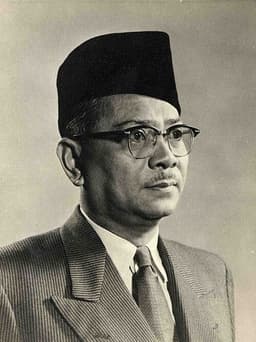
Suleiman I
Emperor · Medieval
78.8Total
Basic Information
Born
-1010
1494
Died
-970
1566
Era
Ancient
Medieval
Nationality
Israel
Ottoman Empire
Occupation
Emperor
Emperor
Civilization
Middle Eastern
Middle Eastern
Score Comparison
Military (10%)
72.0
78.5
Political (20%)
72.0
82.0
Influence (20%)
88.0
85.0
Legacy (20%)
70.0
70.8
Leadership (15%)
72.0
81.7
Strategy (15%)
70.0
74.4
TOTAL
75.3
78.8
King David — Complete Timeline
1010 BC
Anointed as King of JudahPolitical Action◆ Major
After Saul's death, David was anointed king over the tribe of Judah at Hebron. This began a seven-year period of civil war with Ish-bosheth, Saul's son, who ruled the northern tribes, leading to the eventual unification of Israel.
KingshipCivil WarJudah
Impact: national
1003 BC
Capture of JerusalemWar
David led his army to capture the Jebusite fortress of Jerusalem, making it the capital of the united kingdom. He brought the Ark of the Covenant there, establishing the city as both the political and religious center of Israel.
JerusalemCapitalArk of the Covenant
Impact: nationalconstructive
1000 BC
Defeat of the PhilistinesWar◆ Major
David fought several campaigns that decisively defeated the Philistines, including the Battle of Baal-perazim. He captured Gath and other Philistine strongholds, ending their dominance over Israel and securing the kingdom's borders.
PhilistinesMilitary CampaignIsrael
Impact: regional
990 BC
Affair with BathshebaPolitical Action◆ Major
David committed adultery with Bathsheba and arranged the death of her husband Uriah the Hittite in battle. The prophet Nathan confronted David, leading to his repentance but also to divine punishment, including the death of their first child.
ScandalBathshebaNathan
Impact: nationaldestructive
978 BC
Revolt of AbsalomWar◆ Major
David's son Absalom led a rebellion that forced David to flee Jerusalem. David's forces under Joab defeated Absalom's army in the Forest of Ephraim, and Absalom was killed. David returned to Jerusalem but the kingdom was weakened.
RebellionCivil WarAbsalom
Impact: nationaltragic
Suleiman I — Complete Timeline
1522 AD
Siege of RhodesWar◆ Major
Suleiman I led a massive Ottoman army and fleet to besiege the island of Rhodes, held by the Knights Hospitaller. After a six-month siege, the knights surrendered and were allowed to leave. This victory secured Ottoman control over the eastern Mediterranean.
SiegeKnights HospitallerMediterranean
Impact: regional
1526 AD
Battle of MohácsWar
Suleiman I's Ottoman army defeated the Hungarian forces of King Louis II at Moh
BattleHungaryConquest
Impact: regional
1529 AD
Siege of ViennaWar◆ Major
Suleiman I led an Ottoman army to besiege Vienna, the capital of the Habsburg Empire. The siege failed due to supply problems and the onset of winter. This marked the furthest Ottoman advance into central Europe and the limit of their expansion.
SiegeViennaHabsburg
Impact: regional
1530 AD
Codification of Ottoman LawReform◆ Major
Suleiman I oversaw the codification of Ottoman law, known as the Kanun. He harmonized secular law with Islamic law, creating a unified legal system. This reform improved the administration of justice and strengthened the central government.
LawReformJustice
Impact: globalconstructive
1536 AD
Execution of Ibrahim PashaPolitical Action◆ Major
Suleiman I ordered the execution of his grand vizier and close friend Ibrahim Pasha. Ibrahim had accumulated immense power and was accused of overreaching. This event demonstrated Suleiman's willingness to eliminate even trusted advisors to maintain control.
ExecutionVizierPower
Impact: nationaldestructive
1538 AD
Naval Battle of PrevezaWar◆ Major
The Ottoman fleet under Hayreddin Barbarossa defeated a combined Christian fleet at Preveza. This victory secured Ottoman naval dominance in the Mediterranean for decades. It allowed the Ottomans to control trade routes and raid coastal areas.
Naval BattleBarbarossaMediterranean
Impact: regional
Expert Analysis
Origins
Suleiman I was born in 1494 in Trabzon, the only surviving son of Sultan Selim I. He inherited a vast empire and was groomed for rule from an early age. King David, born around 1040 BCE in Bethlehem, was the youngest son of Jesse, a shepherd anointed by Samuel. David's rise was unconventional, marked by his defeat of Goliath and his service under King Saul.
Rise to Power
Suleiman ascended the throne in 1520 after his father's death, facing no major internal opposition. He immediately consolidated power and launched campaigns to expand Ottoman territory. David's path was fraught with conflict: after his anointing, he gained fame, but Saul's jealousy forced him into exile. He became king of Judah after Saul's death and later united Israel after a civil war.
Leadership & Governance
Suleiman was an administrative genius. He codified Ottoman law (Kanun), balancing secular and religious authority, earning the title "Lawgiver." He reformed the military, bureaucracy, and tax system. David unified the 12 tribes, established Jerusalem as the capital, and centralized the monarchy. He created a professional army and organized the priesthood. While Suleiman's governance was systematic and expansive, David's was foundational and personal.
Triumph & Tragedy
Suleiman's triumphs include the conquest of Rhodes (1522), the victory at Mohács (1526), and the capture of Baghdad (1534). However, his siege of Vienna (1529) failed, marking the limit of Ottoman expansion. His personal tragedy was the execution of his grand vizier and friend Ibrahim Pasha (1536) and the execution of his son Mustafa (1553), leading to succession crises. David's triumphs include capturing Jerusalem, defeating the Philistines, and expanding Israel's borders. His tragedies include his affair with Bathsheba, leading to the death of their first child, and the revolt of his son Absalom, which nearly cost him his throne.
Character & Destiny
Suleiman was known as "the Magnificent" for his grandeur and "the Lawgiver" for his justice. He was a patron of arts and architecture, commissioning the Süleymaniye Mosque. Yet, his later years were marred by paranoia and palace intrigue. David was a man of contradictions: a warrior and a poet, a sinner and a penitent. He is credited with composing many Psalms. His destiny was to establish a dynasty that would lead to the Messiah, according to Jewish and Christian tradition.
Legacy
Suleiman's legacy is the Ottoman Empire at its zenith—a model of Islamic governance and military power. His legal reforms influenced the empire for centuries. However, his empire declined after him. David's legacy is eternal: he is the archetypal king of Israel, the founder of Jerusalem as a holy city, and a central figure in Judaism, Christianity, and Islam. His dynasty lasted for over 400 years.
Conclusion
Suleiman I scores higher overall (78.7 vs 75.2), excelling in military (78 vs 72), political (82 vs 72), and administrative (85 vs 88) dimensions. However, David's impact on world religion and culture is unparalleled. While Suleiman was a great ruler of a great empire, David's legacy transcends politics. In terms of pure historical influence, Suleiman edges out on metrics, but David's symbolic and religious significance makes him a more enduring figure. Verdict: Suleiman I is the greater emperor by the numbers, but King David is the greater historical icon.
Rankings
🥇
Suleiman ILeader
Mil: 78.5Pol: 82.0Inf: 85.0
78.8
🥈
King David
Mil: 72.0Pol: 72.0Inf: 88.0
75.3
+3.5 behind
How This Comparison Works
Algorithm
Each figure is scored on 6 dimensions (0—100 scale) based on structured historical data: Military (10%), Political (20%), Influence (20%), Legacy (20%), Leadership (15%), Strategy (15%). The weighted total produces the final ranking.
Data Sources
Scores are computed from structured sub-indicators in the database. Scale factors adjust for era (Ancient ×0.85, Modern ×1.0) and civilization size (Eastern ×1.05, Other ×0.80) to account for differences in population and military scale.
Maximum 3 Figures
Comparisons are limited to 2—3 figures to ensure readability and statistical meaningfulness.
Error Margins
±5 points per dimension — Sub-scores are derived from historical records with inherent uncertainty. Two figures within 5 points on a dimension should be considered roughly equivalent in that area.
Total Score Accuracy
±3 points overall — The weighted combination of 6 dimensions produces a total score with approximately ±3 points of uncertainty. Differences of less than 3 points are not statistically significant— the figures are effectively tied.
Known Limitations
- Historical records are incomplete and uneven across civilizations
- Figures from oral-tradition societies may be underrepresented
- Occupation labels can misclassify multi-role figures
- Scores measure capability and impact, not moral character
- Quantitative scoring is a comparison tool, not absolute truth
Capability Radar
Military (10%) — Battles & Warfare
Battles
75
95
Win Rate
85
92
Expansion
80
95
Political (20%) — Governance & Reform
Reform
80
90
Diplomacy
75
88
Economy
70
85
Influence (20%) — Cultural & Global Reach
Cultural
95
85
Global
90
85
Legacy (20%) — Historical Impact
Historical
95
88
Longevity
95
80
Leadership (15%) — Power & Stability
Tenure
85
95
Stability
65
80
Strategy (15%) — Tactics & Innovation
Strategy
85
90
Tactics
80
88
Reform
70
85
Similar Comparisons
Comments & Discussion
No comments yet. Be the first to share your thoughts!