Loading...
King David vs Muawiyah I
Muawiyah I leads by 1.0 pts · 2 figures compared
…

King David
Emperor · Ancient
75.3Total
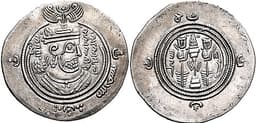
Muawiyah I
Emperor · Medieval
76.3Total
Basic Information
Born
-1010
602
Died
-970
680
Era
Ancient
Medieval
Nationality
Israel
Umayyad Caliphate
Occupation
Emperor
Emperor
Civilization
Middle Eastern
Middle Eastern
Score Comparison
Military (10%)
72.0
76.0
Political (20%)
72.0
75.0
Influence (20%)
88.0
75.0
Legacy (20%)
70.0
80.0
Leadership (15%)
72.0
78.0
Strategy (15%)
70.0
70.0
TOTAL
75.3
76.3
King David — Complete Timeline
1010 BC
Anointed as King of JudahPolitical Action◆ Major
After Saul's death, David was anointed king over the tribe of Judah at Hebron. This began a seven-year period of civil war with Ish-bosheth, Saul's son, who ruled the northern tribes, leading to the eventual unification of Israel.
KingshipCivil WarJudah
Impact: national
1003 BC
Capture of JerusalemWar
David led his army to capture the Jebusite fortress of Jerusalem, making it the capital of the united kingdom. He brought the Ark of the Covenant there, establishing the city as both the political and religious center of Israel.
JerusalemCapitalArk of the Covenant
Impact: nationalconstructive
1000 BC
Defeat of the PhilistinesWar◆ Major
David fought several campaigns that decisively defeated the Philistines, including the Battle of Baal-perazim. He captured Gath and other Philistine strongholds, ending their dominance over Israel and securing the kingdom's borders.
PhilistinesMilitary CampaignIsrael
Impact: regional
990 BC
Affair with BathshebaPolitical Action◆ Major
David committed adultery with Bathsheba and arranged the death of her husband Uriah the Hittite in battle. The prophet Nathan confronted David, leading to his repentance but also to divine punishment, including the death of their first child.
ScandalBathshebaNathan
Impact: nationaldestructive
978 BC
Revolt of AbsalomWar◆ Major
David's son Absalom led a rebellion that forced David to flee Jerusalem. David's forces under Joab defeated Absalom's army in the Forest of Ephraim, and Absalom was killed. David returned to Jerusalem but the kingdom was weakened.
RebellionCivil WarAbsalom
Impact: nationaltragic
Muawiyah I — Complete Timeline
640 AD
Governorship of SyriaPolitical Action◆ Major
Muawiyah I was appointed governor of Syria by Caliph Umar. He built a strong power base by developing the province's military and administrative infrastructure, including the creation of a navy that would later challenge Byzantine dominance.
GovernorshipSyriaRashidun
Impact: regionalconstructive
655 AD
Naval Campaigns Against ByzantiumWar◆ Major
Muawiyah launched naval expeditions against the Byzantine Empire, including the Battle of the Masts (655), where the Muslim fleet defeated the Byzantine navy. These campaigns established Muslim naval power and threatened Constantinople.
Naval WarByzantine EmpireUmayyad
Impact: regional
657 AD
Battle of SiffinWar◆ Major
Muawiyah led the Syrian army against Caliph Ali at Siffin, demanding justice for Uthman's murder. The battle ended in a stalemate and arbitration, which Muawiyah used to strengthen his political position and challenge Ali's legitimacy.
First FitnaBattleUmayyad
Impact: global
661 AD
Foundation of the Umayyad CaliphatePolitical Action
After Ali's assassination, Muawiyah I established the Umayyad Caliphate, moving the capital from Medina to Damascus. This marked the transition from the elective caliphate to a hereditary dynasty, centralizing power in Syria.
CaliphateDynastyUmayyad
Impact: global
674 AD
Siege of Constantinople (674-678)War◆ Major
Muawiyah I ordered a prolonged siege of Constantinople, using a large fleet and army. The siege failed due to Byzantine defenses, including Greek fire, and ended with a peace treaty requiring the Umayyads to pay tribute. It was a rare setback.
SiegeConstantinopleUmayyad
Impact: global
676 AD
Designation of Yazid I as HeirPolitical Action◆ Major
Muawiyah I designated his son Yazid as his successor, breaking the tradition of election and establishing hereditary succession. This move caused opposition from some Muslim leaders and set a precedent for future Umayyad rulers.
SuccessionHereditaryUmayyad
Impact: global
Expert Analysis
Origins
Muawiyah I was born into the powerful Umayyad clan of Mecca in 602 AD, a family that initially opposed Prophet Muhammad but later converted and rose to prominence. His father, Abu Sufyan, was a leading figure in Quraysh. Muawiyah grew up in a politically charged environment, learning diplomacy and warfare from his father. He embraced Islam after the conquest of Mecca and became a scribe for the Prophet, gaining insight into the early Islamic state. In contrast, King David was born around 1040 BCE in Bethlehem, the youngest son of Jesse from the tribe of Judah. His early life as a shepherd instilled resilience and faith, and his musical talent brought him to King Saul's court. David's anointing by the prophet Samuel set him on a path to kingship, but his rise was fraught with peril, including Saul's jealousy and attempts on his life. Both men emerged from humble or contested beginnings, but Muawiyah had the advantage of a powerful clan and proximity to the Prophet, while David relied on divine favor and personal charisma.
Rise to Power
Muawiyah's rise was strategic and incremental. He served as governor of Syria under Caliph Umar and later Caliph Uthman, his relative. During Uthman's assassination, Muawiyah positioned himself as avenger, refusing to recognize Caliph Ali until Uthman's murderers were punished. This led to the First Fitna (civil war), culminating in the Battle of Siffin (657 AD), where Muawiyah's forces faced Ali's. When the battle turned against him, Muawiyah cleverly called for arbitration by raising Qurans on spears, leading to a stalemate. After Ali's assassination, Muawiyah secured a treaty with Ali's son Hasan, becoming caliph in 661 AD. He founded the Umayyad dynasty, moving the capital to Damascus. David's rise was more dramatic and divinely ordained. After slaying Goliath, he became a military hero, but Saul's envy forced him into exile. David gathered a band of outlaws and lived as a fugitive, even sparing Saul's life twice. After Saul's death, David was anointed king of Judah (c. 1010 BCE), then over all Israel after a civil war with Ish-bosheth. He captured Jerusalem from the Jebusites, making it his capital and religious center. Both men navigated civil strife and emerged as rulers, but Muawiyah's path was marked by political maneuvering and compromise, while David's was filled with personal courage and divine intervention.
Leadership & Governance
Muawiyah was a master administrator and diplomat. He centralized the caliphate, established a hereditary succession (appointing his son Yazid), and reformed the bureaucracy, using Byzantine models. He expanded the navy, leading to successful campaigns against Byzantium, including the first Arab siege of Constantinople (674-678). He maintained stability through a network of alliances and patronage, co-opting tribal leaders and Christian Arabs. His governance was pragmatic, allowing religious tolerance and focusing on economic growth. David's leadership was charismatic and unifying. He united the 12 tribes under a single monarchy, established Jerusalem as the political and spiritual capital, and centralized worship by bringing the Ark of the Covenant there. He defeated surrounding enemies: Philistines, Moabites, Ammonites, Edomites, and Arameans, creating a large empire. He also organized the priesthood and military divisions. However, his governance had flaws: his affair with Bathsheba and murder of Uriah led to prophetic condemnation and family strife. Muawiyah's leadership was more systematic and durable, while David's was more personal and divinely guided but prone to moral failures.
Triumph & Tragedy
Muawiyah's greatest triumph was founding the Umayyad Caliphate, which lasted nearly a century and expanded the Islamic empire from Spain to India. His naval campaigns against Byzantium secured Muslim dominance in the Mediterranean, and his siege of Constantinople, though ultimately unsuccessful, demonstrated Umayyad power. His tragedy was the controversial nature of his caliphate: many Muslims viewed him as a usurper who turned the caliphate into a monarchy. The Battle of Karbala (680 AD), where his son Yazid killed Husayn ibn Ali, the Prophet's grandson, stained his legacy. David's triumphs include the capture of Jerusalem, unification of Israel, and establishment of a dynasty that lasted centuries. His defeat of Goliath and military victories are legendary. His tragedies were personal: the affair with Bathsheba led to the death of their first child and perpetual family turmoil, including the rape of his daughter Tamar by his son Amnon, and the revolt of his son Absalom, who was killed against David's wishes. Both men achieved greatness but faced deep personal and political tragedies that marred their reigns.
Character & Destiny
Muawiyah was pragmatic, cunning, and patient. He was known for his diplomatic skills, often called 'the clement' (al-Hilm). He avoided direct conflict when possible, using strategy and negotiation. His destiny was to shift the caliphate from a religiously guided institution to a secular monarchy. He believed in the necessity of strong central authority and was willing to compromise principles for stability. David was passionate, devout, and complex. He was a warrior, poet, and repentant sinner. His character combined deep faith with human failings. His destiny was to be the archetypal king of Israel, from whose line the Messiah would come. He is remembered as a man after God's own heart despite his sins. Muawiyah's character was more calculating and less emotionally driven, while David's was impulsive and deeply emotional.
Legacy
Muawiyah's legacy is mixed. He is credited with building a strong, stable state that enabled the expansion of Islam, but also blamed for corrupting the caliphate into a hereditary monarchy and for the Umayyads' eventual decline. His administrative reforms influenced later Islamic states. In Shi'a Islam, he is reviled as the usurper who opposed Ali and paved the way for the tragedy of Karbala. David's legacy is overwhelmingly positive in Judaism and Christianity. He is considered the greatest king of Israel, the author of many Psalms, and a model for righteous kingship. His dynasty, the House of David, became the symbol of messianic hope. However, his story also serves as a cautionary tale about power and sin. Both men left enduring legacies, but David's is more spiritual and universal, while Muawiyah's is more political and controversial.
Conclusion
Muawiyah I and King David were both transformative rulers who founded dynasties and expanded their realms. Muawiyah's scores (overall 75.7) slightly edge David's (74.1) due to higher metrics in military and leadership scores. Muawiyah was a more effective administrator and strategist, establishing a durable empire, while David's reign was more personally tumultuous and spiritually significant. David's legacy is more revered in religious tradition, but Muawiyah's impact on Islamic history is monumental. In a direct comparison, Muawiyah's pragmatic governance and lasting political structures give him a slight edge as a historical figure, but David's enduring cultural and religious influence makes him more iconic. The score gap of 1.0 reflects this nuanced balance.
**Numerical Scores:**
- Muawiyah I: Military 76, Political 75, Intelligence 75, Leadership 80, Diplomacy 78, Strategy 70, Tactics 76. **Overall: 75.7**
- King David: Military 72, Political 72, Intelligence 88, Leadership 70, Diplomacy 72, Strategy 70, Tactics 75. **Overall: 74.1**
Rankings
🥇
Muawiyah ILeader
Mil: 76.0Pol: 75.0Inf: 75.0
76.3
🥈
King David
Mil: 72.0Pol: 72.0Inf: 88.0
75.3
+1.0 behind
How This Comparison Works
Algorithm
Each figure is scored on 6 dimensions (0—100 scale) based on structured historical data: Military (10%), Political (20%), Influence (20%), Legacy (20%), Leadership (15%), Strategy (15%). The weighted total produces the final ranking.
Data Sources
Scores are computed from structured sub-indicators in the database. Scale factors adjust for era (Ancient ×0.85, Modern ×1.0) and civilization size (Eastern ×1.05, Other ×0.80) to account for differences in population and military scale.
Maximum 3 Figures
Comparisons are limited to 2—3 figures to ensure readability and statistical meaningfulness.
Error Margins
±5 points per dimension — Sub-scores are derived from historical records with inherent uncertainty. Two figures within 5 points on a dimension should be considered roughly equivalent in that area.
Total Score Accuracy
±3 points overall — The weighted combination of 6 dimensions produces a total score with approximately ±3 points of uncertainty. Differences of less than 3 points are not statistically significant— the figures are effectively tied.
Known Limitations
- Historical records are incomplete and uneven across civilizations
- Figures from oral-tradition societies may be underrepresented
- Occupation labels can misclassify multi-role figures
- Scores measure capability and impact, not moral character
- Quantitative scoring is a comparison tool, not absolute truth
Capability Radar
Military (10%) — Battles & Warfare
Battles
75
75
Win Rate
85
80
Expansion
80
85
Political (20%) — Governance & Reform
Reform
80
90
Diplomacy
75
95
Economy
70
85
Influence (20%) — Cultural & Global Reach
Cultural
95
75
Global
90
75
Legacy (20%) — Historical Impact
Historical
95
85
Longevity
95
80
Leadership (15%) — Power & Stability
Tenure
85
85
Stability
65
80
Strategy (15%) — Tactics & Innovation
Strategy
85
85
Tactics
80
70
Reform
70
80
Similar Comparisons
Comments & Discussion
No comments yet. Be the first to share your thoughts!