Loading...
This comparison has not been analyzed yet.
One-time AI generation (~1 minute). Scores and timeline are already available below.
Kijuro Shidehara vs Winnie Madikizela-Mandela
Kijuro Shidehara leads by 4.8 pts · 2 figures compared
…

Kijuro Shidehara
Politician · Modern
55.1Total
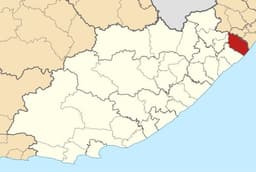
Winnie Madikizela-Mandela
Politician · Modern
50.3Total
Basic Information
Born
1872
1936
Died
1951
—
Era
Modern
Modern
Nationality
Japan
South Africa
Occupation
Politician
Politician
Civilization
Eastern
Other
Score Comparison
Military (10%)
18.4
36.5
Political (20%)
70.3
42.3
Influence (20%)
61.0
58.3
Legacy (20%)
52.0
50.0
Leadership (15%)
78.0
58.8
Strategy (15%)
28.1
43.9
TOTAL
55.1
50.3
Kijuro Shidehara — Complete Timeline
1945 AD
Served as Prime Minister of JapanPolitical Action◆ Major
Shidehara served as Prime Minister of Japan from October 1945 to May 1946, during the early Allied occupation. His government focused on demilitarization, political reform, and drafting a new constitution.
OccupationPrime MinisterReform
Impact: national
1946 AD
Authored Article 9 of the Japanese ConstitutionPolitical Action
As Prime Minister, Shidehara, in consultation with General Douglas MacArthur, proposed the inclusion of Article 9 in the new Japanese Constitution. This article renounces war and prohibits Japan from maintaining military forces for warfare.
ConstitutionPacifismPost-War Japan
Impact: globalconstructive
Winnie Madikizela-Mandela — Complete Timeline
1958 AD
Married Nelson MandelaPolitical Action◆ Major
Winnie Madikizela married Nelson Mandela, becoming his second wife. She became a prominent anti-apartheid activist in her own right, leading campaigns while Mandela was imprisoned.
MarriageAnti-ApartheidActivism
Impact: nationalconstructive
1969 AD
Banned and Detained by Apartheid RegimePolitical Action◆ Major
Winnie was subjected to banning orders and spent 18 months in solitary confinement at Pretoria Central Prison. Her treatment became a symbol of apartheid's brutality and galvanized international support for the anti-apartheid cause.
DetentionRepressionSymbol
Impact: nationaltragic
1988 AD
Mandela United Football Club ControversyPolitical Action◆ Major
Winnie's bodyguards, the Mandela United Football Club, were implicated in the kidnapping and murder of young activist Stompie Seipei. The scandal tarnished her reputation and led to her conviction for kidnapping, though the murder charge was dropped.
ScandalViolenceControversy
Impact: nationaldestructive
1996 AD
Divorced Nelson MandelaPolitical Action◆ Major
Winnie and Nelson Mandela divorced after a highly publicized separation. The divorce marked the end of their political partnership and reflected the personal toll of the struggle.
DivorcePersonalMandela
Impact: nationaltragic
This comparison has not been analyzed yet.
One-time AI generation (~1 minute). Scores and timeline are already available below.
Rankings
🥇
Kijuro ShideharaLeader
Mil: 18.4Pol: 70.3Inf: 61.0
55.1
🥈
Winnie Madikizela-Mandela
Mil: 36.5Pol: 42.3Inf: 58.3
50.3
+4.8 behind
How This Comparison Works
Algorithm
Each figure is scored on 6 dimensions (0—100 scale) based on structured historical data: Military (10%), Political (20%), Influence (20%), Legacy (20%), Leadership (15%), Strategy (15%). The weighted total produces the final ranking.
Data Sources
Scores are computed from structured sub-indicators in the database. Scale factors adjust for era (Ancient ×0.85, Modern ×1.0) and civilization size (Eastern ×1.05, Other ×0.80) to account for differences in population and military scale.
Maximum 3 Figures
Comparisons are limited to 2—3 figures to ensure readability and statistical meaningfulness.
Error Margins
±5 points per dimension — Sub-scores are derived from historical records with inherent uncertainty. Two figures within 5 points on a dimension should be considered roughly equivalent in that area.
Total Score Accuracy
±3 points overall — The weighted combination of 6 dimensions produces a total score with approximately ±3 points of uncertainty. Differences of less than 3 points are not statistically significant— the figures are effectively tied.
Known Limitations
- Historical records are incomplete and uneven across civilizations
- Figures from oral-tradition societies may be underrepresented
- Occupation labels can misclassify multi-role figures
- Scores measure capability and impact, not moral character
- Quantitative scoring is a comparison tool, not absolute truth
Capability Radar
Military (10%) — Battles & Warfare
Battles
13
20
Win Rate
16
22
Expansion
18
30
Political (20%) — Governance & Reform
Reform
75
55
Diplomacy
80
35
Economy
55
10
Influence (20%) — Cultural & Global Reach
Cultural
40
60
Global
55
60
Legacy (20%) — Historical Impact
Historical
70
55
Longevity
60
45
Leadership (15%) — Power & Stability
Tenure
60
40
Stability
65
15
Strategy (15%) — Tactics & Innovation
Strategy
25
30
Tactics
26
33
Reform
28
37
Similar Comparisons
Comments & Discussion
No comments yet. Be the first to share your thoughts!