Loading...
Khosrow II vs Vologases I of Parthia
Khosrow II leads by 8.2 pts · 2 figures compared
…

Khosrow II
Emperor · Ancient
63.5Total
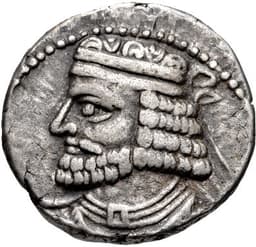
Vologases I of Parthia
Emperor · Ancient
55.3Total
Basic Information
Born
-570
25
Died
—
78
Era
Ancient
Ancient
Nationality
Sassanid Empire
Parthian Empire
Occupation
Emperor
Emperor
Civilization
Middle Eastern
Middle Eastern
Score Comparison
Military (10%)
78.0
52.5
Political (20%)
72.0
68.0
Influence (20%)
58.3
52.5
Legacy (20%)
52.0
45.0
Leadership (15%)
72.0
68.0
Strategy (15%)
65.4
52.5
TOTAL
63.5
55.3
Khosrow II — Complete Timeline
614 AD
Capture of JerusalemWar◆ Major
Khosrow II's Sassanid forces captured Jerusalem after a three-week siege. The Persians took the True Cross and other Christian relics to Ctesiphon, causing a major psychological and religious shock to the Byzantine Empire.
Sassanid-Byzantine WarJerusalemReligious Relics
Impact: regionaldestructive
619 AD
Conquest of EgyptWar◆ Major
Khosrow II's armies completed the conquest of Egypt, a vital grain-producing province of the Byzantine Empire. This gave the Sassanids control over the eastern Mediterranean and severely weakened Byzantine resources.
Sassanid ConquestEgyptByzantine Empire
Impact: regional
626 AD
Siege of ConstantinopleWar
Khosrow II coordinated a joint Sassanid-Avar siege of Constantinople. The city was defended by the Byzantines under Emperor Heraclius. The siege failed, marking a turning point in the war and beginning the Sassanid decline.
Siege of ConstantinopleSassanid-Avar AllianceTurning Point
Impact: global
627 AD
Battle of NinevehWar◆ Major
The Byzantine Emperor Heraclius defeated the Sassanid army at the Battle of Nineveh. Khosrow II's forces were routed, and the Byzantines advanced toward Ctesiphon, forcing the Sassanids to sue for peace.
Byzantine VictoryHeracliusSassanid Defeat
Impact: regionaldestructive
628 AD
Overthrow and DeathPolitical Action
Khosrow II was overthrown in a coup led by his son Kavadh II and the Sassanid nobility. He was imprisoned and executed shortly after. His death ended the Sassanid golden age and plunged the empire into a period of civil war and decline.
CoupRegicideSassanid Decline
Impact: nationaltragic
Vologases I of Parthia — Complete Timeline
51 AD
Accession to Parthian ThronePolitical Action◆ Major
Vologases I became king of Parthia after the death of Gotarzes II. He was a member of the Arsacid dynasty and sought to stabilize the empire after years of civil war.
SuccessionDynastic RestorationStabilization
Impact: national
54 AD
Installation of Tiridates I as King of ArmeniaPolitical Action◆ Major
Vologases I installed his brother Tiridates I as king of Armenia, asserting Parthian influence over the region. This act directly challenged Roman authority and led to the Roman-Parthian War of 58-63.
Armenian QuestionDynastic PolicyRoman Challenge
Impact: regional
58 AD
War with Rome under CorbuloWar◆ Major
Vologases I fought a war against Roman forces led by Gnaeus Domitius Corbulo over control of Armenia. The conflict included sieges and battles, with both sides suffering heavy losses.
Roman-Parthian WarsCorbuloArmenian Campaign
Impact: regional
63 AD
Treaty of RhandeiaPolitical Action
Vologases I negotiated the Treaty of Rhandeia with Rome, which recognized Tiridates I as king of Armenia under Roman suzerainty. The treaty ended the war and established a compromise that lasted for decades.
DiplomacyPeace TreatyArmenian Settlement
Impact: regionalconstructive
70 AD
Suppression of Hyrcanian RebellionWar
Vologases I faced a rebellion in the eastern province of Hyrcania, which he suppressed with difficulty. The revolt weakened Parthian control over its eastern territories and diverted resources from the Roman frontier.
RebellionEastern CampaignInternal Conflict
Impact: national
Expert Analysis
Origins
Khosrow II (born c. 570 CE) was a member of the Sassanid dynasty, the son of Hormizd IV. He grew up in a period of intense conflict with Byzantium and internal aristocratic intrigue. His early life was marked by the rebellion of Bahram Chobin, which forced him to flee to the Byzantine court for refuge. This experience shaped his later ambitions against the empire.
Vologases I of Parthia (r. 51–78 CE) was an Arsacid prince, likely a son of Vonones II. He ascended the throne after the death of Gotarzes II, during a time of Parthian weakness and Roman encroachment. His reign focused on stabilizing the empire and asserting Parthian influence in Armenia, a traditional buffer zone.
Rise to Power
Khosrow II regained his throne with Byzantine help in 591 CE, after the usurper Bahram Chobin was defeated. This debt to Byzantium later fueled his desire for revenge. He consolidated power by centralizing authority and launching a massive war against Byzantium in 602 CE, following the murder of Emperor Maurice, his former benefactor.
Vologases I became king in 51 CE after the death of Gotarzes II, but his legitimacy was contested. He quickly moved to install his brother Tiridates I as king of Armenia, a direct challenge to Rome. This act triggered a long war with the Roman general Corbulo, which defined his early reign.
Leadership & Governance
Khosrow II ruled as an absolute monarch, leveraging the Sassanid bureaucratic and military apparatus. He expanded the empire to its largest extent since the Achaemenids, but his governance relied heavily on successful military campaigns. When his offensives stalled, the nobility and clergy turned against him. His score of 72.0 in political reflects his initial control but ultimate failure to maintain support.
Vologases I scored 68.0 in political, demonstrating skill in diplomacy and internal management. He negotiated the Treaty of Rhandeia (63 CE), which allowed Tiridates to rule Armenia under Roman suzerainty, a pragmatic compromise. He also suppressed the Hyrcanian rebellion, though with difficulty, showing his ability to balance internal and external pressures.
Triumph & Tragedy
Khosrow II's triumphs include the capture of Jerusalem (614 CE) and the conquest of Egypt (619 CE), bringing the Sassanid Empire to its peak. He seized the True Cross, a major Christian relic, boosting his prestige. However, his tragedy was the overreach that led to the Battle of Nineveh (627 CE), where Heraclius routed his army. He was overthrown and executed by his son in 628 CE, ending his dynasty's golden age.
Vologases I's triumph was the successful installation of his brother in Armenia and the Treaty of Rhandeia, which secured Parthian influence without total war. His tragedy was the prolonged conflict with Rome, which drained resources and exposed Parthian military weaknesses. The Hyrcanian rebellion also highlighted internal divisions.
Character & Destiny
Khosrow II was ambitious and vengeful, driven by a desire to surpass his predecessors. His decision to invade Byzantium after Maurice's death was bold but ultimately catastrophic. He ignored the limits of Sassanid power, leading to his downfall. Historians note his arrogance and inability to adapt to Heraclius's counteroffensive.
Vologases I was more cautious and diplomatic. He recognized Parthia's limitations and chose negotiation over total war. His character favored stability, but his reign saw no major territorial expansion, and he struggled to assert full control over the eastern provinces.
Legacy
Khosrow II left a mixed legacy: his conquests briefly revived the Sassanid Empire, but his failure led to its collapse within decades. He scored 52.0 in legacy, reflecting the ephemeral nature of his achievements. The True Cross was returned, and the empire was weakened beyond repair.
Vologases I's legacy is more modest (score 45.0). He maintained Parthian influence in Armenia and established a diplomatic precedent with Rome. However, his reign did not halt the empire's gradual decline. The Treaty of Rhandeia is his most enduring achievement.
Conclusion
Khosrow II had greater impact, as his military campaigns (score 78.0) dramatically reshaped the Near East, even if temporarily. Vologases I scored 52.5 in military, reflecting his limited offensives. Khosrow's total score of 63.5 surpasses Vologases's 55.3, and his actions had more far-reaching consequences, including the rise of Heraclius and the eventual fall of the Sassanids. While Vologases was a competent diplomat, Khosrow's aggressive ambition left a deeper mark on history.
Rankings
🥇
Khosrow IILeader
Mil: 78.0Pol: 72.0Inf: 58.3
63.5
🥈
Vologases I of Parthia
Mil: 52.5Pol: 68.0Inf: 52.5
55.3
+8.2 behind
How This Comparison Works
Algorithm
Each figure is scored on 6 dimensions (0—100 scale) based on structured historical data: Military (10%), Political (20%), Influence (20%), Legacy (20%), Leadership (15%), Strategy (15%). The weighted total produces the final ranking.
Data Sources
Scores are computed from structured sub-indicators in the database. Scale factors adjust for era (Ancient ×0.85, Modern ×1.0) and civilization size (Eastern ×1.05, Other ×0.80) to account for differences in population and military scale.
Maximum 3 Figures
Comparisons are limited to 2—3 figures to ensure readability and statistical meaningfulness.
Error Margins
±5 points per dimension — Sub-scores are derived from historical records with inherent uncertainty. Two figures within 5 points on a dimension should be considered roughly equivalent in that area.
Total Score Accuracy
±3 points overall — The weighted combination of 6 dimensions produces a total score with approximately ±3 points of uncertainty. Differences of less than 3 points are not statistically significant— the figures are effectively tied.
Known Limitations
- Historical records are incomplete and uneven across civilizations
- Figures from oral-tradition societies may be underrepresented
- Occupation labels can misclassify multi-role figures
- Scores measure capability and impact, not moral character
- Quantitative scoring is a comparison tool, not absolute truth
Capability Radar
Military (10%) — Battles & Warfare
Battles
75
60
Win Rate
70
55
Expansion
80
40
Political (20%) — Governance & Reform
Reform
65
45
Diplomacy
70
70
Economy
68
50
Influence (20%) — Cultural & Global Reach
Cultural
60
40
Global
60
35
Legacy (20%) — Historical Impact
Historical
65
50
Longevity
55
40
Leadership (15%) — Power & Stability
Tenure
85
70
Stability
55
55
Strategy (15%) — Tactics & Innovation
Strategy
78
60
Tactics
72
65
Reform
60
30
Similar Comparisons
Comments & Discussion
No comments yet. Be the first to share your thoughts!