Loading...
Analysis will be generated on first visit.
Scores and timeline are available below. The page will refresh automatically when ready.
Khosrow I Anushirvan vs Napoleon Bonaparte
Napoleon Bonaparte leads by 9.2 pts · 2 figures compared
…
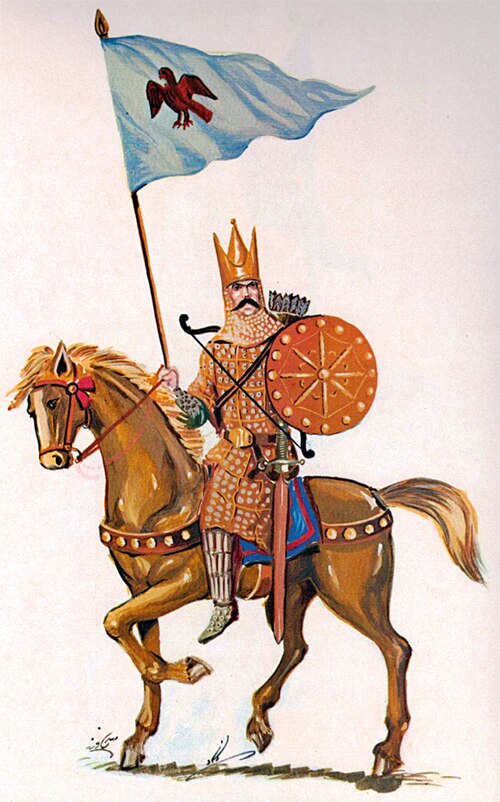
Khosrow I Anushirvan
Emperor · Ancient
73.2Total
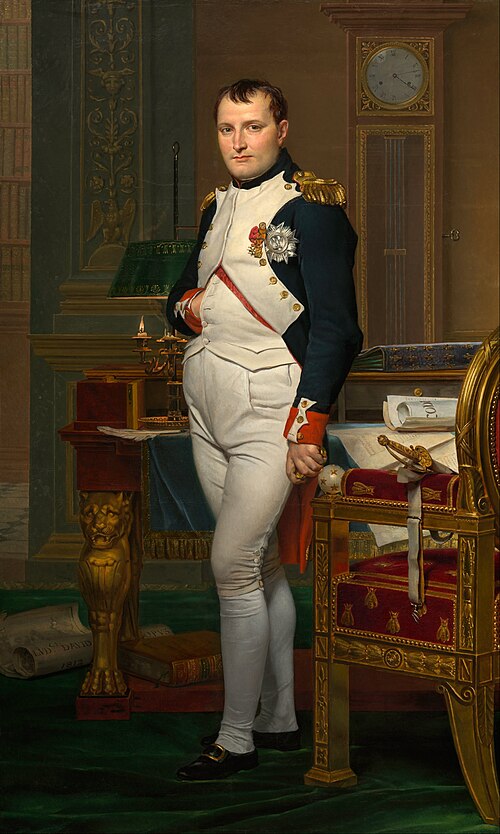
Napoleon Bonaparte
General · Modern
82.4Total
Basic Information
Born
-501
1769
Died
—
1821
Era
Ancient
Modern
Nationality
Sasanian Empire
France
Occupation
Emperor
General
Civilization
Middle Eastern
Western
Score Comparison
Military (10%)
66.3
94.0
Political (20%)
84.0
75.0
Influence (20%)
67.7
82.0
Legacy (20%)
64.9
78.0
Leadership (15%)
81.6
80.0
Strategy (15%)
73.2
93.0
TOTAL
73.2
82.4
Rankings
🥇
Napoleon BonaparteLeader
Mil: 94.0Pol: 75.0Inf: 82.0
82.4
🥈
Khosrow I Anushirvan
Mil: 66.3Pol: 84.0Inf: 67.7
73.2
+9.2 behind
How This Comparison Works
Algorithm
Each figure is scored on 6 dimensions (0—100 scale) based on structured historical data: Military (10%), Political (20%), Influence (20%), Legacy (20%), Leadership (15%), Strategy (15%). The weighted total produces the final ranking.
Data Sources
Scores are computed from structured sub-indicators in the database. Scale factors adjust for era (Ancient ×0.85, Modern ×1.0) and civilization size (Eastern ×1.05, Other ×0.80) to account for differences in population and military scale.
Maximum 3 Figures
Comparisons are limited to 2—3 figures to ensure readability and statistical meaningfulness.
Error Margins
±5 points per dimension — Sub-scores are derived from historical records with inherent uncertainty. Two figures within 5 points on a dimension should be considered roughly equivalent in that area.
Total Score Accuracy
±3 points overall — The weighted combination of 6 dimensions produces a total score with approximately ±3 points of uncertainty. Differences of less than 3 points are not statistically significant— the figures are effectively tied.
Known Limitations
- Historical records are incomplete and uneven across civilizations
- Figures from oral-tradition societies may be underrepresented
- Occupation labels can misclassify multi-role figures
- Scores measure capability and impact, not moral character
- Quantitative scoring is a comparison tool, not absolute truth
Capability Radar
Military (10%) — Battles & Warfare
Battles
85
95
Win Rate
80
90
Expansion
75
95
Political (20%) — Governance & Reform
Reform
95
95
Diplomacy
85
80
Economy
95
85
Influence (20%) — Cultural & Global Reach
Cultural
85
85
Global
75
90
Legacy (20%) — Historical Impact
Historical
85
95
Longevity
80
90
Leadership (15%) — Power & Stability
Tenure
90
85
Stability
90
70
Strategy (15%) — Tactics & Innovation
Strategy
90
95
Tactics
85
98
Reform
95
92
Analysis will be generated on first visit.
Scores and timeline are available below. The page will refresh automatically when ready.
Khosrow I Anushirvan — Complete Timeline
531 AD
Reign as the greatest Sasanian rulerPolitical Action
Khosrow I Anushirvan ascended the throne and began a reign that would be remembered as the golden age of the Sasanian Empire. He implemented sweeping reforms in administration, military, and taxation, earning the epithet 'the Just'.
ReignGolden AgeSasanian Empire
Impact: globalconstructive
532 AD
Peace treaty with the Byzantine Empire (Eternal Peace)Political Action◆ Major
Khosrow I negotiated the 'Eternal Peace' with the Byzantine Emperor Justinian I, ending the Iberian War. The treaty required the Sasanians to return occupied territories in exchange for a large gold payment, securing a temporary truce.
TreatyByzantine EmpireDiplomacy
Impact: global
540 AD
Invasion of Syria and sack of AntiochWar◆ Major
Taking advantage of Justinian's focus on the West, Khosrow I invaded Byzantine Syria. He captured and sacked the great city of Antioch, deporting its inhabitants to a new city near Ctesiphon, demonstrating Sasanian military power.
InvasionSack of AntiochByzantine-Sasanian Wars
Impact: regionaldestructive
Reforms of the army and tax systemReform◆ Major
Khosrow I reorganized the Sasanian military, creating a standing army of heavily armored cavalry (aswaran) and improving logistics. He also reformed the tax system, introducing a fixed land tax and a poll tax, which increased state revenue.
Military ReformTax ReformAdministration
Impact: nationalconstructive
541 AD
Foundation of the city of Weh Antiok KhosrowCultural
Khosrow I founded a new city near Ctesiphon, named Weh Antiok Khosrow ('Better than Antioch, Khosrow built this'), to house the deported population of Antioch. The city became a center for trade and culture.
City FoundationUrban PlanningDeportation
constructive
Similar Comparisons
Comments & Discussion
No comments yet. Be the first to share your thoughts!