Loading...
This comparison has not been analyzed yet.
One-time AI generation (~1 minute). Scores and timeline are already available below.
Khalid of Saudi Arabia vs Shambhu Singh of Udaipur
Khalid of Saudi Arabia leads by 0.4 pts · 2 figures compared
…
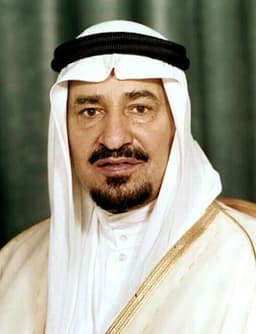
Khalid of Saudi Arabia
Emperor · Modern
46.9Total

Shambhu Singh of Udaipur
Emperor · Modern
46.5Total
Basic Information
Born
1913
1847
Died
1982
1874
Era
Modern
Modern
Nationality
Saudi Arabia
India
Occupation
Emperor
Emperor
Civilization
Middle Eastern
Indian
Score Comparison
Military (10%)
43.3
20.0
Political (20%)
36.5
45.1
Influence (20%)
50.2
51.0
Legacy (20%)
39.2
39.2
Leadership (15%)
62.2
65.0
Strategy (15%)
54.3
54.3
TOTAL
46.9
46.5
Khalid of Saudi Arabia — Complete Timeline
1975 AD
Accession to the ThronePolitical Action◆ Major
Following the assassination of King Faisal, Khalid became King of Saudi Arabia. His reign was marked by continuity of Faisal's policies but with a more cautious approach to reform, focusing on stability and religious conservatism.
SuccessionRoyal Family
Impact: national
1979 AD
Grand Mosque SeizureWar
During King Khalid's reign, Juhayman al-Otaybi and his followers seized the Grand Mosque in Mecca, holding hundreds of pilgrims hostage. The Saudi military, with French assistance, recaptured the mosque after a two-week siege, resulting in hundreds of deaths.
CrisisReligious ExtremismSecurity
Impact: nationaltragic
Second Oil Price ShockPolitical Action◆ Major
The Iranian Revolution and the Grand Mosque seizure led to a second oil price shock during Khalid's reign. Saudi Arabia increased oil production to stabilize markets, demonstrating its role as a swing producer in OPEC.
Oil PoliticsEconomic Policy
Impact: global
Shambhu Singh of Udaipur — Complete Timeline
1861 AD
Accession as Maharana of MewarPolitical Action◆ Major
Shambhu Singh became Maharana of Mewar at age 14 after the death of his father Swarup Singh. A regency council governed until he came of age. His reign focused on administrative reforms and maintaining British relations.
AccessionMewarMaharana
Impact: regional
1870 AD
Administrative reforms in MewarReform◆ Major
Shambhu Singh introduced administrative reforms including a modern judiciary, revenue system, and police force. He established courts and codified laws, reducing corruption and improving governance in the princely state.
AdministrationReformMewar
Impact: regionalconstructive
Construction of Shambhu Niwas PalaceCultural
Shambhu Singh built the Shambhu Niwas Palace in Udaipur, a European-style building that served as his residence. The palace reflected his interest in Western architecture and modernization.
ArchitectureUdaipurPalace
constructive
1874 AD
Death and successionOther
Shambhu Singh died in 1874 after a 13-year reign. He was succeeded by his son Sajjan Singh. His reforms laid the groundwork for Mewar's modernization, though his early death limited their full implementation.
DeathSuccessionMewar
Impact: regional
This comparison has not been analyzed yet.
One-time AI generation (~1 minute). Scores and timeline are already available below.
Rankings
🥇
Khalid of Saudi ArabiaLeader
Mil: 43.3Pol: 36.5Inf: 50.2
46.9
🥈
Shambhu Singh of Udaipur
Mil: 20.0Pol: 45.1Inf: 51.0
46.5
+0.4 behind
How This Comparison Works
Algorithm
Each figure is scored on 6 dimensions (0—100 scale) based on structured historical data: Military (10%), Political (20%), Influence (20%), Legacy (20%), Leadership (15%), Strategy (15%). The weighted total produces the final ranking.
Data Sources
Scores are computed from structured sub-indicators in the database. Scale factors adjust for era (Ancient ×0.85, Modern ×1.0) and civilization size (Eastern ×1.05, Other ×0.80) to account for differences in population and military scale.
Maximum 3 Figures
Comparisons are limited to 2—3 figures to ensure readability and statistical meaningfulness.
Error Margins
±5 points per dimension — Sub-scores are derived from historical records with inherent uncertainty. Two figures within 5 points on a dimension should be considered roughly equivalent in that area.
Total Score Accuracy
±3 points overall — The weighted combination of 6 dimensions produces a total score with approximately ±3 points of uncertainty. Differences of less than 3 points are not statistically significant— the figures are effectively tied.
Known Limitations
- Historical records are incomplete and uneven across civilizations
- Figures from oral-tradition societies may be underrepresented
- Occupation labels can misclassify multi-role figures
- Scores measure capability and impact, not moral character
- Quantitative scoring is a comparison tool, not absolute truth
Capability Radar
Military (10%) — Battles & Warfare
Battles
5
5
Win Rate
5
5
Expansion
5
5
Political (20%) — Governance & Reform
Reform
20
30
Diplomacy
30
35
Economy
30
30
Influence (20%) — Cultural & Global Reach
Cultural
20
25
Global
20
10
Legacy (20%) — Historical Impact
Historical
25
20
Longevity
20
15
Leadership (15%) — Power & Stability
Tenure
40
40
Stability
20
40
Strategy (15%) — Tactics & Innovation
Strategy
5
5
Tactics
5
5
Reform
5
5
Similar Comparisons
Comments & Discussion
No comments yet. Be the first to share your thoughts!