Loading...
This comparison has not been analyzed yet.
One-time AI generation (~1 minute). Scores and timeline are already available below.
Khalid of Saudi Arabia vs Olav V of Norway
Olav V of Norway leads by 9.6 pts · 2 figures compared
…
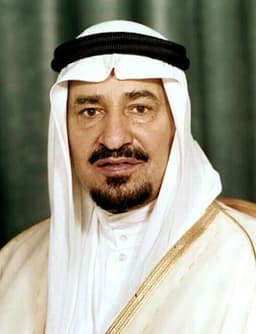
Khalid of Saudi Arabia
Emperor · Modern
46.9Total
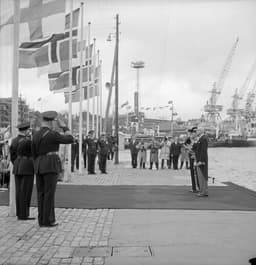
Olav V of Norway
Emperor · Modern
56.5Total
Basic Information
Born
1913
1903
Died
1982
1991
Era
Modern
Modern
Nationality
Saudi Arabia
Norway
Occupation
Emperor
Emperor
Civilization
Middle Eastern
Western
Score Comparison
Military (10%)
43.3
48.2
Political (20%)
36.5
68.0
Influence (20%)
50.2
53.3
Legacy (20%)
39.2
42.5
Leadership (15%)
62.2
79.8
Strategy (15%)
54.3
55.2
TOTAL
46.9
56.5
Khalid of Saudi Arabia — Complete Timeline
1975 AD
Accession to the ThronePolitical Action◆ Major
Following the assassination of King Faisal, Khalid became King of Saudi Arabia. His reign was marked by continuity of Faisal's policies but with a more cautious approach to reform, focusing on stability and religious conservatism.
SuccessionRoyal Family
Impact: national
1979 AD
Grand Mosque SeizureWar
During King Khalid's reign, Juhayman al-Otaybi and his followers seized the Grand Mosque in Mecca, holding hundreds of pilgrims hostage. The Saudi military, with French assistance, recaptured the mosque after a two-week siege, resulting in hundreds of deaths.
CrisisReligious ExtremismSecurity
Impact: nationaltragic
Second Oil Price ShockPolitical Action◆ Major
The Iranian Revolution and the Grand Mosque seizure led to a second oil price shock during Khalid's reign. Saudi Arabia increased oil production to stabilize markets, demonstrating its role as a swing producer in OPEC.
Oil PoliticsEconomic Policy
Impact: global
Olav V of Norway — Complete Timeline
1957 AD
Accession to the thronePolitical Action◆ Major
Olav V became King of Norway upon the death of his father, Haakon VII. He inherited a constitutional monarchy that had been restored after World War II and was widely popular among Norwegians.
SuccessionMonarchy
Impact: national
1960 AD
Popularity as 'People's King'Cultural
Olav V was known for his informal and approachable style, often seen skiing or walking in public without security. This earned him the nickname 'Folkekongen' (People's King) and strengthened the monarchy's popularity.
MonarchyPopularityCulture
Impact: nationalconstructive
1972 AD
Leadership during the 1972 EC referendumPolitical Action
Olav V remained neutral during the Norwegian referendum on joining the European Economic Community, which was rejected by voters. His restraint helped maintain the monarchy's non-political image.
ReferendumEuropean IntegrationNeutrality
Impact: national
This comparison has not been analyzed yet.
One-time AI generation (~1 minute). Scores and timeline are already available below.
Rankings
🥇
Olav V of NorwayLeader
Mil: 48.2Pol: 68.0Inf: 53.3
56.5
🥈
Khalid of Saudi Arabia
Mil: 43.3Pol: 36.5Inf: 50.2
46.9
+9.6 behind
How This Comparison Works
Algorithm
Each figure is scored on 6 dimensions (0—100 scale) based on structured historical data: Military (10%), Political (20%), Influence (20%), Legacy (20%), Leadership (15%), Strategy (15%). The weighted total produces the final ranking.
Data Sources
Scores are computed from structured sub-indicators in the database. Scale factors adjust for era (Ancient ×0.85, Modern ×1.0) and civilization size (Eastern ×1.05, Other ×0.80) to account for differences in population and military scale.
Maximum 3 Figures
Comparisons are limited to 2—3 figures to ensure readability and statistical meaningfulness.
Error Margins
±5 points per dimension — Sub-scores are derived from historical records with inherent uncertainty. Two figures within 5 points on a dimension should be considered roughly equivalent in that area.
Total Score Accuracy
±3 points overall — The weighted combination of 6 dimensions produces a total score with approximately ±3 points of uncertainty. Differences of less than 3 points are not statistically significant— the figures are effectively tied.
Known Limitations
- Historical records are incomplete and uneven across civilizations
- Figures from oral-tradition societies may be underrepresented
- Occupation labels can misclassify multi-role figures
- Scores measure capability and impact, not moral character
- Quantitative scoring is a comparison tool, not absolute truth
Capability Radar
Military (10%) — Battles & Warfare
Battles
5
24
Win Rate
5
25
Expansion
5
30
Political (20%) — Governance & Reform
Reform
20
40
Diplomacy
30
65
Economy
30
45
Influence (20%) — Cultural & Global Reach
Cultural
20
40
Global
20
30
Legacy (20%) — Historical Impact
Historical
25
35
Longevity
20
30
Leadership (15%) — Power & Stability
Tenure
40
52
Stability
20
70
Strategy (15%) — Tactics & Innovation
Strategy
5
31
Tactics
5
36
Reform
5
41
Similar Comparisons
Comments & Discussion
No comments yet. Be the first to share your thoughts!