Loading...
Analysis will be generated on first visit.
Scores and timeline are available below. The page will refresh automatically when ready.
Khalid bin Walid vs Napoleon Bonaparte
Napoleon Bonaparte leads by 25.1 pts · 2 figures compared
…

Khalid bin Walid
General · Ancient
57.3Total
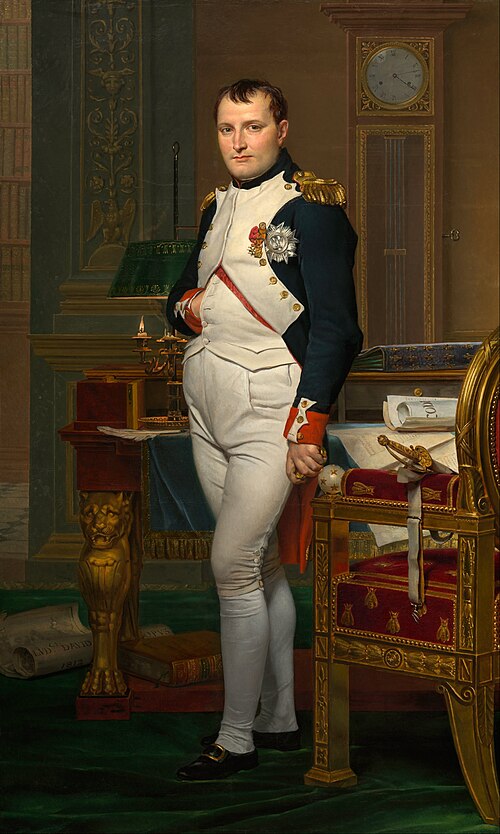
Napoleon Bonaparte
General · Modern
82.4Total
Basic Information
Born
-592
1769
Died
—
1821
Era
Ancient
Modern
Nationality
Rashidun Caliphate
France
Occupation
General
General
Civilization
Middle Eastern
Western
Score Comparison
Military (10%)
83.7
94.0
Political (20%)
36.1
75.0
Influence (20%)
67.7
82.0
Legacy (20%)
64.9
78.0
Leadership (15%)
33.6
80.0
Strategy (15%)
67.8
93.0
TOTAL
57.3
82.4
Rankings
🥇
Napoleon BonaparteLeader
Mil: 94.0Pol: 75.0Inf: 82.0
82.4
🥈
Khalid bin Walid
Mil: 83.7Pol: 36.1Inf: 67.7
57.3
+25.1 behind
How This Comparison Works
Algorithm
Each figure is scored on 6 dimensions (0—100 scale) based on structured historical data: Military (10%), Political (20%), Influence (20%), Legacy (20%), Leadership (15%), Strategy (15%). The weighted total produces the final ranking.
Data Sources
Scores are computed from structured sub-indicators in the database. Scale factors adjust for era (Ancient ×0.85, Modern ×1.0) and civilization size (Eastern ×1.05, Other ×0.80) to account for differences in population and military scale.
Maximum 3 Figures
Comparisons are limited to 2—3 figures to ensure readability and statistical meaningfulness.
Error Margins
±5 points per dimension — Sub-scores are derived from historical records with inherent uncertainty. Two figures within 5 points on a dimension should be considered roughly equivalent in that area.
Total Score Accuracy
±3 points overall — The weighted combination of 6 dimensions produces a total score with approximately ±3 points of uncertainty. Differences of less than 3 points are not statistically significant— the figures are effectively tied.
Known Limitations
- Historical records are incomplete and uneven across civilizations
- Figures from oral-tradition societies may be underrepresented
- Occupation labels can misclassify multi-role figures
- Scores measure capability and impact, not moral character
- Quantitative scoring is a comparison tool, not absolute truth
Capability Radar
Military (10%) — Battles & Warfare
Battles
95
95
Win Rate
100
90
Expansion
95
95
Political (20%) — Governance & Reform
Reform
10
95
Diplomacy
40
80
Economy
10
85
Influence (20%) — Cultural & Global Reach
Cultural
75
85
Global
75
90
Legacy (20%) — Historical Impact
Historical
85
95
Longevity
80
90
Leadership (15%) — Power & Stability
Tenure
30
85
Stability
20
70
Strategy (15%) — Tactics & Innovation
Strategy
90
95
Tactics
98
98
Reform
70
92
Analysis will be generated on first visit.
Scores and timeline are available below. The page will refresh automatically when ready.
Khalid bin Walid — Complete Timeline
629 AD
Battle of Mu'tahWar◆ Major
Khalid bin Walid took command of the Muslim army after three previous commanders were killed. He executed a tactical withdrawal, saving the Muslim force from annihilation by a much larger Byzantine and Arab Christian army. This action earned him the title 'Sword of Allah' from Muhammad.
Early Muslim ConquestsByzantine WarMilitary Leadership
Impact: regional
632 AD
Battle of YamamaWar◆ Major
Khalid bin Walid led the Muslim army against the forces of Musaylima, a false prophet, during the Ridda Wars. The battle was fierce and resulted in a decisive Muslim victory, crushing the rebellion in central Arabia and solidifying the nascent caliphate's control.
Ridda WarsArabian PeninsulaRebellion
Impact: regional
633 AD
Battle of WalajaWar◆ Major
Khalid bin Walid defeated a larger Sassanid Persian army in Mesopotamia using a double envelopment tactic. This victory opened the way for the Muslim conquest of Iraq and demonstrated Khalid's strategic ingenuity against a major empire.
Muslim Conquest of PersiaMesopotamiaMilitary Tactic
Impact: regional
636 AD
Battle of YarmoukWar
Khalid bin Walid, as supreme commander, led the Muslim army to a decisive victory over a large Byzantine force in Syria. The battle lasted six days and resulted in the permanent Muslim conquest of Syria and Palestine, ending Byzantine rule in the Levant.
Byzantine-Arab WarsConquest of SyriaDecisive Battle
Impact: global
638 AD
Dismissal from military commandPolitical Action◆ Major
Caliph Umar dismissed Khalid bin Walid from his command of the Muslim armies in Syria. Umar cited concerns over Khalid's growing fame and potential for fitna (civil strife), though he did not punish him. Khalid retired to Homs and died a few years later.
Caliphate PoliticsUmarMilitary Dismissal
Impact: regional
Similar Comparisons
Comments & Discussion
No comments yet. Be the first to share your thoughts!