Loading...
Khalid bin Barghash vs Napoleon Bonaparte
Napoleon Bonaparte leads by 36.6 pts · 2 figures compared
…
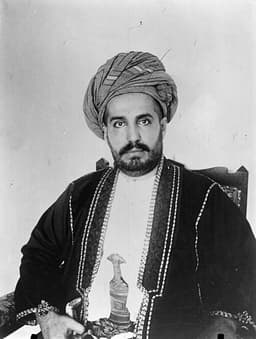
Khalid bin Barghash
Emperor · Modern
34.3Total

Napoleon Bonaparte
General · Modern
70.9Total
Basic Information
Born
1874
1769
Died
1927
1821
Era
Modern
Modern
Nationality
Zanzibar
France
Occupation
Emperor
General
Civilization
Other
Western
Score Comparison
Military (10%)
10.5
94.0
Political (20%)
27.9
72.0
Influence (20%)
45.5
40.0
Legacy (20%)
34.2
80.0
Leadership (15%)
31.2
78.0
Strategy (15%)
44.4
90.0
TOTAL
34.3
70.9
Khalid bin Barghash — Complete Timeline
1896 AD
Anglo-Zanzibar WarWar
Khalid bin Barghash's refusal to abdicate led to the Anglo-Zanzibar War, the shortest war in history. British warships bombarded the palace for 38 minutes, killing 500 defenders. Khalid fled to the German consulate and was exiled.
WarBritish EmpireZanzibar
Impact: regionaltragic
Accession as Sultan of ZanzibarPolitical Action◆ Major
Khalid bin Barghash seized the sultanate after the death of his cousin Hamad bin Thuwaini, without British approval. He declared himself Sultan, challenging British authority over Zanzibar's succession.
SuccessionZanzibarCoup
Impact: regional
Exile to Seychelles and Saint HelenaPolitical Action◆ Major
After his defeat, Khalid bin Barghash was captured by the British and exiled first to the Seychelles, then to Saint Helena. He remained in exile for decades, never returning to Zanzibar, ending his political ambitions.
ExilePunishmentColonialism
Impact: regionaltragic
Napoleon Bonaparte — Complete Timeline
1799 AD
Coup of 18 BrumaireOther◆ Major
Napoleon Bonaparte, with support from his brother Lucien and key political figures, overthrew the Directory in a bloodless coup. He established the Consulate with himself as First Consul, effectively becoming the ruler of France. This event ended the French Revolution's most unstable period.
French RevolutionCoupRise to Power
Impact: regional
1804 AD
Promulgation of the Napoleonic CodeOther◆ Major
Napoleon enacted the Civil Code of the French, known as the Napoleonic Code, a comprehensive set of laws that replaced the fragmented feudal legal systems. The code established legal equality, protected property rights, and secularized law. It became the basis for legal systems in many European and world countries.
Legal ReformNapoleonic CodeCivil Law
Impact: globalconstructive
1805 AD
Battle of AusterlitzWar◆ Major
Napoleon's Grande Arm
Napoleonic WarsBattleDecisive Victory
Impact: global
1812 AD
Invasion of RussiaWar◆ Major
Napoleon led the Grande Arm
Napoleonic WarsInvasionDisaster
Impact: globaldestructive
1815 AD
Battle of WaterlooWar◆ Major
Napoleon's French army was defeated by the combined forces of the Duke of Wellington's Anglo-Allied army and Gebhard Leberecht von Bl
Napoleonic WarsBattleFinal Defeat
Impact: globaldestructive
Expert Analysis
khalid-bin-barghash-vs-napoleon-bonaparte
# The Emperor and the Sultan: Napoleon and Khalid’s Divergent Paths
On the morning of August 27, 1896, Sultan Khalid bin Barghash of Zanzibar watched from his palace window as British warships anchored in the harbor below. He had been sultan for just three days. Thirty-eight minutes later, his palace was in flames, his army scattered, and he was fleeing for his life. Half a world away and nearly a century earlier, another man had stood before the Pyramids of Giza in 1798, telling his troops: “Soldiers, from the height of these pyramids, forty centuries look down upon you.” Napoleon Bonaparte’s war lasted years and reshaped continents. Khalid’s lasted less than an hour. What separates a man who conquers an empire from one who loses a sultanate in forty minutes? The answer lies not in the brevity of their wars, but in the depth of their worlds.
Origins
Napoleon was born in 1769 on the island of Corsica, a rocky Mediterranean outpost that had just become French. His family was minor nobility, but poor. He spoke French with a thick Italian accent and was mocked by classmates at military school. Yet he devoured books on military history and artillery, and the French Revolution—that great leveler of old hierarchies—opened doors that had been shut for centuries. By 1795, at age twenty-six, he had saved the revolutionary government from a royalist mob and was given command of the Army of Italy.
Khalid bin Barghash was born in 1874 on the island of Zanzibar, a spice-rich sultanate on the East African coast. He was the son of Sultan Barghash bin Said, a ruler who had modernized the island’s infrastructure and built a formidable palace. Khalid grew up in a world of Arab and Swahili aristocrats, where power came from bloodlines and British protection. When his cousin Sultan Hamad bin Thuwaini died suddenly in 1896, Khalid saw his chance. He seized the palace and declared himself sultan—without waiting for the British consul’s approval.
The difference in their origins was not merely geography. Napoleon was forged in the crucible of revolution, where merit and audacity could overthrow kings. Khalid was born into a system where the British Empire decided who ruled, and he had never learned to fight that system.
Rise to Power
Napoleon’s rise was a masterclass in seizing opportunity. In 1796, he took command of a starving, unpaid French army in Italy and turned it into a conquering force. He defeated the Austrians in a series of lightning campaigns, forcing peace treaties that made him a national hero. By 1799, he had returned from a failed Egyptian campaign to find France in chaos. He staged a coup d’état and made himself First Consul—then Emperor in 1804. Each step was calculated, each risk measured against his own ambition.
Khalid’s rise was simpler and shorter. When his cousin died, he moved fast. He had the support of the palace guard and some Zanzibari nobles. He had, he believed, numbers on his side. But he had not counted on the British ultimatum: abdicate by 9:00 AM on August 27, or face bombardment. He refused, perhaps believing that the British would not dare fire on a sultan’s palace. They did.
Napoleon climbed a ladder of his own making. Khalid stepped onto a throne that rested on British sufferance.
Leadership & Governance
As a ruler, Napoleon was a revolutionary in conservative robes. He centralized the French state, created the Napoleonic Code—a legal system that influenced civil law across Europe—and reformed education, banking, and the military. He appointed officials based on talent, not birth. “I have only one passion: the love of glory,” he said. And he fed that passion with constant war, placing his brothers on thrones from Spain to Holland. But his governance was also autocratic: he suppressed dissent, censored newspapers, and treated Europe as his personal chessboard.
Khalid’s governance lasted three days. He had no time for reforms, no chance to build institutions. What we know of his leadership comes from that single crisis: he was stubborn, proud, and perhaps naïve. He believed his title would protect him. It did not. After the bombardment, British marines found the palace empty. Khalid had fled to the German consulate, then into exile—first to the Seychelles, then to Saint Helena, the same island where Napoleon had died in 1821.
The irony is bitter: two rulers, one island, two utterly different ends.
Triumph & Tragedy
Napoleon’s greatest triumph was Austerlitz in 1805, where he destroyed a combined Russian-Austrian army and dissolved the Holy Roman Empire. His tragedy was Moscow in 1812: he invaded Russia with 600,000 men and returned with fewer than 100,000. The disaster broke his aura of invincibility. He was exiled to Elba in 1814, escaped, ruled for a Hundred Days, and was finally crushed at Waterloo in 1815. His tragedy was hubris—the belief that he could conquer the world.
Khalid’s triumph was his accession itself: he became sultan, however briefly. His tragedy was the war itself—the shortest in recorded history, lasting just thirty-eight minutes. British shells destroyed his palace, killed hundreds of his defenders, and ended his reign before it began. His tragedy was not hubris but miscalculation: he underestimated the power of an empire that had no patience for local sovereignty.
Character & Destiny
Napoleon’s character was a furnace of ambition, intelligence, and insecurity. He needed to prove himself constantly—to the aristocrats who had mocked him, to the kings he defeated, to history itself. This drive made him brilliant but also reckless. “Impossible is a word to be found only in the dictionary of fools,” he said. He died at fifty-one, a prisoner on a remote island, still dictating his memoirs.
Khalid’s character is harder to read. He was bold enough to seize power but lacked the strategic mind to hold it. He may have believed that tradition and local loyalty would outweigh British firepower. He was wrong. He died in 1927, at fifty-three, in exile in Mombasa, a forgotten footnote to a war that lasted less than an hour.
Destiny, for Napoleon, was a stage he built himself. For Khalid, it was a trap he walked into.
Legacy
Napoleon’s legacy is immense. The Napoleonic Code still shapes legal systems in Europe, Latin America, and parts of Africa. He modernized France, spread nationalism across Europe, and changed warfare forever. His name is synonymous with ambition and genius. His scores—Military 94, Strategy 93, Influence 82—reflect a man who bent history to his will.
Khalid’s legacy is the shortest war. His scores—Military 14.6, Political 46.7, Leadership 41.2—reflect a man who was defeated in less time than it takes to cook an egg. He is remembered not for what he did, but for how quickly he failed. Yet his story carries a darker truth: that in the age of empires, local rulers were often puppets, and those who forgot that were broken.
Conclusion
Napoleon and Khalid never met, but their fates are linked by a strange coincidence: both were exiled to Saint Helena, that lonely rock in the South Atlantic. Napoleon died there, raging against his captors. Khalid was sent there as well, a second exile after the Seychelles. On that island, the emperor who had shaken Europe and the sultan who had lasted thirty-eight minutes shared the same soil.
What separates them is not talent alone, but the world that shaped them. Napoleon was a child of revolution, a time when old orders collapsed and new men could rise. Khalid was a child of empire, a time when the old orders had already been conquered. One built an empire; the other lost a throne before breakfast. Both ended up on the same island, equal in dust. History remembers the man who made the world tremble, not the one who trembled before it. But both remind us that power is always borrowed, and that the shortest wars can tell the longest truths.
Rankings
🥇
Napoleon BonaparteLeader
Mil: 94.0Pol: 72.0Inf: 40.0
70.9
🥈
Khalid bin Barghash
Mil: 10.5Pol: 27.9Inf: 45.5
34.3
+36.6 behind
How This Comparison Works
Algorithm
Each figure is scored on 6 dimensions (0—100 scale) based on structured historical data: Military (10%), Political (20%), Influence (20%), Legacy (20%), Leadership (15%), Strategy (15%). The weighted total produces the final ranking.
Data Sources
Scores are computed from structured sub-indicators in the database. Scale factors adjust for era (Ancient ×0.85, Modern ×1.0) and civilization size (Eastern ×1.05, Other ×0.80) to account for differences in population and military scale.
Maximum 3 Figures
Comparisons are limited to 2—3 figures to ensure readability and statistical meaningfulness.
Error Margins
±5 points per dimension — Sub-scores are derived from historical records with inherent uncertainty. Two figures within 5 points on a dimension should be considered roughly equivalent in that area.
Total Score Accuracy
±3 points overall — The weighted combination of 6 dimensions produces a total score with approximately ±3 points of uncertainty. Differences of less than 3 points are not statistically significant— the figures are effectively tied.
Known Limitations
- Historical records are incomplete and uneven across civilizations
- Figures from oral-tradition societies may be underrepresented
- Occupation labels can misclassify multi-role figures
- Scores measure capability and impact, not moral character
- Quantitative scoring is a comparison tool, not absolute truth
Capability Radar
Military (10%) — Battles & Warfare
Battles
4
95
Win Rate
10
90
Expansion
11
95
Political (20%) — Governance & Reform
Reform
5
95
Diplomacy
5
80
Economy
5
85
Influence (20%) — Cultural & Global Reach
Cultural
5
85
Global
5
90
Legacy (20%) — Historical Impact
Historical
10
95
Longevity
5
90
Leadership (15%) — Power & Stability
Tenure
10
85
Stability
5
70
Strategy (15%) — Tactics & Innovation
Strategy
15
95
Tactics
20
98
Reform
20
92
Similar Comparisons
Comments & Discussion
No comments yet. Be the first to share your thoughts!