Loading...
Khafre vs Napoleon Bonaparte
Napoleon Bonaparte leads by 22.1 pts · 2 figures compared
…
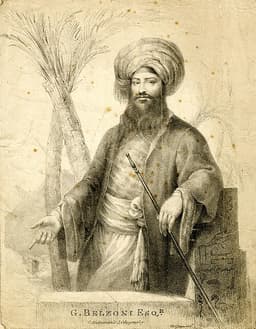
Khafre
Emperor · Ancient
48.8Total

Napoleon Bonaparte
General · Modern
70.9Total
Basic Information
Born
-2558
1769
Died
-2532
1821
Era
Ancient
Modern
Nationality
Egypt
France
Occupation
Emperor
General
Civilization
Middle Eastern
Western
Score Comparison
Military (10%)
25.9
94.0
Political (20%)
46.6
72.0
Influence (20%)
58.3
40.0
Legacy (20%)
52.0
80.0
Leadership (15%)
53.2
78.0
Strategy (15%)
36.8
90.0
TOTAL
48.8
70.9
Khafre — Complete Timeline
2550 BC
Construction of the Second Pyramid at GizaCultural◆ Major
Khafre built the second pyramid at Giza, slightly smaller than Khufu's but retaining some casing stones at its apex. The pyramid complex includes the Valley Temple and the Great Sphinx, which is believed to bear Khafre's face.
PyramidSphinxArchitecture
Impact: regionalconstructive
Construction of the Great SphinxCultural◆ Major
Khafre commissioned the Great Sphinx of Giza, a limestone statue with a lion's body and a human head, likely representing himself. The Sphinx, 73 meters long and 20 meters high, became a symbol of royal power and divine guardianship.
SphinxSculptureSymbolism
Impact: globalconstructive
Napoleon Bonaparte — Complete Timeline
1799 AD
Coup of 18 BrumaireOther◆ Major
Napoleon Bonaparte, with support from his brother Lucien and key political figures, overthrew the Directory in a bloodless coup. He established the Consulate with himself as First Consul, effectively becoming the ruler of France. This event ended the French Revolution's most unstable period.
French RevolutionCoupRise to Power
Impact: regional
1804 AD
Promulgation of the Napoleonic CodeOther◆ Major
Napoleon enacted the Civil Code of the French, known as the Napoleonic Code, a comprehensive set of laws that replaced the fragmented feudal legal systems. The code established legal equality, protected property rights, and secularized law. It became the basis for legal systems in many European and world countries.
Legal ReformNapoleonic CodeCivil Law
Impact: globalconstructive
1805 AD
Battle of AusterlitzWar◆ Major
Napoleon's Grande Arm
Napoleonic WarsBattleDecisive Victory
Impact: global
1812 AD
Invasion of RussiaWar◆ Major
Napoleon led the Grande Arm
Napoleonic WarsInvasionDisaster
Impact: globaldestructive
1815 AD
Battle of WaterlooWar◆ Major
Napoleon's French army was defeated by the combined forces of the Duke of Wellington's Anglo-Allied army and Gebhard Leberecht von Bl
Napoleonic WarsBattleFinal Defeat
Impact: globaldestructive
Expert Analysis
khafre-vs-napoleon-bonaparte
# The Emperor and the God-King
On a June morning in 1815, Napoleon Bonaparte stood on a muddy field near Waterloo, watching his Imperial Guard march into the muzzles of British cannon. Forty-six years old, he had already conquered Europe, rewritten its laws, and crowned himself emperor. Across forty centuries, another ruler had stood before a monument of his own making—the Great Sphinx of Giza, its lion body carved from living rock, its face bearing the features of Pharaoh Khafre. One man built an empire of cannon and code; the other built one of stone and eternity. What drove these two figures, separated by more than four thousand years, to such different fates?
Origins
Napoleon was born in 1769 on the island of Corsica, a Mediterranean backwater that had just become French. His family was minor nobility, poor enough that young Napoleon wore patched uniforms to military school. His world was one of revolution and upheaval—the old order of kings and aristocrats was collapsing, and a boy with talent could seize opportunities his father never dreamed of. The French Revolution, which erupted when he was twenty, would become his launching pad.
Khafre, by contrast, was born into the divine. As a pharaoh of Egypt's Fourth Dynasty, around 2558 BC, he was not merely a king but a living god, the earthly embodiment of Horus. His father Khufu had built the Great Pyramid, the tallest structure on Earth. Khafre inherited not just a throne but a theology: the pharaoh's role was to maintain cosmic order, to build monuments that would ensure the gods' favor and the kingdom's eternal stability. Where Napoleon's world was dynamic and dangerous, Khafre's was sacred and stable—at least on the surface.
Rise to Power
Napoleon's ascent was meteoric and improbable. In 1793, at age twenty-four, he drove British forces from the port of Toulon, earning promotion to brigadier general. By 1796, he commanded the French army in Italy, where his lightning campaigns stunned Europe. He was not born to power; he seized it. In 1799, he overthrew the French government in a coup and made himself First Consul. Five years later, he crowned himself emperor in Notre Dame Cathedral, taking the crown from the Pope's hands and placing it on his own head.
Khafre's rise followed the pattern of eternity. He was likely the son of Khufu and succeeded his brother Djedefre, who had ruled only briefly. There were no coups, no dramatic battles for the throne—or if there were, the sands have erased them. Khafre assumed power as his ancestors had, through blood and divine right. His challenge was not to conquer but to consolidate, not to innovate but to maintain. The pyramids rising on the Giza plateau were not personal ambitions; they were cosmic duties.
Leadership & Governance
Napoleon governed through sheer force of will and organization. He centralized the state, created the Bank of France, and most enduringly, codified French law into the Napoleonic Code—a system that enshrined equality before the law, protected property rights, and ended feudalism. His military genius was staggering: at Austerlitz in 1805, he destroyed a Russo-Austrian army with a feigned retreat that remains a textbook maneuver. His leadership score of 80 reflects a man who could inspire soldiers to die for him, yet whose arrogance eventually alienated allies and subjects alike.
Khafre ruled through ritual and monument. His military score of 60 suggests competence rather than brilliance—Egypt's army was professional but faced no existential threats during his reign. His political score of 46.7 is modest by modern standards, but that misses the point. In ancient Egypt, politics was religion. Khafre's true achievement was the Second Pyramid at Giza, completed around 2550 BC. Slightly smaller than Khufu's, it retains some of its original casing stones at the apex, giving modern visitors a glimpse of how these structures once gleamed white in the desert sun. More haunting is the Great Sphinx, a limestone colossus with a lion's body and Khafre's own face, carved from a single ridge of stone. It was not a vanity project; it was a guardian, a symbol of the pharaoh's power to protect Egypt from chaos.
Triumph & Tragedy
Napoleon's greatest triumph was the Napoleonic Code, which influenced legal systems across Europe and the world. His most devastating failure was the 1812 invasion of Russia. He marched with 600,000 men; fewer than 100,000 returned. The disaster broke his aura of invincibility. By 1814, Allied armies had captured Paris, and Napoleon was exiled to Elba. He escaped in 1815, raised another army, and met his final defeat at Waterloo. The man who had conquered Europe ended his days on the remote island of Saint Helena, dictating memoirs to a small circle of followers.
Khafre's triumphs and tragedies are harder to measure. His pyramid still stands, one of the most durable structures ever built. But the Old Kingdom that produced it was already showing cracks. Within a few generations after Khafre, Egypt would descend into the First Intermediate Period—a time of civil war, famine, and the collapse of central authority. Did Khafre's massive building projects, which consumed labor and resources, contribute to that collapse? The evidence is ambiguous. What is certain is that he left no personal writings, no record of his thoughts or fears. He exists only in stone.
Character & Destiny
Napoleon was a creature of his time—the age of revolution, nationalism, and the rise of the modern state. His personality was a volatile mix of genius, ambition, and insecurity. He could be charming and ruthless, visionary and petty. His strategy score of 93 is among the highest in history, but his political score of 75 suggests a man who never quite learned the art of compromise. He once said, "Power is my mistress," and he pursued her to his ruin.
Khafre was a creature of eternity. His personality is almost unknowable, but his actions speak to a worldview utterly different from Napoleon's. Where Napoleon sought to reshape the world in his own image, Khafre sought to preserve it. The pyramid was not a monument to himself but to Ma'at—the cosmic order that the pharaoh was sworn to uphold. His face on the Sphinx stares east, watching the sun rise each morning, a silent witness to four thousand years of history.
Legacy
Napoleon's legacy is everywhere. The Napoleonic Code still underpins civil law in much of Europe and the Americas. His military campaigns are studied in war colleges. He redrew the map of Europe and unleashed forces of nationalism that would shape the next two centuries. But his empire vanished within a decade of his death. His tomb in Paris is a tourist attraction, not a place of pilgrimage.
Khafre's legacy is the Second Pyramid and the Sphinx. They have outlasted every empire Napoleon built. Tourists from around the world still gaze at them, wondering at their construction, their meaning, their survival. Khafre's influence score of 75.4 and legacy score of 66.3 reflect the strange truth: we remember the builder, but we do not know him. He is a name attached to stones.
Conclusion
Napoleon and Khafre represent two poles of human ambition. One sought to change the world through action, law, and war; the other through permanence, stone, and ritual. Napoleon's story is a drama of rise and fall, of glory and exile. Khafre's is a mystery of endurance. Which achieved more? Napoleon changed his world for a generation; Khafre's world has changed his monuments hardly at all. Perhaps the final lesson is that power, whether expressed in cannon fire or in carved limestone, is always a gamble against time. Napoleon lost that gamble in a muddy field in Belgium. Khafre, staring silently from the Giza plateau, is still waiting to see who wins.
Rankings
🥇
Napoleon BonaparteLeader
Mil: 94.0Pol: 72.0Inf: 40.0
70.9
🥈
Khafre
Mil: 25.9Pol: 46.6Inf: 58.3
48.8
+22.1 behind
How This Comparison Works
Algorithm
Each figure is scored on 6 dimensions (0—100 scale) based on structured historical data: Military (10%), Political (20%), Influence (20%), Legacy (20%), Leadership (15%), Strategy (15%). The weighted total produces the final ranking.
Data Sources
Scores are computed from structured sub-indicators in the database. Scale factors adjust for era (Ancient ×0.85, Modern ×1.0) and civilization size (Eastern ×1.05, Other ×0.80) to account for differences in population and military scale.
Maximum 3 Figures
Comparisons are limited to 2—3 figures to ensure readability and statistical meaningfulness.
Error Margins
±5 points per dimension — Sub-scores are derived from historical records with inherent uncertainty. Two figures within 5 points on a dimension should be considered roughly equivalent in that area.
Total Score Accuracy
±3 points overall — The weighted combination of 6 dimensions produces a total score with approximately ±3 points of uncertainty. Differences of less than 3 points are not statistically significant— the figures are effectively tied.
Known Limitations
- Historical records are incomplete and uneven across civilizations
- Figures from oral-tradition societies may be underrepresented
- Occupation labels can misclassify multi-role figures
- Scores measure capability and impact, not moral character
- Quantitative scoring is a comparison tool, not absolute truth
Capability Radar
Military (10%) — Battles & Warfare
Battles
10
95
Win Rate
10
90
Expansion
10
95
Political (20%) — Governance & Reform
Reform
40
95
Diplomacy
40
80
Economy
50
85
Influence (20%) — Cultural & Global Reach
Cultural
70
85
Global
70
90
Legacy (20%) — Historical Impact
Historical
70
95
Longevity
80
90
Leadership (15%) — Power & Stability
Tenure
60
85
Stability
60
70
Strategy (15%) — Tactics & Innovation
Strategy
10
95
Tactics
10
98
Reform
10
92
Similar Comparisons
Comments & Discussion
No comments yet. Be the first to share your thoughts!