Loading...
This comparison has not been analyzed yet.
One-time AI generation (~1 minute). Scores and timeline are already available below.
Kersti Kaljulaid vs Philip Stanhope Chesterfield
Philip Stanhope Chesterfield leads by 3.6 pts · 2 figures compared
…

Kersti Kaljulaid
Politician · Modern
48.4Total
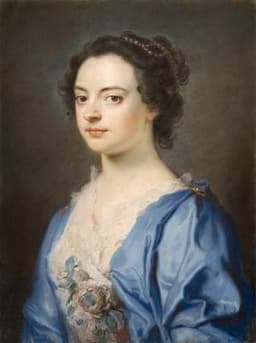
Philip Stanhope Chesterfield
Politician · Modern
52.0Total
Basic Information
Born
1969
1694
Died
—
1773
Era
Modern
Modern
Nationality
Estonia
Great Britain
Occupation
Politician
Politician
Civilization
Western
Western
Score Comparison
Military (10%)
13.8
47.0
Political (20%)
62.7
37.9
Influence (20%)
53.3
60.0
Legacy (20%)
40.8
52.0
Leadership (15%)
66.0
62.2
Strategy (15%)
41.5
43.1
TOTAL
48.4
52.0
Kersti Kaljulaid — Complete Timeline
2016 AD
Elected President of EstoniaPolitical Action◆ Major
Kaljulaid was elected as the first female President of Estonia, serving from 2016 to 2021. Her election marked a milestone for gender equality in Estonian politics, and she focused on social issues, digitalization, and international relations.
PresidencyGender EqualityFirst Female President
Impact: nationalprogressive
2017 AD
Advocated for EU Digital Single MarketPolitical Action
Kaljulaid actively promoted the European Union's Digital Single Market strategy, emphasizing the importance of digital innovation and cross-border data flows. She spoke at EU summits and conferences, positioning Estonia as a leader in digital policy.
EU PolicyDigital Single MarketInnovation
Impact: regionalconstructive
2018 AD
Supported the 'Education for All' InitiativeReform
Kaljulaid launched an initiative to improve access to education for marginalized groups in Estonia, including Russian-speaking minorities and rural populations. The program aimed to reduce educational inequality and promote social cohesion.
EducationSocial PolicyEquality
Impact: nationalprogressive
2019 AD
Addressed the United Nations General AssemblyPolitical Action
Kaljulaid addressed the UN General Assembly, calling for stronger international cooperation on climate change, digital governance, and human rights. Her speech highlighted Estonia's commitment to multilateralism and sustainable development.
UNClimate ChangeMultilateralism
Impact: globalconstructive
2021 AD
End of Presidential TermPolitical Action
Kaljulaid's term as President ended in October 2021, as she did not seek re-election. She was succeeded by Alar Karis. Her presidency was noted for its focus on digitalization, social issues, and gender equality.
PresidencyTransitionLegacy
Impact: national
Philip Stanhope Chesterfield — Complete Timeline
1730 AD
Authorship of Political ArticlesCultural
Chesterfield wrote political articles for the opposition journal The Craftsman, criticizing the Walpole government. His witty and satirical style earned him a reputation as a leading literary figure in opposition politics.
JournalismSatireOpposition
Impact: national
1745 AD
Appointment as Lord Lieutenant of IrelandPolitical Action
Chesterfield served as Lord Lieutenant of Ireland, where he implemented policies of religious tolerance, reducing tensions with Catholics. He also improved Dublin's infrastructure, including the construction of the Royal Barracks.
AdministrationToleranceInfrastructure
Impact: regionalconstructive
1774 AD
Publication of Letters to His SonCultural◆ Major
Chesterfield's letters to his illegitimate son, Philip Stanhope, were published posthumously. The letters offered advice on manners, politics, and social climbing, becoming a widely read manual on etiquette and self-improvement in the 18th century.
LiteratureEtiquetteEducation
Impact: globalconstructive
This comparison has not been analyzed yet.
One-time AI generation (~1 minute). Scores and timeline are already available below.
Rankings
🥇
Philip Stanhope ChesterfieldLeader
Mil: 47.0Pol: 37.9Inf: 60.0
52.0
🥈
Kersti Kaljulaid
Mil: 13.8Pol: 62.7Inf: 53.3
48.4
+3.6 behind
How This Comparison Works
Algorithm
Each figure is scored on 6 dimensions (0—100 scale) based on structured historical data: Military (10%), Political (20%), Influence (20%), Legacy (20%), Leadership (15%), Strategy (15%). The weighted total produces the final ranking.
Data Sources
Scores are computed from structured sub-indicators in the database. Scale factors adjust for era (Ancient ×0.85, Modern ×1.0) and civilization size (Eastern ×1.05, Other ×0.80) to account for differences in population and military scale.
Maximum 3 Figures
Comparisons are limited to 2—3 figures to ensure readability and statistical meaningfulness.
Error Margins
±5 points per dimension — Sub-scores are derived from historical records with inherent uncertainty. Two figures within 5 points on a dimension should be considered roughly equivalent in that area.
Total Score Accuracy
±3 points overall — The weighted combination of 6 dimensions produces a total score with approximately ±3 points of uncertainty. Differences of less than 3 points are not statistically significant— the figures are effectively tied.
Known Limitations
- Historical records are incomplete and uneven across civilizations
- Figures from oral-tradition societies may be underrepresented
- Occupation labels can misclassify multi-role figures
- Scores measure capability and impact, not moral character
- Quantitative scoring is a comparison tool, not absolute truth
Capability Radar
Military (10%) — Battles & Warfare
Battles
20
31
Win Rate
24
33
Expansion
28
37
Political (20%) — Governance & Reform
Reform
55
20
Diplomacy
60
40
Economy
55
25
Influence (20%) — Cultural & Global Reach
Cultural
30
55
Global
30
45
Legacy (20%) — Historical Impact
Historical
25
50
Longevity
20
60
Leadership (15%) — Power & Stability
Tenure
50
30
Stability
65
30
Strategy (15%) — Tactics & Innovation
Strategy
34
37
Tactics
34
41
Reform
35
46
Similar Comparisons
Comments & Discussion
No comments yet. Be the first to share your thoughts!