Loading...
This comparison has not been analyzed yet.
One-time AI generation (~1 minute). Scores and timeline are already available below.
Kemal Kilicdaroglu vs Sushil Koirala
Kemal Kilicdaroglu leads by 0.8 pts · 2 figures compared
…

Kemal Kilicdaroglu
Politician · Modern
53.7Total
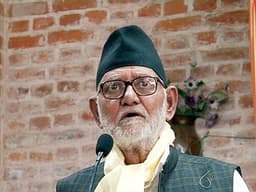
Sushil Koirala
Politician · Modern
52.9Total
Basic Information
Born
1948
1939
Died
—
—
Era
Modern
Modern
Nationality
Turkey
Nepal
Occupation
Politician
Politician
Civilization
Middle Eastern
Indian
Score Comparison
Military (10%)
47.1
39.7
Political (20%)
68.0
45.0
Influence (20%)
54.9
55.7
Legacy (20%)
44.2
48.3
Leadership (15%)
65.7
68.0
Strategy (15%)
41.8
60.0
TOTAL
53.7
52.9
Kemal Kilicdaroglu — Complete Timeline
2010 AD
Elected Leader of CHPPolitical Action◆ Major
Kilicdaroglu was elected leader of the Republican People's Party (CHP), Turkey's main opposition party. He succeeded Deniz Baykal and aimed to modernize the party and challenge Erdogan's AKP.
CHPOppositionLeadership
Impact: nationalconstructive
2016 AD
Survived Assassination AttemptPolitical Action
Kilicdaroglu survived an assassination attempt when a gunman opened fire near his convoy during a funeral. No one was injured, and the attacker was arrested.
Assassination AttemptSecurityTurkey
Impact: nationaltragic
2017 AD
Led Opposition in 2017 Constitutional ReferendumPolitical Action◆ Major
Kilicdaroglu led the 'No' campaign against the constitutional referendum that granted sweeping powers to President Erdogan. The 'Yes' vote won narrowly, with allegations of irregularities.
ReferendumConstitutional ChangeDemocracy
Impact: nationalconstructive
2023 AD
Challenged Erdogan in 2023 Presidential ElectionPolitical Action◆ Major
Kilicdaroglu ran as the joint opposition candidate against Erdogan in the presidential election. He won 47.8% in the first round but lost the runoff, despite strong support from a six-party alliance.
Presidential ElectionOpposition AllianceTurkey
Impact: national
Sushil Koirala — Complete Timeline
2014 AD
Elected as Prime Minister of NepalPolitical Action◆ Major
Sushil Koirala was elected Prime Minister of Nepal by the Constituent Assembly, leading a coalition government of the Nepali Congress and other parties. His main task was to finalize the new constitution.
Prime MinisterCoalitionConstitution
Impact: national
2015 AD
Promulgated the Constitution of NepalPolitical Action
Under Koirala's leadership, the Constituent Assembly promulgated the new Constitution of Nepal, replacing the interim constitution. The constitution established Nepal as a federal democratic republic, but faced protests from Madhesi groups over provincial boundaries.
ConstitutionFederalismRepublic
Impact: nationalconstructive
Resigned as Prime Minister after constitution promulgationPolitical Action◆ Major
Following the promulgation of the constitution, Koirala resigned as Prime Minister as part of a power-sharing agreement. His resignation led to the election of a new prime minister from the leftist alliance.
ResignationPower-sharingConstitution
Impact: national
This comparison has not been analyzed yet.
One-time AI generation (~1 minute). Scores and timeline are already available below.
Rankings
🥇
Kemal KilicdarogluLeader
Mil: 47.1Pol: 68.0Inf: 54.9
53.7
🥈
Sushil Koirala
Mil: 39.7Pol: 45.0Inf: 55.7
52.9
+0.8 behind
How This Comparison Works
Algorithm
Each figure is scored on 6 dimensions (0—100 scale) based on structured historical data: Military (10%), Political (20%), Influence (20%), Legacy (20%), Leadership (15%), Strategy (15%). The weighted total produces the final ranking.
Data Sources
Scores are computed from structured sub-indicators in the database. Scale factors adjust for era (Ancient ×0.85, Modern ×1.0) and civilization size (Eastern ×1.05, Other ×0.80) to account for differences in population and military scale.
Maximum 3 Figures
Comparisons are limited to 2—3 figures to ensure readability and statistical meaningfulness.
Error Margins
±5 points per dimension — Sub-scores are derived from historical records with inherent uncertainty. Two figures within 5 points on a dimension should be considered roughly equivalent in that area.
Total Score Accuracy
±3 points overall — The weighted combination of 6 dimensions produces a total score with approximately ±3 points of uncertainty. Differences of less than 3 points are not statistically significant— the figures are effectively tied.
Known Limitations
- Historical records are incomplete and uneven across civilizations
- Figures from oral-tradition societies may be underrepresented
- Occupation labels can misclassify multi-role figures
- Scores measure capability and impact, not moral character
- Quantitative scoring is a comparison tool, not absolute truth
Capability Radar
Military (10%) — Battles & Warfare
Battles
21
41
Win Rate
27
48
Expansion
26
51
Political (20%) — Governance & Reform
Reform
45
65
Diplomacy
50
55
Economy
40
30
Influence (20%) — Cultural & Global Reach
Cultural
30
35
Global
30
30
Legacy (20%) — Historical Impact
Historical
35
50
Longevity
20
40
Leadership (15%) — Power & Stability
Tenure
30
45
Stability
35
40
Strategy (15%) — Tactics & Innovation
Strategy
32
55
Tactics
32
54
Reform
38
58
Similar Comparisons
Comments & Discussion
No comments yet. Be the first to share your thoughts!