Loading...
Kato Kiyomasa vs Sakakibara Yasumasa
Sakakibara Yasumasa leads by 4.8 pts · 2 figures compared
…

Kato Kiyomasa
General · Modern
54.3Total
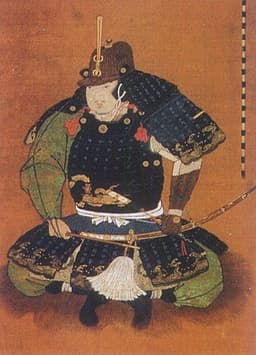
Sakakibara Yasumasa
General · Modern
59.1Total
Basic Information
Born
1562
1548
Died
1611
1606
Era
Modern
Modern
Nationality
Japan
Japan
Occupation
General
General
Civilization
Eastern
Eastern
Score Comparison
Military (10%)
61.7
70.0
Political (20%)
39.4
68.0
Influence (20%)
61.0
56.4
Legacy (20%)
47.5
48.3
Leadership (15%)
62.0
70.0
Strategy (15%)
57.5
52.5
TOTAL
54.3
59.1
Kato Kiyomasa — Complete Timeline
1592 AD
First Invasion of Korea (Imjin War)War◆ Major
Kato Kiyomasa led a Japanese division in the invasion of Korea, capturing the city of Seoul and advancing into the northeastern provinces. His forces engaged in brutal campaigns against Korean and Ming Chinese troops.
Imjin WarJapanese InvasionKorea
Impact: regionaldestructive
Tiger Hunting in KoreaOther
During the invasion of Korea, Kato Kiyomasa hunted tigers in the Korean mountains, reportedly killing several. This earned him the nickname 'Tiger Hunter' and became a celebrated aspect of his military reputation.
Tiger HuntingLegendKorea
1598 AD
Battle of UlsanWar◆ Major
Kato Kiyomasa defended the Japanese fortress at Ulsan against a siege by Ming Chinese and Korean forces. The siege lasted several months, and Kato's forces held out until reinforcements arrived, forcing the allies to withdraw.
Imjin WarSiegeDefense
Impact: regional
1600 AD
Battle of SekigaharaWar
Kato Kiyomasa fought on the Eastern Army side under Tokugawa Ieyasu at Sekigahara. His forces contributed to the defeat of the Western Army, securing Tokugawa's dominance and Kato's position as a major daimyo.
SekigaharaBattleTokugawa
Impact: nationalconstructive
Sakakibara Yasumasa — Complete Timeline
1570 AD
Battle of AnegawaWar
Sakakibara Yasumasa fought under Tokugawa Ieyasu at the Battle of Anegawa. He led a unit and contributed to the allied victory against the Azai and Asakura forces.
Sengoku PeriodBattleTokugawa
Impact: regionalconstructive
1584 AD
Battle of Komaki and NagakuteWar◆ Major
Sakakibara Yasumasa fought at the Battle of Komaki and Nagakute against Toyotomi Hideyoshi's forces. He commanded a unit and engaged in skirmishes, demonstrating his loyalty to Tokugawa Ieyasu.
Sengoku PeriodBattleKomaki
Impact: regional
1590 AD
Siege of OdawaraWar
Sakakibara Yasumasa participated in the Siege of Odawara under Toyotomi Hideyoshi. He commanded a contingent of Tokugawa forces during the siege, which ended with the surrender of the Hojo clan.
Sengoku PeriodSiegeOdawara
Impact: regional
1600 AD
Battle of SekigaharaWar
Sakakibara Yasumasa fought for Tokugawa Ieyasu at Sekigahara. He led his forces against the Western Army, contributing to the decisive victory that established Tokugawa rule.
Sengoku PeriodBattleSekigahara
Impact: nationalconstructive
Expert Analysis
Origins
Kato Kiyomasa was born in 1562 in Owari Province to a blacksmith family. His father died when he was young, and he was taken in by the Toyotomi clan, serving Hideyoshi from childhood. He grew up in the turbulent Sengoku period, surrounded by warfare. His early experiences included participating in the Battle of Shizugatake in 1583, where he earned recognition for his bravery.
Sakakibara Yasumasa was born in 1548 in Mikawa Province to a samurai family serving the Matsudaira (later Tokugawa) clan. He served Tokugawa Ieyasu from a young age, participating in the Battle of Anegawa in 1570. His loyalty and skill in battle earned him a place among Ieyasu's most trusted generals, known as the "Four Heavenly Kings."
Rise to Power
Kato Kiyomasa rose to prominence during Toyotomi Hideyoshi's campaigns. He distinguished himself at the Battle of Shizugatake in 1583, where his charge helped defeat Shibata Katsuie. He was granted the fief of Kumamoto in 1588, worth 250,000 koku. His participation in the First Invasion of Korea in 1592-1593 brought him fame: he captured Seoul and advanced into Hamgyong Province. His tiger hunting in Korea earned him the nickname "Tiger Hunter." However, his rivalry with Konishi Yukinaga, a Christian daimyo, would later affect his standing.
Sakakibara Yasumasa rose through steadfast service to Tokugawa Ieyasu. He fought at the Battle of Anegawa in 1570, helping to defeat the Azai and Asakura clans. In 1584, at the Battle of Komaki and Nagakute, he commanded a unit against Toyotomi Hideyoshi's forces. He participated in the Siege of Odawara in 1590, commanding a contingent of Tokugawa forces. By the time of the Battle of Sekigahara in 1600, he was one of Ieyasu's most senior commanders.
Leadership & Governance
Kato Kiyomasa was a fierce warrior with a reputation for strict discipline. As daimyo of Kumamoto, he was known for his harsh rule: he suppressed Christianity in his domain, executing missionaries and converts. He focused on military preparedness, building the formidable Kumamoto Castle, which was designed to be impregnable. His governance was effective but brutal, reflecting his warrior ethos.
Sakakibara Yasumasa was a more balanced leader. He served as a military commander and later as an administrator. He was known for his loyalty and strategic advice to Ieyasu. After Sekigahara, he was appointed as a senior elder (tairo) and given a fief of 100,000 koku. He was involved in the administration of the Tokugawa shogunate, contributing to the establishment of the bakuhan system. His political score of 68.0 reflects his dual role as a general and administrator, compared to Kiyomasa's 39.4.
Triumph & Tragedy
Kato Kiyomasa's greatest triumph was his performance in the Korean campaigns. His division captured Seoul and advanced into northeastern Korea, defeating Korean and Ming forces. He held the fortress of Ulsan during a prolonged siege in 1597-1598, demonstrating his defensive capabilities. His greatest failure was his rivalry with Konishi Yukinaga, which led to internal conflicts among the Japanese forces. After Hideyoshi's death, he sided with Tokugawa Ieyasu at Sekigahara, but his political missteps after the battle—such as opposing Ieyasu's marriage alliance—led to his forced retirement and eventual death in 1611. His legacy score of 47.5 reflects his limited long-term impact.
Sakakibara Yasumasa's triumphs include his role in securing Tokugawa victories. At Sekigahara, he commanded a key force that helped break the Western Army. He was instrumental in the early Edo period's governance. His failure was relatively minor: he was not as prominent in later campaigns, and his influence waned after Ieyasu's death. He died in 1606, before fully enjoying the rewards of his service. His legacy score of 48.3 is similar to Kiyomasa's, but his political and military scores are higher.
Character & Destiny
Kato Kiyomasa was aggressive, ambitious, and religiously intolerant. His nickname "Tiger Hunter" reflects his personal bravery and love of hunting. He was a staunch opponent of Christianity, which put him at odds with other daimyo. His character led to both his rise and fall: his military prowess earned him fame, but his inability to navigate politics limited his influence. He died with 54.3 total score.
Sakakibara Yasumasa was loyal, cautious, and pragmatic. He was known for his level-headedness and strategic counsel. His character allowed him to serve effectively under Ieyasu, but he lacked the charisma to leave a lasting personal legacy. He scored 59.1 total.
Legacy
Kato Kiyomasa is remembered as a symbol of samurai martial prowess. Kumamoto Castle, one of Japan's most famous castles, stands as a testament to his military engineering. His tiger hunting stories are celebrated in Japanese folklore. However, his political legacy is minimal.
Sakakibara Yasumasa is remembered as one of the Four Heavenly Kings of Tokugawa, a trusted general who helped establish the Tokugawa shogunate. His contributions to the early Edo period's stability are recognized, but he is less famous than other Tokugawa generals like Ii Naomasa or Honda Tadakatsu.
Conclusion
Sakakibara Yasumasa had a greater impact on Japanese history than Kato Kiyomasa. With a total score of 59.1 vs 54.3, Yasumasa's contributions as both a general and administrator were more crucial to the stability of the Tokugawa shogunate, which lasted over 250 years. Kiyomasa's military exploits, while impressive, did not have the same long-term political consequences. Yasumasa's higher scores in military (70.0 vs 61.7), political (68.0 vs 39.4), and leadership (70.0 vs 62.0) reflect his more balanced and enduring influence.
Rankings
🥇
Sakakibara YasumasaLeader
Mil: 70.0Pol: 68.0Inf: 56.4
59.1
🥈
Kato Kiyomasa
Mil: 61.7Pol: 39.4Inf: 61.0
54.3
+4.8 behind
How This Comparison Works
Algorithm
Each figure is scored on 6 dimensions (0—100 scale) based on structured historical data: Military (10%), Political (20%), Influence (20%), Legacy (20%), Leadership (15%), Strategy (15%). The weighted total produces the final ranking.
Data Sources
Scores are computed from structured sub-indicators in the database. Scale factors adjust for era (Ancient ×0.85, Modern ×1.0) and civilization size (Eastern ×1.05, Other ×0.80) to account for differences in population and military scale.
Maximum 3 Figures
Comparisons are limited to 2—3 figures to ensure readability and statistical meaningfulness.
Error Margins
±5 points per dimension — Sub-scores are derived from historical records with inherent uncertainty. Two figures within 5 points on a dimension should be considered roughly equivalent in that area.
Total Score Accuracy
±3 points overall — The weighted combination of 6 dimensions produces a total score with approximately ±3 points of uncertainty. Differences of less than 3 points are not statistically significant— the figures are effectively tied.
Known Limitations
- Historical records are incomplete and uneven across civilizations
- Figures from oral-tradition societies may be underrepresented
- Occupation labels can misclassify multi-role figures
- Scores measure capability and impact, not moral character
- Quantitative scoring is a comparison tool, not absolute truth
Capability Radar
Military (10%) — Battles & Warfare
Battles
70
55
Win Rate
65
60
Expansion
60
50
Political (20%) — Governance & Reform
Reform
20
45
Diplomacy
25
55
Economy
30
50
Influence (20%) — Cultural & Global Reach
Cultural
40
40
Global
35
30
Legacy (20%) — Historical Impact
Historical
45
50
Longevity
30
40
Leadership (15%) — Power & Stability
Tenure
45
60
Stability
40
55
Strategy (15%) — Tactics & Innovation
Strategy
55
55
Tactics
60
60
Reform
30
40
Similar Comparisons
Comments & Discussion
No comments yet. Be the first to share your thoughts!