Loading...
Karpoori Thakur vs Rafic Hariri
Karpoori Thakur leads by 1.8 pts · 2 figures compared
…

Karpoori Thakur
Politician · Modern
57.4Total
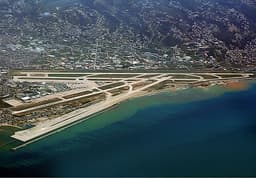
Rafic Hariri
Politician · Modern
55.6Total
Basic Information
Born
1924
1944
Died
—
—
Era
Modern
Modern
Nationality
India
Lebanon
Occupation
Politician
Politician
Civilization
Indian
Middle Eastern
Score Comparison
Military (10%)
40.9
26.9
Political (20%)
65.0
78.0
Influence (20%)
55.0
55.0
Legacy (20%)
52.0
52.0
Leadership (15%)
72.0
68.0
Strategy (15%)
60.0
42.1
TOTAL
57.4
55.6
Karpoori Thakur — Complete Timeline
1970 AD
Became Chief Minister of Bihar for the first timePolitical Action◆ Major
Karpoori Thakur was sworn in as the Chief Minister of Bihar, leading a coalition government. His first tenure focused on land reforms and prohibition, but was short-lived due to political instability.
Chief MinisterBiharSocialist
Impact: regionalconstructive
1977 AD
Second term as Chief Minister of BiharPolitical Action◆ Major
Thakur returned as Chief Minister after the Janata Party victory in 1977. His second term saw the implementation of the Mungeri Lal Commission report, which introduced reservations for backward castes in government jobs and education.
Chief MinisterBiharReservations
Impact: regionalprogressive
1978 AD
Introduced backward caste quotas in BiharReform
Thakur implemented the recommendations of the Mungeri Lal Commission, providing 26% reservation for backward castes in government jobs and educational institutions. This landmark decision became a model for other states and influenced national policy.
ReservationsBackward CastesSocial Justice
Impact: nationalprogressive
1988 AD
Death and legacy as a socialist iconOther◆ Major
Thakur died in 1988, leaving a legacy as a champion of backward caste rights. His policies on reservations and social justice continued to influence Indian politics, and he was posthumously awarded the Bharat Ratna in 2024.
DeathLegacySocial Justice
Impact: nationalconstructive
Rafic Hariri — Complete Timeline
1992 AD
Appointed Prime Minister of LebanonPolitical Action◆ Major
Rafic Hariri was appointed Prime Minister of Lebanon on October 31, 1992, after the end of the civil war. He was tasked with rebuilding the country's economy and infrastructure, leveraging his personal wealth and international connections.
Prime MinisterReconstructionPost-war
Impact: nationalconstructive
1994 AD
Launched the reconstruction of Beirut Central DistrictOther◆ Major
Hariri's government initiated the reconstruction of Beirut's central district through the Solidere company. The project rebuilt the war-torn city center with modern infrastructure, but faced criticism for displacing residents and favoring wealthy investors.
ReconstructionBeirutUrban Development
Impact: nationalconstructive
1998 AD
Resigned as Prime Minister amid political crisisPolitical Action
Hariri resigned as Prime Minister in December 1998 after a dispute with President Emile Lahoud over economic policy and corruption. He returned to power in 2000 after winning parliamentary elections.
ResignationPolitical CrisisElections
Impact: national
2005 AD
Assassinated in Beirut bombingPolitical Action
Rafic Hariri was assassinated on February 14, 2005, when a massive truck bomb exploded near his motorcade in Beirut. His death sparked the Cedar Revolution, leading to the withdrawal of Syrian troops from Lebanon and international investigations.
AssassinationCedar RevolutionSyria
Impact: regionaltragic
Expert Analysis
Origins
Karpoori Thakur was born on January 24, 1924, in a lower-caste barber family in Samastipur, Bihar. His father was a farmer, and Thakur faced caste discrimination from an early age, which shaped his political commitment to social justice. He joined the Indian independence movement in 1942, participating in the Quit India Movement, and was imprisoned. After independence, he became a protégé of socialist leader Jayaprakash Narayan and was elected to the Bihar Legislative Assembly in 1952 as a member of the Socialist Party.
Rafic Hariri was born on November 1, 1944, in Sidon, Lebanon, into a Sunni Muslim farming family. He studied business administration at the Beirut Arab University but left before graduating. In 1965, he moved to Saudi Arabia, where he worked as a teacher and later founded his own construction company, Saudi Oger. Hariri became a billionaire through construction contracts, including building the King Saud University campus. He also acquired Saudi citizenship and became a close confidant of the Saudi royal family.
Rise to Power
Thakur rose through Bihar's socialist politics. He served as a minister in the state government in the 1960s, handling portfolios like education and transport. In 1967, he became the first non-Congress Chief Minister of Bihar, leading a coalition government. His first term lasted only 11 months but focused on land reforms and prohibition. He returned to power in 1977 after the Janata Party swept to power nationally, serving as Chief Minister until 1979. His rise was marked by advocacy for backward castes, culminating in the implementation of the Mungeri Lal Commission report in 1978.
Hariri's rise was built on wealth and connections. After making his fortune in Saudi Arabia, he became involved in Lebanese politics. In 1992, he was appointed Prime Minister, tasked with rebuilding Lebanon after the 15-year civil war. He leveraged his personal fortune and international ties to secure foreign aid and investment. His government passed the Law on the Reconstruction of Beirut, creating the private company Solidere to rebuild the city center. Hariri's political influence grew as he became a symbol of economic recovery, though his close ties to Saudi Arabia and the West drew criticism.
Leadership & Governance
Thakur's leadership was defined by his commitment to social justice and socialism. He implemented a 26% reservation for backward castes in Bihar's government jobs and educational institutions, a landmark policy that preceded the Mandal Commission at the national level. He also introduced prohibition in Bihar, banning alcohol to reduce social ills. However, his governance was hampered by coalition instability and limited financial resources. His political score of 65.0 reflects his influence in shaping caste politics, but his leadership score of 72.0 is tempered by the short duration of his tenures.
Hariri governed as a technocratic businessman, focusing on reconstruction and economic growth. He oversaw the rebuilding of Beirut's central district, attracting international investment and restoring infrastructure. His government also stabilized the Lebanese pound and reduced inflation. However, his governance was criticized for corruption, cronyism, and a lack of transparency. He accumulated a huge national debt, and his economic policies benefited the elite. His political score of 78.0 is high due to his role in post-war recovery, but his strategy score of 42.1 indicates a failure to address political and sectarian tensions.
Triumph & Tragedy
Thakur's greatest triumph was the implementation of backward caste quotas, which transformed Bihar's social landscape and inspired national reservation policies. He is remembered as a hero of the backward classes. His tragedy was his inability to sustain power: his first term lasted less than a year, and his second term ended after two years due to coalition collapses. He also faced criticism for not doing enough for the poorest, focusing on caste rather than class.
Hariri's triumph was rebuilding Beirut and restoring Lebanon's economic stability after the civil war. He attracted $18 billion in reconstruction funds and transformed the city's skyline. His tragedy was his assassination on February 14, 2005, in a massive bomb blast that killed 21 others. The assassination sparked the Cedar Revolution, leading to the withdrawal of Syrian troops from Lebanon. However, his legacy is also marred by accusations of corruption and his role in creating a debt-ridden economy.
Character & Destiny
Thakur was known for his humility, austerity, and principled socialism. He lived a simple life, refusing to use official perks. His character made him a beloved figure among the marginalized, but his rigid ideology limited his political flexibility. He died on February 17, 1988, at age 64, from a heart attack. His destiny was to be a catalyst for social change, even if his own political career was short.
Hariri was ambitious, charismatic, and pragmatic. He used his wealth to buy political influence and was seen as a unifier. However, his character also included a ruthlessness in business and politics, and he made many enemies. His destiny was to be a martyr for Lebanese sovereignty, but his death also deepened sectarian divisions. He was assassinated at age 60, leaving behind a mixed legacy of achievement and controversy.
Legacy
Thakur's legacy is monumental in Indian caste politics. His quotas became a model for the Mandal Commission, which extended reservations to 27% for other backward classes nationwide. He is celebrated annually in Bihar on his birth anniversary, and his policies continue to influence affirmative action debates. His total score of 57.4 reflects his enduring impact on social justice, though his influence remains largely regional.
Hariri's legacy is visible in Beirut's rebuilt downtown, but his economic model left Lebanon with a debt crisis that contributed to the 2019 financial collapse. His assassination reshaped Lebanese politics, leading to the end of Syrian occupation. However, his personal legacy is contested. He scored 55.6 overall, with high political influence but low military and strategy scores. His impact is more immediate but less transformative than Thakur's.
Conclusion
Karpoori Thakur had a greater impact than Rafic Hariri. While Hariri rebuilt a city and briefly stabilized a nation, his policies sowed the seeds of future crises, and his legacy is tied to his violent death. Thakur, by contrast, initiated a social revolution that empowered millions and reshaped Indian democracy. His quotas have had a lasting effect on caste relations and continue to be a reference point for affirmative action worldwide. Despite his lower political score (65.0 vs. 78.0), Thakur's legacy score of 52.0 matches Hariri's, and his leadership score of 72.0 exceeds Hariri's 68.0. Thakur's total score of 57.4 is slightly higher, but more importantly, his policies have had a deeper, more enduring impact on social equality. Thakur's contribution to justice outweighs Hariri's contribution to reconstruction.
Rankings
🥇
Karpoori ThakurLeader
Mil: 40.9Pol: 65.0Inf: 55.0
57.4
🥈
Rafic Hariri
Mil: 26.9Pol: 78.0Inf: 55.0
55.6
+1.8 behind
How This Comparison Works
Algorithm
Each figure is scored on 6 dimensions (0—100 scale) based on structured historical data: Military (10%), Political (20%), Influence (20%), Legacy (20%), Leadership (15%), Strategy (15%). The weighted total produces the final ranking.
Data Sources
Scores are computed from structured sub-indicators in the database. Scale factors adjust for era (Ancient ×0.85, Modern ×1.0) and civilization size (Eastern ×1.05, Other ×0.80) to account for differences in population and military scale.
Maximum 3 Figures
Comparisons are limited to 2—3 figures to ensure readability and statistical meaningfulness.
Error Margins
±5 points per dimension — Sub-scores are derived from historical records with inherent uncertainty. Two figures within 5 points on a dimension should be considered roughly equivalent in that area.
Total Score Accuracy
±3 points overall — The weighted combination of 6 dimensions produces a total score with approximately ±3 points of uncertainty. Differences of less than 3 points are not statistically significant— the figures are effectively tied.
Known Limitations
- Historical records are incomplete and uneven across civilizations
- Figures from oral-tradition societies may be underrepresented
- Occupation labels can misclassify multi-role figures
- Scores measure capability and impact, not moral character
- Quantitative scoring is a comparison tool, not absolute truth
Capability Radar
Military (10%) — Battles & Warfare
Battles
43
19
Win Rate
49
22
Expansion
48
29
Political (20%) — Governance & Reform
Reform
85
70
Diplomacy
70
75
Economy
50
85
Influence (20%) — Cultural & Global Reach
Cultural
60
55
Global
45
60
Legacy (20%) — Historical Impact
Historical
70
60
Longevity
65
50
Leadership (15%) — Power & Stability
Tenure
65
65
Stability
55
40
Strategy (15%) — Tactics & Innovation
Strategy
53
31
Tactics
54
35
Reform
57
35
Similar Comparisons
Comments & Discussion
No comments yet. Be the first to share your thoughts!