Loading...
Karim Khan Zand vs Qin Shi Huang
Qin Shi Huang leads by 23.7 pts · 2 figures compared
…

Karim Khan Zand
Emperor · Modern
61.5Total
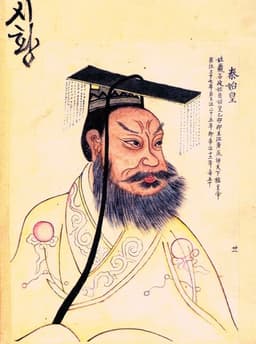
Qin Shi Huang
Emperor · Ancient
85.2Total
Basic Information
Born
1705
-259
Died
1779
-210
Era
Modern
Ancient
Nationality
Persia
China
Occupation
Emperor
Emperor
Civilization
Middle Eastern
Eastern
Score Comparison
Military (10%)
50.0
80.0
Political (20%)
78.0
90.0
Influence (20%)
60.0
85.0
Legacy (20%)
48.3
90.0
Leadership (15%)
78.0
78.0
Strategy (15%)
60.0
82.0
TOTAL
61.5
85.2
Karim Khan Zand — Complete Timeline
1750 AD
Captured ShirazWar◆ Major
Karim Khan captured Shiraz from the Afsharid governor, making it his capital. He then embarked on a building program, constructing the Arg of Karim Khan, the Vakil Mosque, and the Vakil Bazaar, transforming Shiraz into a prosperous cultural center.
ConquestUrban DevelopmentShiraz
Impact: regionalconstructive
Founded the Zand DynastyPolitical Action
Karim Khan Zand established the Zand dynasty after the collapse of the Afsharid Empire. He took control of western and central Persia, making Shiraz his capital. His rule brought stability after decades of war and foreign invasion.
Dynasty FoundingStabilization
Impact: nationalconstructive
Refused the Title of ShahPolitical Action
Karim Khan refused to take the title of shah, instead ruling as 'Vakil-e Ra'aya' (Regent of the People). This decision reflected his desire to maintain legitimacy by ruling in the name of the Safavid claimant Ismail III, and it contributed to his reputation as a benevolent ruler.
GovernanceLegitimacySafavid Claim
Impact: nationalconstructive
1759 AD
Defeated the Qajars at AstarabadWar◆ Major
Karim Khan defeated the Qajar tribal forces under Mohammad Hasan Khan Qajar at Astarabad, securing control over northern Persia. This victory eliminated a major rival and allowed Karim Khan to consolidate his rule over most of Iran.
BattleQajar RivalryConsolidation
Impact: national
1775 AD
Negotiated Peace with the OttomansPolitical Action
Karim Khan negotiated a peace treaty with the Ottoman Empire, ending hostilities along the western borders. This agreement secured the frontier and allowed Karim Khan to focus on internal development and trade, contributing to the prosperity of his realm.
DiplomacyOttoman RelationsPeace
Impact: regionalconstructive
Qin Shi Huang — Complete Timeline
246 BC
Construction of the Mausoleum and Terracotta ArmyOther◆ Major
Qin Shi Huang commissioned a vast mausoleum complex near Xi'an, guarded by thousands of life-sized terracotta soldiers, horses, and chariots. The project employed hundreds of thousands of workers and reflected his obsession with immortality and imperial power.
Impact: global
230 BC
Conquest of the Six Warring StatesWar
From 230 to 221 BCE, Ying Zheng led the Qin state in a series of campaigns that conquered the Han, Zhao, Wei, Chu, Yan, and Qi states. This unified China under a single ruler for the first time, ending the Warring States period.
Impact: global
221 BC
Standardization of Writing, Currency, and MeasurementsReform◆ Major
Qin Shi Huang ordered the standardization of Chinese script, currency, and weights and measures across the unified empire. This facilitated administration, trade, and cultural integration, laying a foundation for future dynasties.
Impact: globalconstructive
Proclamation of the Qin DynastyPolitical Action
After conquering the last independent state, Ying Zheng declared himself Shi Huangdi (First Emperor), founding the Qin Dynasty. He adopted a new title to signify his supreme authority and initiated centralized imperial rule.
Impact: global
214 BC
Initiation of the Great Wall ConstructionOther◆ Major
Qin Shi Huang ordered the connection and extension of existing northern fortifications to create a unified defensive wall against nomadic Xiongnu raids. This project involved massive conscripted labor and became the precursor to the later Great Wall.
Impact: regional
213 BC
Burning of Books and Burying of ScholarsPolitical Action◆ Major
On the advice of Li Si, Qin Shi Huang ordered the burning of historical records and philosophical texts not aligned with Legalist doctrine. He also had 460 Confucian scholars buried alive to suppress dissent and consolidate ideological control.
Impact: nationaldestructive
Expert Analysis
karim-khan-zand-vs-qin-shi-huang
# The First Emperor and the Regent of the People
In the year 221 BC, a man who called himself Shi Huangdi—the First Emperor—stood atop the conquered kingdoms of China, his armies stretching from the Yellow Sea to the Tibetan plateau. He had burned the books of his enemies, buried their scholars alive, and declared that his dynasty would last ten thousand generations. It lasted fifteen years. Eighteen centuries later and half a world away, another ruler entered the Persian city of Shiraz, not on a war chariot but as a liberator. Karim Khan Zand refused the title of shah, calling himself instead *Vakil-e Ra'aya*—Regent of the People. He built gardens, not tombs. He negotiated peace, not annihilation. Two men, both founders of dynasties, both unifiers of fractured lands—yet they could not have been more different. What made one a tyrant of bronze and blood, and the other a builder of gentle walls?
Origins
Ying Zheng was born in 259 BC into a world of endless war. The Warring States period had torn China apart for centuries, and the Qin kingdom, perched on the western frontier, had forged itself into a machine of conquest. His father was a king, his mother a concubine, and his childhood was a labyrinth of palace intrigue and assassination plots. He learned early that trust was a weapon turned against the foolish. By the time he ascended the throne at thirteen, he had already internalized the Legalist philosophy that governed Qin: human nature was base, order must be imposed by terror, and the state was everything.
Karim Khan was born in 1705 in the Zagros Mountains, among the Zand tribe of the Lurs, a pastoral people who herded goats and fought for survival. Persia had collapsed after the death of Nader Shah, the "Napoleon of Persia," whose military genius had only left a trail of ruin. Karim Khan was not a prince; he was a tribal chieftain’s son, raised in the rhythms of seasonal migration and clan loyalty. He had no Legalist philosophers whispering in his ear—only the memory of a land exhausted by war.
Rise to Power
Qin Shi Huang’s path was a blitzkrieg. Between 230 and 221 BC, he unleashed his armies in a series of campaigns that swallowed the six rival kingdoms one by one. Han fell first, then Zhao, Wei, Chu, Yan, and finally Qi. Each conquest was methodical, brutal, and absolute. He did not negotiate; he annihilated. When the last king surrendered, Ying Zheng did not simply crown himself—he invented a new title, *Shi Huangdi*, and with it a new cosmos. The universe now had a single emperor.
Karim Khan rose differently. In 1750, after the Afsharid Empire dissolved into chaos, he captured Shiraz from its governor. But he did not march on Isfahan or attempt to seize all of Persia by force. Instead, he consolidated slowly, building alliances with tribal leaders and urban merchants. When he defeated the Qajars at Astarabad in 1759, he did not exterminate them—he left them alive, contained, and wary. His power grew not through conquest but through consent. He refused the title of shah, a decision that still puzzles historians. It was not modesty; it was strategy. By ruling as a regent, he signaled that he was not another Nader Shah, another tyrant. He was the people’s guardian.
Leadership & Governance
Qin Shi Huang governed through standardization. He ordered that all writing, currency, and measurements be unified across the empire. The same script, the same coin, the same axle length for carts—so that the wheels of his realm rolled in perfect alignment. He built roads, canals, and a defensive wall that would one day bear his name. But unity came at a price. In 213 BC, on the advice of his minister Li Si, he ordered the burning of all historical records and philosophical texts that did not glorify Qin. Scholars who protested were buried alive. Knowledge was dangerous; only the emperor’s truth could stand.
Karim Khan governed through restoration. He made Shiraz his capital and transformed it into a city of gardens, palaces, and bazaars. He repaired irrigation systems, reopened trade routes, and negotiated a peace treaty with the Ottoman Empire in 1775 that secured Persia’s western borders. He did not impose a single currency or script—he let the diversity of Persian culture flourish. His court was known for its poetry, not its paranoia. Where Qin Shi Huang saw subjects as cogs in a machine, Karim Khan saw tribes, merchants, and farmers as partners in a fragile peace.
Triumph & Tragedy
Qin Shi Huang’s greatest triumph was also his greatest tragedy. He unified China, but his methods sowed the seeds of destruction. His mausoleum, commissioned in 246 BC, was a monument to his ego: a vast underground city guarded by thousands of life-sized terracotta soldiers, each face unique, each ready for an eternal war that would never come. He died in 210 BC, searching for an immortality elixir that poisoned him. Within three years, his dynasty collapsed, torn apart by rebellion. The First Emperor left a unified China—but also a blueprint for tyranny that haunted every future dynasty.
Karim Khan’s triumph was quieter. He gave Persia eighteen years of peace—a golden age after decades of bloodshed. When he died in 1779, Shiraz mourned. But his tragedy was that he built no lasting institution. The Zand dynasty crumbled within a decade, consumed by the Qajars he had spared. His refusal to take the title of shah meant there was no clear succession, no dynasty to inherit his vision. He left a garden, not a fortress.
Character & Destiny
Qin Shi Huang was driven by fear—fear of chaos, fear of death, fear of losing control. His personality was a fortress of paranoia, and his decisions reflected it. He trusted no one, not even his own sons. He sought immortality because he could not bear the thought of his empire existing without him. And so, ironically, he ensured its destruction.
Karim Khan was driven by pragmatism—and perhaps by a genuine aversion to cruelty. He refused to be called shah because he knew the title carried the weight of tyranny. He ruled by building consensus, not by crushing opposition. But his gentleness had a weakness: he could not imagine that others were not as reasonable as he. The Qajars he spared would destroy his legacy.
Legacy
Qin Shi Huang is remembered as the father of China, the man who gave the nation its name and its shape. The Great Wall, the standardized script, the Terracotta Army—these are his monuments. But he is also remembered as a monster, the burner of books, the burier of scholars. His legacy is a paradox: the unifier who was also a destroyer.
Karim Khan is remembered as the benevolent ruler, the one who refused power for its own sake. In Iran, he is still called *Karim Khan-e Zand*, the good king. But his legacy is fragile. He built no lasting institutions, no bureaucracy that survived him. He is a memory, not a foundation.
Conclusion
Standing at the edge of history, one sees two men who faced the same problem: how to rule a fractured land. One answered with iron, the other with velvet. Qin Shi Huang’s China endures because he built a system so rigid that it forced unity. Karim Khan’s Persia faded because he built a peace so gentle that it could not survive his death. Which was wiser? Perhaps the question itself is the answer. The First Emperor’s tyranny gave China a backbone; the Regent’s kindness gave Persia a soul. Both are needed. Both are lost when only one remains.
Rankings
🥇
Qin Shi HuangLeader
Mil: 80.0Pol: 90.0Inf: 85.0
85.2
🥈
Karim Khan Zand
Mil: 50.0Pol: 78.0Inf: 60.0
61.5
+23.7 behind
How This Comparison Works
Algorithm
Each figure is scored on 6 dimensions (0—100 scale) based on structured historical data: Military (10%), Political (20%), Influence (20%), Legacy (20%), Leadership (15%), Strategy (15%). The weighted total produces the final ranking.
Data Sources
Scores are computed from structured sub-indicators in the database. Scale factors adjust for era (Ancient ×0.85, Modern ×1.0) and civilization size (Eastern ×1.05, Other ×0.80) to account for differences in population and military scale.
Maximum 3 Figures
Comparisons are limited to 2—3 figures to ensure readability and statistical meaningfulness.
Error Margins
±5 points per dimension — Sub-scores are derived from historical records with inherent uncertainty. Two figures within 5 points on a dimension should be considered roughly equivalent in that area.
Total Score Accuracy
±3 points overall — The weighted combination of 6 dimensions produces a total score with approximately ±3 points of uncertainty. Differences of less than 3 points are not statistically significant— the figures are effectively tied.
Known Limitations
- Historical records are incomplete and uneven across civilizations
- Figures from oral-tradition societies may be underrepresented
- Occupation labels can misclassify multi-role figures
- Scores measure capability and impact, not moral character
- Quantitative scoring is a comparison tool, not absolute truth
Capability Radar
Military (10%) — Battles & Warfare
Battles
55
85
Win Rate
60
90
Expansion
45
90
Political (20%) — Governance & Reform
Reform
70
95
Diplomacy
75
75
Economy
70
90
Influence (20%) — Cultural & Global Reach
Cultural
55
95
Global
35
85
Legacy (20%) — Historical Impact
Historical
50
95
Longevity
40
95
Leadership (15%) — Power & Stability
Tenure
65
70
Stability
75
65
Strategy (15%) — Tactics & Innovation
Strategy
55
85
Tactics
50
80
Reform
40
95
Similar Comparisons
Comments & Discussion
数据侦探6/17/2026
别吹什么“仁君”了。Karim Zand统治29年,人口就涨了20%不到;秦始皇统一后,户籍登记人口激增40%以上。数据不说谎:严刑峻法虽然难看,但Zand的“仁政”连基础建设都没搞几条。修筒仓不算功绩,摊大饼谁不会?
HopliteHeart6/17/2026
Two men, two scales of ambition. Qin Shi Huang conquered six kingdoms and standardized script, currency, and axle widths across a continent. Karim Khan kept his warhorses to the Zagros Mountains. One aimed at eternity, the other at contentment. I know which general I’d rather serve under, and it’s the one who aimed for the stars, not the one who settled for Shiraz.
竹帛剑豪6/17/2026
秦始皇焚书坑儒是事实,但你们知道Karim Zand也搞过文化清洗吗?他下令烧毁所有什叶派以外的波斯宗教文本,只留法学和医学。这俩人半斤八两,一个烧“百家”,一个烧“异端”。差别只在于:Zand没建立秦那样的户籍监控系统——不是不想,是没那技术。
Chronicler70316/17/2026
Qin Shi Huang is overrated. Yes, he unified China, but his brutality—burning books, burying scholars alive—was just political theater. His empire collapsed a decade after his death. Karim Khan Zand, meanwhile, ruled for 29 years without a single mass execution, and Persia thrived. The First Emperor built a wall; the Regent built trust. You choose which legacy matters more.
Chronicler65356/17/2026
Coinage doesn’t lie. Qin Shi Huang minted copper *ban liang* coins—standardized weight, uniform design, the first empire-wide currency. Karim Zand? He reused Safavid dies, added his own name sometimes, but mostly recycled old silver. One man built a fiscal system that lasted a millennium; the other just minted enough for his bazaar. That’s the difference between an emperor and a caretaker.