Loading...
This comparison has not been analyzed yet.
One-time AI generation (~1 minute). Scores and timeline are already available below.
Kantaro Suzuki vs Louis de Buade de Frontenac
Louis de Buade de Frontenac leads by 16.2 pts · 2 figures compared
…

Kantaro Suzuki
General · Modern
44.3Total
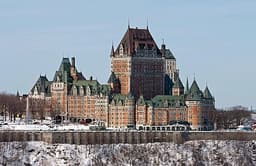
Louis de Buade de Frontenac
General · Modern
60.5Total
Basic Information
Born
1868
1622
Died
1948
1698
Era
Modern
Modern
Nationality
Japan
France
Occupation
General
General
Civilization
Eastern
Western
Score Comparison
Military (10%)
25.9
50.0
Political (20%)
40.8
68.0
Influence (20%)
56.4
61.0
Legacy (20%)
45.0
49.2
Leadership (15%)
43.8
80.0
Strategy (15%)
36.8
57.5
TOTAL
44.3
60.5
Kantaro Suzuki — Complete Timeline
1936 AD
Survived Assassination AttemptPolitical Action◆ Major
During the February 26 Incident, a coup attempt by young Imperial Japanese Army officers, Suzuki was shot multiple times by the rebels at his home. He survived the attack, though he was seriously wounded.
February 26 IncidentCoupAssassination
Impact: nationaltragic
1945 AD
Became Prime Minister of JapanPolitical Action◆ Major
Suzuki was appointed Prime Minister of Japan in April 1945, during the final months of World War II. He led the government that ultimately decided to accept the Potsdam Declaration and surrender to the Allies.
World War IIPrime MinisterSurrender
Impact: global
Announced Japan's SurrenderPolitical Action
As Prime Minister, Suzuki oversaw the decision to surrender after the atomic bombings of Hiroshima and Nagasaki and the Soviet invasion of Manchuria. He announced Japan's acceptance of the Potsdam Declaration on August 15, 1945.
World War IISurrenderPotsdam Declaration
Impact: global
Louis de Buade de Frontenac — Complete Timeline
1672 AD
Appointment as Governor General of New FrancePolitical Action◆ Major
Louis XIV appointed Frontenac as Governor General of New France. He arrived in Quebec and immediately pursued expansionist policies, strengthening French control over the colony and its fur trade.
Colonial AdministrationNew France
Impact: regional
1673 AD
Construction of Fort FrontenacWar◆ Major
Frontenac ordered the construction of Fort Frontenac on Lake Ontario to secure French access to the interior fur trade and to counter Iroquois and English influence. The fort became a key military and trading post.
FortificationFur TradeIroquois
Impact: regional
Expedition against the Iroquois (1673)War◆ Major
Frontenac led a military expedition into Iroquois territory, forcing the Iroquois to negotiate a peace treaty that temporarily secured French trade routes and reduced hostilities.
Iroquois WarsDiplomacy
Impact: regional
1682 AD
Recall to France (1682)Political Action
Due to conflicts with the Sovereign Council and the Bishop of Quebec over authority and trade policies, Frontenac was recalled to France. This ended his first term as governor.
Political ConflictRecall
destructive
1689 AD
Second Appointment as Governor GeneralPolitical Action◆ Major
Louis XIV reappointed Frontenac as Governor General of New France during King William's War. He returned to Quebec to defend the colony against English and Iroquois attacks.
King William's WarColonial Defense
Impact: regional
1690 AD
Battle of Quebec (1690)War
Frontenac successfully defended Quebec City against an English invasion force led by Sir William Phips. He refused to surrender, and the English fleet withdrew after a failed siege.
King William's WarSiege of Quebec
Impact: regionalconstructive
Raid on Schenectady (1690)War
Frontenac ordered a French and Indigenous raid on the English settlement of Schenectady in New York. The attack destroyed the town and killed many inhabitants, escalating the conflict in North America.
King William's WarRaid
destructive
1698 AD
Peace with the Iroquois (1698)Political Action◆ Major
Frontenac negotiated a peace treaty with the Iroquois Confederacy, ending years of warfare. The treaty secured French trade routes and reduced hostilities, though it was fragile.
Iroquois WarsDiplomacy
Impact: regionalconstructive
This comparison has not been analyzed yet.
One-time AI generation (~1 minute). Scores and timeline are already available below.
Rankings
🥇
Louis de Buade de FrontenacLeader
Mil: 50.0Pol: 68.0Inf: 61.0
60.5
🥈
Kantaro Suzuki
Mil: 25.9Pol: 40.8Inf: 56.4
44.3
+16.2 behind
How This Comparison Works
Algorithm
Each figure is scored on 6 dimensions (0—100 scale) based on structured historical data: Military (10%), Political (20%), Influence (20%), Legacy (20%), Leadership (15%), Strategy (15%). The weighted total produces the final ranking.
Data Sources
Scores are computed from structured sub-indicators in the database. Scale factors adjust for era (Ancient ×0.85, Modern ×1.0) and civilization size (Eastern ×1.05, Other ×0.80) to account for differences in population and military scale.
Maximum 3 Figures
Comparisons are limited to 2—3 figures to ensure readability and statistical meaningfulness.
Error Margins
±5 points per dimension — Sub-scores are derived from historical records with inherent uncertainty. Two figures within 5 points on a dimension should be considered roughly equivalent in that area.
Total Score Accuracy
±3 points overall — The weighted combination of 6 dimensions produces a total score with approximately ±3 points of uncertainty. Differences of less than 3 points are not statistically significant— the figures are effectively tied.
Known Limitations
- Historical records are incomplete and uneven across civilizations
- Figures from oral-tradition societies may be underrepresented
- Occupation labels can misclassify multi-role figures
- Scores measure capability and impact, not moral character
- Quantitative scoring is a comparison tool, not absolute truth
Capability Radar
Military (10%) — Battles & Warfare
Battles
10
45
Win Rate
10
55
Expansion
10
50
Political (20%) — Governance & Reform
Reform
20
45
Diplomacy
40
55
Economy
20
40
Influence (20%) — Cultural & Global Reach
Cultural
20
40
Global
30
35
Legacy (20%) — Historical Impact
Historical
40
45
Longevity
20
40
Leadership (15%) — Power & Stability
Tenure
30
60
Stability
10
35
Strategy (15%) — Tactics & Innovation
Strategy
10
55
Tactics
10
50
Reform
10
40
Similar Comparisons
Comments & Discussion
No comments yet. Be the first to share your thoughts!