Loading...
Kanishka I vs Mahapadma Nanda
Kanishka I leads by 5.1 pts · 2 figures compared
…
Kanishka I
Emperor · Ancient
63.5Total

Mahapadma Nanda
Emperor · Ancient
58.4Total
Basic Information
Born
127
-400
Died
150
-329
Era
Ancient
Ancient
Nationality
Kushan Empire
India
Occupation
Emperor
Emperor
Civilization
Indian
Indian
Score Comparison
Military (10%)
78.0
67.3
Political (20%)
60.0
72.0
Influence (20%)
72.0
55.7
Legacy (20%)
52.0
45.0
Leadership (15%)
66.0
68.0
Strategy (15%)
58.0
55.0
TOTAL
63.5
58.4
Kanishka I — Complete Timeline
130 AD
Conquest of the Indus and Ganges RegionsWar◆ Major
Kanishka I expanded the Kushan Empire to its greatest extent, conquering the Indus Valley, the Ganges Basin, and parts of Central Asia. His empire stretched from Bactria to Mathura, becoming a major power.
ConquestExpansionKushan Empire
Impact: regional
135 AD
Issuance of Gold Coins with DeitiesCultural
Kanishka I issued gold coins depicting Greek, Persian, Indian, and Buddhist deities, including Buddha, Shiva, and Mithra. This reflected the religious diversity of his empire and promoted syncretism.
CoinageReligionSyncretism
Impact: regionalconstructive
140 AD
Patronage of the Fourth Buddhist CouncilCultural◆ Major
Kanishka I convened the Fourth Buddhist Council in Kashmir, which standardized Buddhist scriptures and promoted the Sarvastivada school. This council was a major event in Buddhist history and led to the spread of Buddhism in Central Asia.
BuddhismCouncilScriptures
Impact: regionalconstructive
Construction of the Kanishka StupaCultural
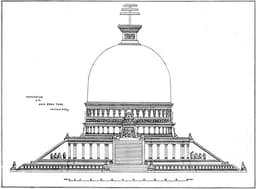
Kanishka I built a large stupa at Peshawar, known as the Kanishka Stupa, which was one of the tallest structures in the ancient world. It served as a major Buddhist pilgrimage site and symbol of his patronage.
ArchitectureBuddhismStupa
Impact: regionalconstructive
Mahapadma Nanda — Complete Timeline
345 BC
Founded the Nanda DynastyPolitical Action
Mahapadma Nanda overthrew the Shishunaga dynasty to establish the Nanda Empire. He is described in Puranic texts as the first emperor of a unified northern India, conquering many kingdoms and creating the first large-scale imperial state in the region.
Dynasty FoundationImperial Unification
Impact: regional
340 BC
Conquered the Kalinga KingdomWar◆ Major
Mahapadma Nanda led a military campaign against Kalinga (modern Odisha), annexing it into the Nanda Empire. This conquest extended Nanda control to the eastern coast and gave access to maritime trade routes.
ConquestKalinga
Impact: regional
335 BC
Amassed Vast WealthOther
Mahapadma Nanda accumulated enormous wealth through conquest and taxation, becoming known as the richest ruler of his time. The Nanda treasury was legendary, containing vast amounts of gold and silver, which later funded Alexander's invasion of India.
WealthEconomy
Impact: regional
330 BC
Maintained a Large ArmyWar◆ Major
Mahapadma Nanda commanded a massive army reportedly consisting of 200,000 infantry, 20,000 cavalry, 2,000 chariots, and 3,000 elephants. This military force was the largest in India at the time and deterred Alexander the Great from advancing further east.
MilitaryArmy Size
Impact: regional
Expert Analysis
Origins
Kanishka I, born around 78 CE, was a ruler of the Kushan Empire, a Central Asian dynasty that controlled a vast territory spanning modern-day Afghanistan, Pakistan, and northern India. His early life is obscure, but he likely belonged to the Yuezhi confederation. Kanishka ascended the throne around 127 CE, succeeding his father Vima Kadphises. He embraced Buddhism, possibly influenced by the cosmopolitan nature of the empire, which included Greek, Persian, and Indian cultures.
Mahapadma Nanda, born in the 5th century BCE, was the founder of the Nanda dynasty in ancient India. He was the son of a Shishunaga king and a shudra woman, according to Puranic texts. His rise marked the end of the Shishunaga dynasty. Little is known of his early life, but he was ambitious and ruthless, overthrowing the existing ruler to seize power around 345 BCE.
Rise to Power
Kanishka I came to power after a period of consolidation under his predecessors. He expanded the Kushan Empire through military campaigns, conquering the Indus Valley, the Ganges Basin, and parts of Central Asia. His conquests brought him into conflict with the Parthians and the Chinese. Kanishka's military scored 78.3, reflecting his success in expanding the empire to its greatest extent. He also promoted Buddhism, convening the Fourth Buddhist Council in Kashmir around 100 CE, which standardized scriptures and promoted the Sarvastivada school.
Mahapadma Nanda rose by overthrowing the Shishunaga dynasty, likely through a palace coup. He then conquered neighboring kingdoms, including Kalinga (modern Odisha), and built a massive army. His political score of 72.0 indicates his skill in consolidating power and establishing a new dynasty. He amassed enormous wealth through conquest and taxation, becoming known as the richest ruler of his time.
Leadership & Governance
Kanishka I governed a multi-ethnic empire with a policy of religious tolerance. He issued gold coins depicting Greek, Persian, Indian, and Buddhist deities, reflecting the diversity of his realm. His patronage of Buddhism was a key aspect of his rule, but he did not impose it. The Fourth Buddhist Council standardized the Buddhist canon and promoted missionary activity, spreading Buddhism to Central Asia and China. Kanishka's leadership score of 66.0 reflects his ability to maintain stability across a vast territory.
Mahapadma Nanda was a centralized ruler who built a strong administrative system. He maintained a large army of 200,000 infantry, 20,000 cavalry, 2,000 chariots, and 3,000 elephants, which served as a tool for expansion and control. His taxation policies were harsh, leading to accumulation of vast wealth but also resentment. His political score of 72.0 indicates effective governance, but his legacy is marred by descriptions of greed and oppression.
Triumph & Tragedy
Kanishka I's greatest success was expanding the Kushan Empire to its peak and promoting Buddhism, which had a lasting impact on Asia. The Kanishka Stupa at Peshawar was one of the tallest structures in the ancient world. However, his empire faced pressure from the Sassanians after his death, and his religious policies may have alienated some subjects. His legacy score of 52.0 reflects that his empire did not endure long after him.
Mahapadma Nanda's triumph was unifying much of northern India and building a powerful empire. His wealth and military might were legendary. However, his rule was marked by unpopularity due to high taxes and oppression. His son Dhana Nanda was overthrown by Chandragupta Maurya, ending the dynasty. His legacy score of 45.0 indicates that his dynasty was short-lived and his reputation suffered.
Character & Destiny
Kanishka I was a tolerant and ambitious ruler, open to diverse cultures and religions. His character shaped a prosperous and stable empire, but his successors could not maintain it. He is remembered as a great patron of Buddhism, but his military achievements were also significant.
Mahapadna Nanda was ruthless and ambitious, willing to overthrow his own dynasty. His greed and harsh rule led to his downfall. He is often depicted as a tyrant in later texts.
Legacy
Kanishka I's legacy endures through his promotion of Buddhism, which spread across Asia. The Gandharan art style flourished under his rule. The Fourth Buddhist Council influenced Buddhist doctrine for centuries. His coins are valuable historical artifacts.
Mahapadna Nanda's legacy is more mixed. He laid the groundwork for the Mauryan Empire by unifying northern India and demonstrating the power of a large army and centralized administration. However, his negative reputation overshadows his achievements.
Conclusion
Kanishka I had a greater impact due to his lasting influence on Buddhism and culture. His total score of 63.5 exceeds Mahapadna Nanda's 58.4, reflecting higher military, influence, and legacy. While Mahapadna Nanda was a powerful conqueror, his empire was short-lived and his legacy tarnished. Kanishka's patronage of Buddhism shaped Asian history for centuries.
Rankings
🥇
Kanishka ILeader
Mil: 78.0Pol: 60.0Inf: 72.0
63.5
🥈
Mahapadma Nanda
Mil: 67.3Pol: 72.0Inf: 55.7
58.4
+5.1 behind
How This Comparison Works
Algorithm
Each figure is scored on 6 dimensions (0—100 scale) based on structured historical data: Military (10%), Political (20%), Influence (20%), Legacy (20%), Leadership (15%), Strategy (15%). The weighted total produces the final ranking.
Data Sources
Scores are computed from structured sub-indicators in the database. Scale factors adjust for era (Ancient ×0.85, Modern ×1.0) and civilization size (Eastern ×1.05, Other ×0.80) to account for differences in population and military scale.
Maximum 3 Figures
Comparisons are limited to 2—3 figures to ensure readability and statistical meaningfulness.
Error Margins
±5 points per dimension — Sub-scores are derived from historical records with inherent uncertainty. Two figures within 5 points on a dimension should be considered roughly equivalent in that area.
Total Score Accuracy
±3 points overall — The weighted combination of 6 dimensions produces a total score with approximately ±3 points of uncertainty. Differences of less than 3 points are not statistically significant— the figures are effectively tied.
Known Limitations
- Historical records are incomplete and uneven across civilizations
- Figures from oral-tradition societies may be underrepresented
- Occupation labels can misclassify multi-role figures
- Scores measure capability and impact, not moral character
- Quantitative scoring is a comparison tool, not absolute truth
Capability Radar
Military (10%) — Battles & Warfare
Battles
75
60
Win Rate
70
65
Expansion
80
80
Political (20%) — Governance & Reform
Reform
65
70
Diplomacy
75
55
Economy
70
65
Influence (20%) — Cultural & Global Reach
Cultural
85
40
Global
70
35
Legacy (20%) — Historical Impact
Historical
80
50
Longevity
75
30
Leadership (15%) — Power & Stability
Tenure
70
60
Stability
65
60
Strategy (15%) — Tactics & Innovation
Strategy
70
70
Tactics
65
55
Reform
60
75
Similar Comparisons
Comments & Discussion
No comments yet. Be the first to share your thoughts!