Loading...
Kamehameha V vs Qin Shi Huang
Qin Shi Huang leads by 40.2 pts · 2 figures compared
…
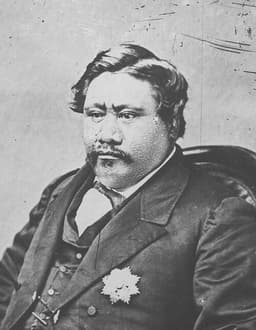
Kamehameha V
Emperor · Modern
45.0Total
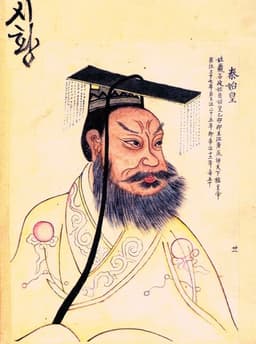
Qin Shi Huang
Emperor · Ancient
85.2Total
Basic Information
Born
1830
-259
Died
1872
-210
Era
Modern
Ancient
Nationality
Hawaii
China
Occupation
Emperor
Emperor
Civilization
Other
Eastern
Score Comparison
Military (10%)
11.3
80.0
Political (20%)
46.6
90.0
Influence (20%)
50.2
85.0
Legacy (20%)
42.5
90.0
Leadership (15%)
74.0
78.0
Strategy (15%)
26.5
82.0
TOTAL
45.0
85.2
Kamehameha V — Complete Timeline
1863 AD
Ascended to the Throne as Kamehameha VPolitical Action◆ Major
Lot Kapuāiwa became King Kamehameha V after the death of his brother Kamehameha IV. He was the last monarch of the Kamehameha dynasty.
Impact: national
1864 AD
Promulgated the 1864 ConstitutionReform◆ Major
Kamehameha V abrogated the 1852 constitution and promulgated a new one that increased royal power. The 1864 constitution abolished the office of kuhina nui (premier), gave the king veto power, and restricted suffrage to property owners.
Impact: national
1865 AD
Oversaw Economic Growth and Public WorksReform
Kamehameha V promoted economic development, including the expansion of the sugar industry, construction of roads and harbors, and the establishment of the Hawaiian Board of Health. His reign saw increased foreign investment and trade.
Impact: nationalconstructive
1867 AD
Refused to Sign the Reciprocity TreatyPolitical Action◆ Major
Kamehameha V refused to sign a reciprocity treaty with the United States that would have reduced tariffs on Hawaiian sugar. He believed the treaty would compromise Hawaiian sovereignty and lead to American domination.
Impact: national
1872 AD
Died Without an HeirOther◆ Major
Kamehameha V died without naming an heir, ending the Kamehameha dynasty. His death triggered a succession crisis that led to the election of Lunalilo as the next king.
Impact: nationaltragic
Qin Shi Huang — Complete Timeline
246 BC
Construction of the Mausoleum and Terracotta ArmyOther◆ Major
Qin Shi Huang commissioned a vast mausoleum complex near Xi'an, guarded by thousands of life-sized terracotta soldiers, horses, and chariots. The project employed hundreds of thousands of workers and reflected his obsession with immortality and imperial power.
Impact: global
230 BC
Conquest of the Six Warring StatesWar
From 230 to 221 BCE, Ying Zheng led the Qin state in a series of campaigns that conquered the Han, Zhao, Wei, Chu, Yan, and Qi states. This unified China under a single ruler for the first time, ending the Warring States period.
Impact: global
221 BC
Standardization of Writing, Currency, and MeasurementsReform◆ Major
Qin Shi Huang ordered the standardization of Chinese script, currency, and weights and measures across the unified empire. This facilitated administration, trade, and cultural integration, laying a foundation for future dynasties.
Impact: globalconstructive
Proclamation of the Qin DynastyPolitical Action
After conquering the last independent state, Ying Zheng declared himself Shi Huangdi (First Emperor), founding the Qin Dynasty. He adopted a new title to signify his supreme authority and initiated centralized imperial rule.
Impact: global
214 BC
Initiation of the Great Wall ConstructionOther◆ Major
Qin Shi Huang ordered the connection and extension of existing northern fortifications to create a unified defensive wall against nomadic Xiongnu raids. This project involved massive conscripted labor and became the precursor to the later Great Wall.
Impact: regional
213 BC
Burning of Books and Burying of ScholarsPolitical Action◆ Major
On the advice of Li Si, Qin Shi Huang ordered the burning of historical records and philosophical texts not aligned with Legalist doctrine. He also had 460 Confucian scholars buried alive to suppress dissent and consolidate ideological control.
Impact: nationaldestructive
Expert Analysis
kamehameha-v-vs-qin-shi-huang
# The Emperor and the King: Two Paths to Power in Ancient and Modern Worlds
On a winter morning in 221 BC, a thirty-eight-year-old king stood before the walls of the last independent city-state in China. His armies had conquered every rival kingdom in a relentless decade of war. As the gates opened, Ying Zheng declared himself Shi Huangdi—the First Emperor—and set in motion a transformation that would echo across millennia. Two thousand years later and halfway around the world, another monarch faced a different kind of challenge. In 1863, Lot Kapuāiwa became King Kamehameha V of Hawaii, inheriting a kingdom already entangled in the webs of global trade and colonial ambition. One ruler built an empire from blood and iron; the other fought to preserve a kingdom with ink and constitution. Their stories, separated by centuries and civilizations, reveal how deeply the context of power shapes the ruler who wields it.
Origins
Qin Shi Huang was born into chaos. The Warring States period had torn China apart for two centuries, a world where seven kingdoms fought endlessly for supremacy. His father was king of Qin, a western state that had already adopted Legalist philosophy—a ruthless doctrine that prioritized state power over individual rights. Young Ying Zheng grew up in a palace where poisonings and betrayals were common. He ascended the throne at thirteen, surrounded by regents and courtiers who underestimated the boy who would one day consume them all.
Kamehameha V was born into a different kind of turbulence. The Hawaiian Islands had been unified by his grandfather, Kamehameha the Great, just a generation before. By 1830, Western ships filled Honolulu’s harbor, Christian missionaries ran schools, and foreign advisors whispered in royal ears. Lot was educated by those missionaries, fluent in English and Hawaiian, trained in law and diplomacy. He knew the world beyond his islands intimately—and feared what it might do to them.
Rise to Power
The First Emperor’s path was paved with iron. Between 230 and 221 BC, he unleashed a military campaign of unprecedented scale. His generals conquered Han first, then Zhao, Wei, Chu, Yan, and finally Qi. Each victory was a masterpiece of strategy and brutality. When the Zhao capital fell, he ordered the massacre of its defenders. When the Yan prince sent an assassin, he annihilated the royal family. By the end, he had unified a territory larger than any previous Chinese ruler.
Kamehameha V’s rise was quieter but no less decisive. When his brother Kamehameha IV died suddenly in 1863, Lot inherited a throne that had already lost much of its power. The 1852 constitution had created a legislature that could override royal vetoes and a cabinet that answered to foreign interests. The new king saw this as a betrayal of his grandfather’s legacy. Within months of his coronation, he summoned a constitutional convention—and when the delegates refused to grant him more power, he dismissed them and wrote his own constitution.
Leadership & Governance
Qin Shi Huang governed through terror and efficiency. He divided his empire into thirty-six commanderies, each governed by appointed officials who reported directly to him. He standardized written Chinese characters so that decrees could be read from the Yellow River to the Yangtze. He unified currency, weights, and measurements, making trade possible across his vast domain. He connected the northern fortifications into what would become the Great Wall. But he also ordered the burning of all historical records not approved by the state and buried alive 460 scholars who protested. His philosophy was simple: the state was everything, the individual nothing.
Kamehameha V governed through law and persuasion. His 1864 constitution abolished the elected lower house, strengthened the monarchy, and gave the king power to appoint his own cabinet. He used this authority to promote economic development—expanding sugar plantations, building roads and harbors, encouraging immigration of workers from Asia. But he refused to sign the 1867 reciprocity treaty with the United States that would have reduced tariffs on Hawaiian sugar. He saw the treaty as a trap, a first step toward American domination. His advisors called him stubborn; history would call him prescient.
Triumph & Tragedy
The First Emperor’s greatest triumph was also his greatest tragedy. He unified China—a feat that would define the world’s most populous nation for two thousand years. But his methods were so brutal that the Qin Dynasty collapsed within four years of his death. His mausoleum, guarded by the Terracotta Army of thousands of life-sized soldiers, remains one of the world’s great archaeological wonders. But the man who built it died searching for an immortality elixir, poisoned by mercury pills his alchemists had given him.
Kamehameha V’s triumph was his survival—and his tragedy was what came after. He kept Hawaii independent during his reign, resisting American annexation when weaker monarchs might have surrendered. He modernized the economy while preserving Hawaiian sovereignty. But he died in 1872 without naming an heir, ending the Kamehameha dynasty. His death triggered a succession crisis that opened the door to the very American influence he had fought to prevent. Within twenty years, the monarchy was overthrown.
Character & Destiny
Qin Shi Huang was a man possessed by fear and ambition. He was paranoid—he never slept in the same palace twice, built secret tunnels between his residences, and executed those who revealed his locations. He was ruthless—when a meteor fell bearing the inscription “The First Emperor will die and his land will be divided,” he ordered the execution of everyone nearby. But he was also visionary. He understood that unity required more than conquest; it required a common language, common laws, a common identity.
Kamehameha V was a man caught between two worlds. He wore Western suits and spoke perfect English, but he defended Hawaiian traditions fiercely. He was educated by missionaries but resented their influence. He modernized his kingdom but refused to sell its soul. His character was defined by resistance—resistance to foreign domination, resistance to constitutional limits, resistance to the inevitable tide of history. He was, in the end, a conservative revolutionary, trying to preserve his kingdom by changing it.
Legacy
The First Emperor’s legacy is written in stone and earth. China remains unified, its script standardized, its walls standing. Every Chinese schoolchild learns his name. But he is remembered as both founder and tyrant—the man who gave China its shape and the man who tried to erase its memory. His tomb remains unopened, its secrets buried with him.
Kamehameha V’s legacy is quieter but no less profound. He is remembered in Hawaii as the last king of the Kamehameha line, the monarch who refused to bow. His constitution, though controversial, preserved Hawaiian sovereignty for another generation. When the monarchy finally fell, it was not because he had failed, but because the forces he had resisted were too strong for any single ruler to withstand.
Conclusion
What drove these two rulers to such different outcomes? The answer lies not in their characters alone, but in the worlds they inhabited. Qin Shi Huang ruled in an age when absolute power was possible—when a single will could reshape mountains and destroy cities. Kamehameha V ruled in an age when power was shared, negotiated, and limited—when even a king had to answer to merchants, missionaries, and foreign navies. One built an empire that would last two thousand years; the other defended a kingdom that would vanish within two decades. Both did what their times demanded. Both failed in ways their successors would remember. And both remind us that history is not a story of good or evil, but of choices made within constraints that no ruler can fully escape.
Rankings
🥇
Qin Shi HuangLeader
Mil: 80.0Pol: 90.0Inf: 85.0
85.2
🥈
Kamehameha V
Mil: 11.3Pol: 46.6Inf: 50.2
45.0
+40.2 behind
How This Comparison Works
Algorithm
Each figure is scored on 6 dimensions (0—100 scale) based on structured historical data: Military (10%), Political (20%), Influence (20%), Legacy (20%), Leadership (15%), Strategy (15%). The weighted total produces the final ranking.
Data Sources
Scores are computed from structured sub-indicators in the database. Scale factors adjust for era (Ancient ×0.85, Modern ×1.0) and civilization size (Eastern ×1.05, Other ×0.80) to account for differences in population and military scale.
Maximum 3 Figures
Comparisons are limited to 2—3 figures to ensure readability and statistical meaningfulness.
Error Margins
±5 points per dimension — Sub-scores are derived from historical records with inherent uncertainty. Two figures within 5 points on a dimension should be considered roughly equivalent in that area.
Total Score Accuracy
±3 points overall — The weighted combination of 6 dimensions produces a total score with approximately ±3 points of uncertainty. Differences of less than 3 points are not statistically significant— the figures are effectively tied.
Known Limitations
- Historical records are incomplete and uneven across civilizations
- Figures from oral-tradition societies may be underrepresented
- Occupation labels can misclassify multi-role figures
- Scores measure capability and impact, not moral character
- Quantitative scoring is a comparison tool, not absolute truth
Capability Radar
Military (10%) — Battles & Warfare
Battles
4
85
Win Rate
9
90
Expansion
11
90
Political (20%) — Governance & Reform
Reform
20
95
Diplomacy
30
75
Economy
35
90
Influence (20%) — Cultural & Global Reach
Cultural
30
95
Global
10
85
Legacy (20%) — Historical Impact
Historical
35
95
Longevity
20
95
Leadership (15%) — Power & Stability
Tenure
40
70
Stability
25
65
Strategy (15%) — Tactics & Innovation
Strategy
15
85
Tactics
15
80
Reform
21
95
Similar Comparisons
Comments & Discussion
IronLawgiver6/17/2026
Qin Shi Huang gets all the hype, but let's be real: building an empire by burying scholars alive and melting your own people's tools into statues? That's not genius, that's paranoid brutality. Kamehameha V wielded a pen, not a sword, to draft the 1864 Constitution and block U.S. annexation for decades. Legalism or not, Qin's centralized tyranny collapsed within four years of his death—weak. Hawaii's monarchy endured colonial pressure until 1893. Who actually built something lasting?
反秦先锋6/17/2026
别跟我吹秦始皇统一度量衡多伟大,他焚书坑儒把思想都掐死了,还征七十万民夫修陵墓,劳工死亡率高得吓人。相比之下,卡美哈梅哈五世在1863年顶住美国商人压力,否决了土地改革法案,保住了夏威夷人的主权。一个靠暴政堆砖,一个靠法律守土,高下立判。
MetricMilitant6/17/2026
The analysis is poetic fluff. Let's talk data: Qin's population was ~20 million; he mobilized 700,000 for his tomb alone (3.5% of the empire). Hawaii's population in 1863? ~80,000, and Kamehameha V faced no mass conscription. You can't compare a pre-industrial agrarian warlord to a 19th-century constitutional king using the same moral yardstick. One had absolute manpower to crush dissent; the other had to negotiate with sugar barons. Apples to oranges, historians.
海国史家6/17/2026
两位君主其实是同一硬币的两面:都在面对"大一统"的挑战。秦始皇要在文化割裂的战国废墟上硬造出"书同文、车同轨",手段残暴但逻辑自洽;卡美哈梅哈五世要在殖民浪潮里维持夏威夷的独特性,最后连《1864年宪法》都保不住本地人的权利。秦的暴力成功是暂时的,夏威夷的智慧失败却是永恒的悲剧。谁更高明?问题本身就天真了。
RevisionistHeat6/17/2026
Spare me the noble savage myth with Kamehameha V. He wasn't some altruistic guardian—he suspended the Hawaiian legislature, censored the press, and pushed through a constitution that actually strengthened royal power at the expense of elected officials. Sound familiar? It should: autocrats always use "preservation" as a smokescreen. Qin was upfront about his tyranny; Kamehameha V dressed his in Hawaiian sovereignty. At least Qin's brutality was honest.