Loading...
Kaidu vs Napoleon Bonaparte
Napoleon Bonaparte leads by 14.5 pts · 2 figures compared
…
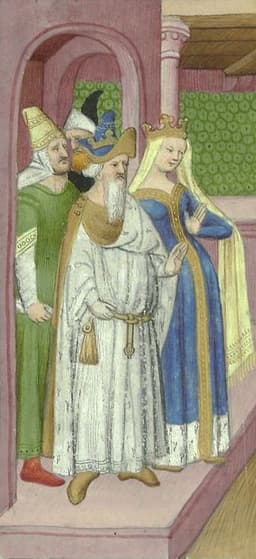
Kaidu
Emperor · Medieval
56.4Total

Napoleon Bonaparte
General · Modern
70.9Total
Basic Information
Born
1230
1769
Died
1301
1821
Era
Medieval
Modern
Nationality
Mongol Empire
France
Occupation
Emperor
General
Civilization
Eastern
Western
Score Comparison
Military (10%)
70.3
94.0
Political (20%)
42.3
72.0
Influence (20%)
54.1
40.0
Legacy (20%)
49.2
80.0
Leadership (15%)
74.0
78.0
Strategy (15%)
61.0
90.0
TOTAL
56.4
70.9
Kaidu — Complete Timeline
1268 AD
Rebellion Against Kublai KhanWar
Kaidu, grandson of Ogedei, launched a rebellion against Kublai Khan, challenging his authority as Great Khan. He claimed the Ogedeid line had the rightful claim to the throne, initiating a decades-long conflict in Central Asia.
Mongol Civil WarOgedeid Rebellion
Impact: global
1272 AD
Battle of the Talas RiverWar◆ Major
Kaidu's forces fought Kublai's army at the Talas River in Central Asia. The battle was indecisive but established Kaidu as the dominant power in the region, controlling much of the former Chagatai Khanate.
Mongol Civil WarCentral Asia
Impact: regional
1301 AD
Death in BattleWar◆ Major
Kaidu died from wounds sustained in a battle against the Yuan dynasty near the Altai Mountains. His death ended the major rebellion against Kublai's successors, though his sons continued resistance for a time.
Mongol Civil WarDeath
Impact: regionaltragic
Napoleon Bonaparte — Complete Timeline
1799 AD
Coup of 18 BrumaireOther◆ Major
Napoleon Bonaparte, with support from his brother Lucien and key political figures, overthrew the Directory in a bloodless coup. He established the Consulate with himself as First Consul, effectively becoming the ruler of France. This event ended the French Revolution's most unstable period.
French RevolutionCoupRise to Power
Impact: regional
1804 AD
Promulgation of the Napoleonic CodeOther◆ Major
Napoleon enacted the Civil Code of the French, known as the Napoleonic Code, a comprehensive set of laws that replaced the fragmented feudal legal systems. The code established legal equality, protected property rights, and secularized law. It became the basis for legal systems in many European and world countries.
Legal ReformNapoleonic CodeCivil Law
Impact: globalconstructive
1805 AD
Battle of AusterlitzWar◆ Major
Napoleon's Grande Arm
Napoleonic WarsBattleDecisive Victory
Impact: global
1812 AD
Invasion of RussiaWar◆ Major
Napoleon led the Grande Arm
Napoleonic WarsInvasionDisaster
Impact: globaldestructive
1815 AD
Battle of WaterlooWar◆ Major
Napoleon's French army was defeated by the combined forces of the Duke of Wellington's Anglo-Allied army and Gebhard Leberecht von Bl
Napoleonic WarsBattleFinal Defeat
Impact: globaldestructive
Expert Analysis
kaidu-vs-napoleon-bonaparte
# The Emperor and the Rebel: Why Napoleon Built an Empire While Kaidu Fought a Losing War
In the spring of 1815, Napoleon Bonaparte stood before his assembled troops in the courtyard of the Tuileries Palace, his hand resting on the hilt of his sword. He had just escaped exile on Elba, and France was his once more. Half a continent away, six centuries earlier, another man had faced a similar moment of defiance. Kaidu, grandson of the great Ogedei Khan, had raised his standard against his cousin Kublai, the Emperor of China. Both men were warriors who challenged the established order. One would conquer Europe and reshape the modern world. The other would fight for thirty years and die in battle, his rebellion crumbling into dust. What made the difference? The answer lies not in their swords, but in the worlds they inhabited.
Origins
Napoleon Bonaparte was born in 1769 on the island of Corsica, a Mediterranean backwater that had only recently become French. His family was minor nobility, poor enough to feel the sting of hunger but connected enough to send young Napoleon to military school in mainland France. There, he was mocked by aristocratic classmates for his Corsican accent and provincial manners. He read voraciously—history, military tactics, the works of Rousseau—and nursed a simmering resentment against the old order that looked down on him. This outsider’s fury would become the engine of his ambition.
Kaidu, born in 1230, knew no such humiliation. He was a prince of the Mongol Empire, grandson of Ogedei Khan, who had succeeded Genghis Khan himself. His world was the steppe: endless grasslands, horses, yurts, and the iron law of the blood oath. Where Napoleon studied in dusty classrooms, Kaidu learned to ride before he could walk, to shoot a bow from horseback before he could write. His education was not in books but in the brutal calculus of tribal loyalty and the unforgiving logic of the Mongol military machine. The two men could not have been more different: one forged in the fire of revolutionary France, the other shaped by the ancient rhythms of nomadic conquest.
Rise to Power
Napoleon’s path to power was a miracle of timing. The French Revolution had shattered the monarchy, abolished noble privilege, and opened the officer corps to talent. In 1793, at just twenty-four, he distinguished himself at the Siege of Toulon, driving the British out of the port with a brilliant artillery barrage. Four years later, he was leading an army into Italy, winning a dozen battles against the Austrians and their allies. Each victory was a stepping stone; each defeat of an old-regime general was a blow against the system that had mocked him. By 1799, he was First Consul of France, and by 1804, Emperor.
Kaidu’s rise was slower, more treacherous. After the death of Ogedei in 1241, the Mongol Empire fractured into competing factions. Kublai, grandson of Genghis through another line, had declared himself Great Khan in 1260, but many Mongols refused to accept him. They saw Kublai as too Chinese, too settled, too soft. Kaidu, as Ogedei’s grandson, became the standard-bearer for those who wanted to preserve the old nomadic ways. In 1268, he launched his rebellion—not as a revolutionary, but as a traditionalist. He was not building a new order; he was fighting to restore an old one.
Leadership & Governance
Napoleon’s genius lay not only in war but in organization. His military campaigns were masterpieces of speed, deception, and concentration of force. At Austerlitz in 1805, he lured the combined armies of Russia and Austria into a trap, crushing them in a single day. But he also reformed France from within: the Napoleonic Code standardized laws across Europe, the Bank of France stabilized the currency, and the lycée system created a meritocratic education. He was a builder as much as a conqueror.
Kaidu was a warrior, not a builder. His military record was respectable—at the Battle of the Talas River in 1272, his forces fought Kublai’s army to a standstill, a rare achievement against the Yuan dynasty. But his strategy was reactive, defensive. He raided borders, formed shifting alliances with other Mongol princes, and fought to hold his Central Asian territories. He never attempted to march on Beijing or to create a lasting administrative system. His goal was not to rule an empire but to prevent Kublai from ruling all of Genghis’s legacy.
Triumph & Tragedy
Napoleon’s greatest triumph was also the seed of his tragedy. In 1812, he invaded Russia with the largest army Europe had ever seen—over 600,000 men. He won every battle, reached Moscow, and waited for the Tsar to surrender. But the Tsar did not surrender, and the Russian winter did. Napoleon retreated through snow and ice, losing nearly his entire army. Less than three years later, he was defeated at Waterloo in 1815 and exiled to Saint Helena, where he died in 1821.
Kaidu’s tragedy was quieter but no less absolute. He fought Kublai for thirty years, never winning a decisive victory, never losing a decisive defeat. In 1301, at the age of seventy-one, he was wounded in battle against Yuan forces near the Altai Mountains and died shortly after. His rebellion died with him. Within a generation, the Ogedei line faded into obscurity.
Character & Destiny
Napoleon was a man of boundless ambition and restless energy. “Impossible,” he once said, “is a word to be found only in the dictionary of fools.” He believed he could reshape the world through will and genius. And in many ways, he did. But his arrogance blinded him. He could not stop, could not consolidate, could not accept limits. He was his own greatest enemy.
Kaidu was a man of stubborn loyalty—loyalty to tradition, to his grandfather’s legacy, to the nomadic way of life. He was not trying to become the next Genghis; he was trying to prevent Kublai from becoming something else. His character was defensive, principled, and ultimately tragic. He fought a war he could not win, for a cause that was already lost.
Legacy
Napoleon’s legacy is everywhere. The Napoleonic Code influences legal systems from France to Louisiana to Japan. His military tactics are still studied at war colleges. He reshaped the map of Europe and inspired nationalism across the continent. He is remembered as a genius, a tyrant, a liberator, a conqueror—a figure of mythic proportions.
Kaidu is remembered, if at all, as a footnote in the history of the Mongol Empire. He appears in the *Secret History of the Mongols* and in Chinese annals, a stubborn rebel who delayed but could not stop Kublai’s consolidation. His legacy score of 66.8 reflects his near-total disappearance from popular memory.
Conclusion
The difference between Napoleon and Kaidu is not a matter of talent or courage. Both were brilliant warriors. Both challenged the greatest powers of their age. But Napoleon rode the wave of a revolutionary era that rewarded innovation, while Kaidu swam against the current of history, trying to preserve a world that was already fading. Napoleon built an empire; Kaidu fought a rearguard action. One created a future; the other defended a past. In the end, history remembers those who build, not those who resist.
Rankings
🥇
Napoleon BonaparteLeader
Mil: 94.0Pol: 72.0Inf: 40.0
70.9
🥈
Kaidu
Mil: 70.3Pol: 42.3Inf: 54.1
56.4
+14.5 behind
How This Comparison Works
Algorithm
Each figure is scored on 6 dimensions (0—100 scale) based on structured historical data: Military (10%), Political (20%), Influence (20%), Legacy (20%), Leadership (15%), Strategy (15%). The weighted total produces the final ranking.
Data Sources
Scores are computed from structured sub-indicators in the database. Scale factors adjust for era (Ancient ×0.85, Modern ×1.0) and civilization size (Eastern ×1.05, Other ×0.80) to account for differences in population and military scale.
Maximum 3 Figures
Comparisons are limited to 2—3 figures to ensure readability and statistical meaningfulness.
Error Margins
±5 points per dimension — Sub-scores are derived from historical records with inherent uncertainty. Two figures within 5 points on a dimension should be considered roughly equivalent in that area.
Total Score Accuracy
±3 points overall — The weighted combination of 6 dimensions produces a total score with approximately ±3 points of uncertainty. Differences of less than 3 points are not statistically significant— the figures are effectively tied.
Known Limitations
- Historical records are incomplete and uneven across civilizations
- Figures from oral-tradition societies may be underrepresented
- Occupation labels can misclassify multi-role figures
- Scores measure capability and impact, not moral character
- Quantitative scoring is a comparison tool, not absolute truth
Capability Radar
Military (10%) — Battles & Warfare
Battles
75
95
Win Rate
70
90
Expansion
72
95
Political (20%) — Governance & Reform
Reform
20
95
Diplomacy
60
80
Economy
35
85
Influence (20%) — Cultural & Global Reach
Cultural
30
85
Global
35
90
Legacy (20%) — Historical Impact
Historical
55
95
Longevity
40
90
Leadership (15%) — Power & Stability
Tenure
65
85
Stability
40
70
Strategy (15%) — Tactics & Innovation
Strategy
78
95
Tactics
80
98
Reform
30
92
Similar Comparisons
Comments & Discussion
No comments yet. Be the first to share your thoughts!