Loading...
Kadashman-Enlil I vs Thutmose I
Thutmose I leads by 16.5 pts · 2 figures compared
…

Kadashman-Enlil I
Emperor · Ancient
43.0Total
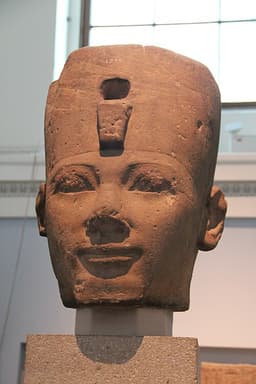
Thutmose I
Emperor · Ancient
59.5Total
Basic Information
Born
-1374
-1506
Died
-1360
-1493
Era
Ancient
Ancient
Nationality
Kassite Dynasty
Egypt
Occupation
Emperor
Emperor
Civilization
Middle Eastern
Middle Eastern
Score Comparison
Military (10%)
25.9
78.0
Political (20%)
37.9
68.0
Influence (20%)
48.6
54.9
Legacy (20%)
38.3
48.3
Leadership (15%)
62.2
68.0
Strategy (15%)
36.8
55.0
TOTAL
43.0
59.5
Kadashman-Enlil I — Complete Timeline
1365 BC
Diplomatic Marriage Alliance with EgyptPolitical Action◆ Major
Kadashman-Enlil I negotiated a marriage alliance with the Egyptian pharaoh Amenhotep III, as recorded in the Amarna letters. The alliance involved the exchange of a Kassite princess for Egyptian gold, strengthening ties between Babylonia and Egypt.
DiplomacyMarriage AllianceEgypt
Impact: regionalconstructive
Correspondence with Amenhotep IIIPolitical Action
Kadashman-Enlil I exchanged letters with Pharaoh Amenhotep III, discussing trade, gifts, and diplomatic protocol. The correspondence, part of the Amarna archive, reveals the Kassite king's efforts to maintain equal status with Egypt and secure economic benefits.
DiplomacyAmarna LettersTrade
Impact: regional
Thutmose I — Complete Timeline
1502 BC
Conquest of NubiaWar◆ Major
Thutmose I launched a campaign into Nubia, extending Egyptian control as far south as the Fourth Cataract of the Nile. He crushed local rebellions and secured access to gold mines and trade routes, strengthening Egypt's southern border.
NubiaConquestGold
Impact: regional
1500 BC
Campaign to the Euphrates RiverWar◆ Major
Thutmose I led a military campaign into Syria and Mesopotamia, reaching the Euphrates River. He erected a victory stele there, marking the farthest extent of Egyptian expansion up to that time and establishing Egyptian dominance in the region.
Military CampaignExpansionEuphrates
Impact: regional
Construction of the First Royal Tomb in the Valley of the KingsCultural◆ Major
Thutmose I commissioned the first known royal tomb in the Valley of the Kings (KV38). This set a precedent for subsequent pharaohs, moving away from pyramid burials to hidden rock-cut tombs in the Theban hills.
Valley of the KingsTombInnovation
Impact: globalconstructive
Expert Analysis
Origins
**Kadashman-Enlil I** (c. 1374–1360 BCE) was a king of the Kassite dynasty in Babylon, likely born around 1380 BCE. His father, Kurigalzu I, had strengthened the Kassite state, and Kadashman-Enlil inherited a stable kingdom. Little is known of his early life, but he was educated in the diplomatic traditions of the time. The Kassites, originally from the Zagros Mountains, had ruled Babylon for centuries, emphasizing foreign relations and trade.
**Thutmose I** (c. 1506–1493 BCE) was the third pharaoh of Egypt's 18th Dynasty, born to a non-royal mother, Seniseneb, and likely father by Thutmose I's predecessor, Amenhotep I. He rose through military ranks before becoming pharaoh. His early career involved campaigns with Amenhotep I, shaping his aggressive expansionist mindset.
Rise to Power
Kadashman-Enlil I ascended to the Babylonian throne around 1374 BCE, likely through hereditary succession. His reign is best known from the Amarna letters, a cache of diplomatic correspondence. He negotiated a marriage alliance with Pharaoh Amenhotep III, sending his daughter to Egypt. This required careful diplomacy, as he demanded reciprocal gifts and assurances. His power was constrained by the larger empires of Egypt and Hatti.
Thutmose I became pharaoh after Amenhotep I's death, possibly as a co-regent first. He quickly launched campaigns to assert dominance. His first major action was a campaign into Nubia (c. 1504 BCE), crushing rebellions and extending Egyptian control to the Fourth Cataract. He then turned to Syria, leading an army to the Euphrates River, defeating the Mitanni kingdom, and erecting a victory stele. These campaigns established him as a warrior pharaoh.
Leadership & Governance
Kadashman-Enlil I ruled through diplomacy and trade, engaging in gift exchanges with Egypt. In one letter, he complained about inadequate gold sent by Amenhotep III, demanding more. He maintained internal stability but did not undertake major military expansions. His political score of 37.9 reflects his focus on foreign relations over conquest.
Thutmose I centralized power and expanded Egypt's borders. He led military campaigns personally, demonstrating strategic acumen (score 55.0). He also initiated construction projects, including the first royal tomb in the Valley of the Kings (KV38), moving away from pyramids. His governance combined military might with architectural innovation, boosting his leadership score of 68.0.
Triumph & Tragedy
Kadashman-Enlil I's greatest success was securing a marriage alliance with Egypt, strengthening Babylon's prestige. His tragedy was limited influence; his kingdom remained secondary to Egypt and Hatti. He failed to expand territory, and his legacy is mostly preserved through letters.
Thutmose I's triumphs include conquering Nubia and reaching the Euphrates, expanding Egypt further than ever before. He also established the Valley of the Kings, influencing later pharaohs. His tragedy: his reign was relatively short (c. 13 years), and his successor, Thutmose II, did not maintain all gains. Additionally, his daughter Hatshepsut later overshadowed him.
Character & Destiny
Kadashman-Enlil I appears cautious and diplomatic, prioritizing stability over glory. His letters show a ruler concerned with protocol and reciprocity. This character led to a peaceful reign but limited impact.
Thutmose I was ambitious and militaristic, driven to expand Egypt's borders. His personality shaped his destiny as a conqueror, but his early death prevented consolidation of his achievements.
Legacy
Kadashman-Enlil I is remembered chiefly through the Amarna letters, providing insight into Bronze Age diplomacy. His total score of 43.0 reflects modest influence. Thutmose I scored 59.5 overall, with military at 78.0. His legacy includes territorial expansion and the Valley of the Kings. He set patterns for later pharaohs like Thutmose III.
Conclusion
Thutmose I had greater impact, as his military and political achievements reshaped Egypt and set precedents for empire. Kadashman-Enlil I's diplomatic efforts, while notable, did not alter the broader power balance. The 16.5-point score gap underscores Thutmose I's superior influence. His campaigns directly expanded Egyptian territory, while Kadashman-Enlil maintained status quo. Thus, Thutmose I emerges as the more consequential ruler.
Rankings
🥇
Thutmose ILeader
Mil: 78.0Pol: 68.0Inf: 54.9
59.5
🥈
Kadashman-Enlil I
Mil: 25.9Pol: 37.9Inf: 48.6
43.0
+16.5 behind
How This Comparison Works
Algorithm
Each figure is scored on 6 dimensions (0—100 scale) based on structured historical data: Military (10%), Political (20%), Influence (20%), Legacy (20%), Leadership (15%), Strategy (15%). The weighted total produces the final ranking.
Data Sources
Scores are computed from structured sub-indicators in the database. Scale factors adjust for era (Ancient ×0.85, Modern ×1.0) and civilization size (Eastern ×1.05, Other ×0.80) to account for differences in population and military scale.
Maximum 3 Figures
Comparisons are limited to 2—3 figures to ensure readability and statistical meaningfulness.
Error Margins
±5 points per dimension — Sub-scores are derived from historical records with inherent uncertainty. Two figures within 5 points on a dimension should be considered roughly equivalent in that area.
Total Score Accuracy
±3 points overall — The weighted combination of 6 dimensions produces a total score with approximately ±3 points of uncertainty. Differences of less than 3 points are not statistically significant— the figures are effectively tied.
Known Limitations
- Historical records are incomplete and uneven across civilizations
- Figures from oral-tradition societies may be underrepresented
- Occupation labels can misclassify multi-role figures
- Scores measure capability and impact, not moral character
- Quantitative scoring is a comparison tool, not absolute truth
Capability Radar
Military (10%) — Battles & Warfare
Battles
10
70
Win Rate
10
75
Expansion
10
80
Political (20%) — Governance & Reform
Reform
30
55
Diplomacy
40
60
Economy
30
55
Influence (20%) — Cultural & Global Reach
Cultural
20
50
Global
10
40
Legacy (20%) — Historical Impact
Historical
20
55
Longevity
20
45
Leadership (15%) — Power & Stability
Tenure
40
60
Stability
40
65
Strategy (15%) — Tactics & Innovation
Strategy
10
70
Tactics
10
65
Reform
10
50
Similar Comparisons
Comments & Discussion
No comments yet. Be the first to share your thoughts!