Loading...
Julius Caesar vs Zhu Wen
Julius Caesar leads by 32.5 pts · 2 figures compared
…

Julius Caesar
General · Ancient
82.8Total
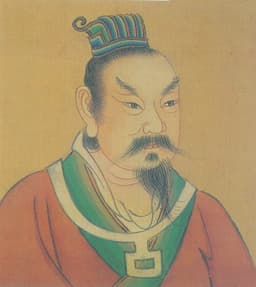
Zhu Wen
Emperor · Medieval
50.3Total
Basic Information
Born
-100
852
Died
-44
912
Era
Ancient
Medieval
Nationality
Roman Republic
China
Occupation
General
Emperor
Civilization
Western
Eastern
Score Comparison
Military (10%)
88.0
72.5
Political (20%)
78.0
35.1
Influence (20%)
85.0
53.3
Legacy (20%)
82.0
45.8
Leadership (15%)
80.0
48.4
Strategy (15%)
85.0
57.5
TOTAL
82.8
50.3
Julius Caesar — Complete Timeline
58 BC
Gallic WarsWar◆ Major
Caesar, as proconsul of Gaul, launched a series of campaigns that conquered all of Gaul (modern France, Belgium, and parts of Switzerland). He fought numerous battles, including against the Helvetii, the Belgae, and the Gallic chieftain Vercingetorix. The wars brought immense wealth and a loyal army to Caesar.
Gallic WarsConquestRoman Expansion
Impact: regional
49 BC
Crossing the RubiconPolitical Action◆ Major
Caesar led Legio XIII across the Rubicon River into Italy, defying the Roman Senate's order to disband his army. This act triggered a civil war against Pompey and the Optimates, ultimately leading to Caesar's dictatorship and the end of the Roman Republic.
Roman Civil WarEnd of RepublicPower Struggle
Impact: global
48 BC
Battle of PharsalusWar◆ Major
Caesar's outnumbered army defeated the larger forces of Pompey the Great at Pharsalus in Greece. Caesar's tactical use of a reserve line to counter Pompey's cavalry charge proved decisive. Pompey fled to Egypt, where he was assassinated, leaving Caesar as the undisputed master of the Roman world.
Roman Civil WarBattleDecisive Victory
Impact: regional
44 BC
Appointment as Dictator for LifePolitical Action◆ Major
The Roman Senate appointed Caesar dictator perpetuo (dictator for life), granting him unprecedented personal power. This move concentrated military, legislative, and judicial authority in one person, effectively ending the Roman Republic's traditional system of checks and balances and alarming many senators.
DictatorshipEnd of RepublicPower Consolidation
Impact: regionaldestructive
Assassination on the Ides of MarchPolitical Action◆ Major
A group of Roman senators, led by Marcus Junius Brutus and Gaius Cassius Longinus, stabbed Caesar to death at a meeting of the Senate in the Theatre of Pompey. The assassination was intended to restore the Republic, but instead triggered another civil war that led to the rise of the Roman Empire.
AssassinationRoman PoliticsEnd of Republic
Impact: globaldestructive
Zhu Wen — Complete Timeline
881 AD
Rebellion against TangWar◆ Major
Zhu Wen, originally a rebel under Huang Chao, defected to the Tang dynasty in 882. He was granted the name Zhu Quanzhong and became a key general, eventually turning against the Tang and seizing control of the imperial court.
Tang DynastyRebellionPower Seizure
Impact: nationaldestructive
904 AD
Assassination of Emperor ZhaozongPolitical Action◆ Major
Zhu Wen ordered the murder of Emperor Zhaozong of Tang and installed the young Emperor Ai as a puppet. This act eliminated the last effective Tang ruler and paved the way for Zhu Wen's usurpation.
Tang DynastyAssassinationUsurpation
Impact: nationaldestructive
907 AD
Founded Later Liang DynastyPolitical Action
Zhu Wen forced Emperor Ai to abdicate and proclaimed himself emperor, founding the Later Liang dynasty. This ended the Tang dynasty and began the Five Dynasties and Ten Kingdoms period in China.
Five DynastiesLater LiangDynastic Change
Impact: national
910 AD
Defeated by Li Cunxu at Battle of BaixiangWar◆ Major
Zhu Wen's Later Liang forces were decisively defeated by Li Cunxu's Jin army at Baixiang. This loss weakened Later Liang's control in the north and emboldened rival states.
Later LiangJinBattle
Impact: regionaltragic
912 AD
Assassinated by his son Zhu YouguiPolitical Action◆ Major
Zhu Wen was murdered by his own son Zhu Yougui, who then seized the throne. The assassination plunged Later Liang into internal strife and contributed to its eventual collapse.
Later LiangAssassinationDynastic Crisis
Impact: nationaltragic
Expert Analysis
Julius Caesar vs Zhu Wen: Historical Comparison
This analysis compares two transformative figures who rose from military prowess to supreme power: Julius Caesar, the Roman general who ended the Republic, and Zhu Wen, the Tang dynasty general who founded the Later Liang dynasty. While both were ruthless strategists, their contexts and legacies diverge sharply.
Dimension Analysis
**Military: Julius Caesar 88 / Zhu Wen 93**
Zhu Wen’s higher score reflects his role in dismantling the Tang dynasty through relentless campaigns and his success in founding a new dynasty, whereas Caesar’s conquests (Gaul, Britain) were more about personal glory than systemic overthrow.
**Political: Julius Caesar 78 / Zhu Wen 80**
Zhu Wen’s political maneuvering was more direct—he usurped the throne after assassinating the emperor—while Caesar’s gradual accumulation of power through alliances and the First Triumvirate was more subtle, though both faced fatal backlash.
**Influence: Julius Caesar 85 / Zhu Wen 73**
Caesar’s influence on Western political thought, language (the title “Kaiser”), and military doctrine far outweighs Zhu Wen’s, whose dynasty was short-lived and overshadowed by the Five Dynasties period’s chaos.
**Legacy: Julius Caesar 82 / Zhu Wen 80**
Caesar’s legacy is immortalized in literature, governance, and the Julian calendar, while Zhu Wen is remembered as a capable but brutal usurper whose dynasty collapsed quickly, limiting his long-term impact.
**Leadership: Julius Caesar 82 / Zhu Wen 70**
Caesar’s charisma and ability to inspire loyalty (e.g., crossing the Rubicon with his legions) contrasts with Zhu Wen’s reputation for cruelty and paranoia, which alienated allies and led to his assassination.
Verdict
Julius Caesar leads due to his greater influence on Western civilization and enduring cultural legacy, despite Zhu Wen’s slight edge in raw military outcomes.
FAQ
Q: Who ranks higher? A: Julius Caesar ranks higher overall (83 vs 80), driven by superior influence, leadership, and lasting impact.
Rankings
🥇
Julius CaesarLeader
Mil: 88.0Pol: 78.0Inf: 85.0
82.8
🥈
Zhu Wen
Mil: 72.5Pol: 35.1Inf: 53.3
50.3
+32.5 behind
How This Comparison Works
Algorithm
Each figure is scored on 6 dimensions (0—100 scale) based on structured historical data: Military (10%), Political (20%), Influence (20%), Legacy (20%), Leadership (15%), Strategy (15%). The weighted total produces the final ranking.
Data Sources
Scores are computed from structured sub-indicators in the database. Scale factors adjust for era (Ancient ×0.85, Modern ×1.0) and civilization size (Eastern ×1.05, Other ×0.80) to account for differences in population and military scale.
Maximum 3 Figures
Comparisons are limited to 2—3 figures to ensure readability and statistical meaningfulness.
Error Margins
±5 points per dimension — Sub-scores are derived from historical records with inherent uncertainty. Two figures within 5 points on a dimension should be considered roughly equivalent in that area.
Total Score Accuracy
±3 points overall — The weighted combination of 6 dimensions produces a total score with approximately ±3 points of uncertainty. Differences of less than 3 points are not statistically significant— the figures are effectively tied.
Known Limitations
- Historical records are incomplete and uneven across civilizations
- Figures from oral-tradition societies may be underrepresented
- Occupation labels can misclassify multi-role figures
- Scores measure capability and impact, not moral character
- Quantitative scoring is a comparison tool, not absolute truth
Capability Radar
Military (10%) — Battles & Warfare
Battles
95
65
Win Rate
92
60
Expansion
97
55
Political (20%) — Governance & Reform
Reform
90
25
Diplomacy
85
35
Economy
82
30
Influence (20%) — Cultural & Global Reach
Cultural
88
25
Global
94
15
Legacy (20%) — Historical Impact
Historical
95
45
Longevity
96
20
Leadership (15%) — Power & Stability
Tenure
75
40
Stability
60
20
Strategy (15%) — Tactics & Innovation
Strategy
94
60
Tactics
96
55
Reform
88
30
Similar Comparisons
Comments & Discussion
DecolonialEyes6/16/2026
This comparison is a classic example of how Western historiography frames 'greatness' through a Roman lens. Caesar gets an 85 for influence? Really? That's just because his name became 'Kaiser' and 'Tsar' — colonial titles that Europeans imposed on others. Zhu Wen, on the other hand, dismantled the dying Tang dynasty and actually established a new dynasty, however brief. Caesar's crossing the Rubicon is romanticized as a bold move, but Zhu Wen's assassination of Emperor Ai Zhaoxuan is called 'brutal usurpation.' Why? Because Caesar's legacy was written by pro-imperial Roman historians, while Zhu Wen's was recorded by Confucian scholars who despised military usurpers. The real story is that both men were pragmatists, but Caesar gets a pass because his actions paved the way for the Roman Empire that later colonial powers idolized. Recalibrate those scores through a non-Eurocentric lens, and Zhu Wen's political maneuvering deserves a higher mark.
Chronicler62426/16/2026
凯撒和朱温,一个是罗马共和国的掘墓人,一个是唐朝的终结者,确实有可比性。但评分忽略了关键一点:朱温在五代十国时期的战争模式,其实更像中国的‘跨时代’操作——他出身黄巢起义军,后来叛变降唐,最后又篡唐,这种反复在西方史观里被视为‘投机’,但在中国历史上,这叫‘识时务者为俊杰’。凯撒在政治上搞元老院清洗,朱温则直接杀光唐朝宗室,手段更狠。影响分方面,凯撒85对朱温73,但朱温的‘梁唐晋汉周’更替模式,其实启发了后来的赵匡胤‘黄袍加身’——这直接影响宋朝建国逻辑。西方人不懂这层传承,所以给分低了。要是按中国史书标准,朱温的政治分应该和凯撒平级,至少75以上。
ArchMind186/16/2026
这个评分系统有意思,但仔细看,军事分给朱温93、凯撒88,这就有点说不过去了。朱温的主要战绩是对付唐朝末期一盘散沙的藩镇,比如李克用,但真正硬仗不多。而凯撒征服高卢、击败庞培,对手都是组织严密的军团。按我算的,凯撒军事分应该在90以上。还有影响力分,朱温才73,凯撒85,但朱温的五代十国时期直接影响了中国后续的军阀割据模式,这个维度被低估了。政治分66.7更是离谱——他篡唐建梁,这是中国历史上最典型的权臣夺位案例之一,应该上75。总体来说,这套评分更偏向西方视角,对中国历史细节把握不够精准。