Loading...
Julius Caesar vs Yamagata Aritomo
Julius Caesar leads by 0.3 pts · 2 figures compared
…

Julius Caesar
General · Ancient
82.8Total
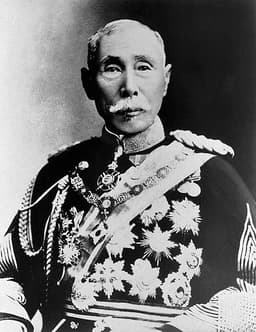
Yamagata Aritomo
General · Modern
82.5Total
Basic Information
Born
-100
1838
Died
-44
1922
Era
Ancient
Modern
Nationality
Roman Republic
Japan
Occupation
General
General
Civilization
Western
Eastern
Score Comparison
Military (10%)
88.0
78.0
Political (20%)
78.0
82.0
Influence (20%)
85.0
80.0
Legacy (20%)
82.0
90.0
Leadership (15%)
80.0
78.0
Strategy (15%)
85.0
82.0
TOTAL
82.8
82.5
Julius Caesar — Complete Timeline
58 BC
Gallic WarsWar◆ Major
Caesar, as proconsul of Gaul, launched a series of campaigns that conquered all of Gaul (modern France, Belgium, and parts of Switzerland). He fought numerous battles, including against the Helvetii, the Belgae, and the Gallic chieftain Vercingetorix. The wars brought immense wealth and a loyal army to Caesar.
Gallic WarsConquestRoman Expansion
Impact: regional
49 BC
Crossing the RubiconPolitical Action◆ Major
Caesar led Legio XIII across the Rubicon River into Italy, defying the Roman Senate's order to disband his army. This act triggered a civil war against Pompey and the Optimates, ultimately leading to Caesar's dictatorship and the end of the Roman Republic.
Roman Civil WarEnd of RepublicPower Struggle
Impact: global
48 BC
Battle of PharsalusWar◆ Major
Caesar's outnumbered army defeated the larger forces of Pompey the Great at Pharsalus in Greece. Caesar's tactical use of a reserve line to counter Pompey's cavalry charge proved decisive. Pompey fled to Egypt, where he was assassinated, leaving Caesar as the undisputed master of the Roman world.
Roman Civil WarBattleDecisive Victory
Impact: regional
44 BC
Appointment as Dictator for LifePolitical Action◆ Major
The Roman Senate appointed Caesar dictator perpetuo (dictator for life), granting him unprecedented personal power. This move concentrated military, legislative, and judicial authority in one person, effectively ending the Roman Republic's traditional system of checks and balances and alarming many senators.
DictatorshipEnd of RepublicPower Consolidation
Impact: regionaldestructive
Assassination on the Ides of MarchPolitical Action◆ Major
A group of Roman senators, led by Marcus Junius Brutus and Gaius Cassius Longinus, stabbed Caesar to death at a meeting of the Senate in the Theatre of Pompey. The assassination was intended to restore the Republic, but instead triggered another civil war that led to the rise of the Roman Empire.
AssassinationRoman PoliticsEnd of Republic
Impact: globaldestructive
Yamagata Aritomo — Complete Timeline
1873 AD
Establishment of the Imperial Japanese ArmyReform
Yamagata Aritomo, as War Minister, oversaw the creation of the Imperial Japanese Army based on the Prussian model. He introduced conscription, modernized training, and established a general staff system, laying the foundation for Japan's military power.
Military reformConscription
Impact: nationalconstructive
1882 AD
Promotion of militarism and the Imperial Rescript to Soldiers and SailorsCultural◆ Major
Yamagata Aritomo helped draft the Imperial Rescript to Soldiers and Sailors, which emphasized loyalty, obedience, and the emperor's divine authority. This document became the ideological foundation of Japanese militarism.
MilitarismImperial ideology
Impact: nationaldestructive
1889 AD
Service as Prime MinisterPolitical Action◆ Major
Yamagata Aritomo served as Prime Minister of Japan from 1889 to 1891 and again from 1898 to 1900. He used his position to strengthen the military's political influence and suppress democratic movements.
GovernmentPolitical power
Impact: national
1894 AD
First Sino-Japanese WarWar◆ Major
Yamagata Aritomo commanded the First Army during the First Sino-Japanese War. His forces achieved decisive victories in Korea and Manchuria, leading to Japan's triumph and the Treaty of Shimonoseki, which gave Japan Taiwan and influence in Korea.
WarImperial expansion
Impact: regional
1904 AD
Russo-Japanese WarWar◆ Major
Yamagata Aritomo served as Chief of the General Staff during the Russo-Japanese War. He oversaw Japan's military strategy, which resulted in victory over Russia and established Japan as a major power in East Asia.
WarGreat power
Impact: global
Expert Analysis
Origins
Julius Caesar (100–44 BCE) was born into the patrician Julian clan, but his family was not wealthy. He navigated Rome's complex political landscape, leveraging populist alliances and military command to rise. In contrast, Yamagata Aritomo (1838–1922) emerged from a lower-ranking samurai family in Choshu domain. His early exposure to Western military technology during the Bakumatsu period shaped his vision for a modernized Japan. Both men were products of transformative eras: Caesar amid the fall of the Roman Republic, Yamagata during the Meiji Restoration.
Rise to Power
Caesar's ascent was marked by the First Triumvirate with Pompey and Crassus, his conquest of Gaul (58–50 BCE), and the subsequent civil war. Crossing the Rubicon in 49 BCE forced a decisive conflict, culminating in his victory at Pharsalus (48 BCE) and appointment as dictator for life. Yamagata's rise was more institutional: he studied Western military systems, became War Minister, and established the Imperial Japanese Army. His service as Prime Minister (1889–1891, 1898–1900) solidified his political influence, promoting militarism as state ideology.
Leadership & Governance
Caesar centralized power, enacted reforms (e.g., Julian calendar, land redistribution), and expanded citizenship. His governance was autocratic but pragmatic, often pardoning former enemies. Yamagata, as a genrō (elder statesman), championed the Imperial Rescript to Soldiers and Sailors (1882), emphasizing loyalty and discipline. He also implemented conscription and a modern general staff, shaping Japan's authoritarian militarism. Both leaders prioritized military strength, but Caesar's reforms were more comprehensive, affecting Rome's political and social fabric.
Triumph & Tragedy
Caesar's greatest triumph was the conquest of Gaul, expanding Rome's territory and his own reputation. His tragic downfall came on the Ides of March (44 BCE), assassinated by senators fearing his kingly ambitions. Yamagata's triumphs included victories in the First Sino-Japanese War (1894–1895) and Russo-Japanese War (1904–1905), establishing Japan as a major power. His tragedy lies in the long-term consequences: his militaristic legacy contributed to Japan's path toward World War II. Caesar's death sparked a civil war that ended the Republic, while Yamagata's policies led to national catastrophe.
Character & Destiny
Caesar was ambitious, charismatic, and calculated—a master of propaganda (e.g., Commentaries on the Gallic War). His destiny was to reshape Rome, but his hunger for power sealed his fate. Yamagata was disciplined, strategic, and deeply conservative, viewing military strength as Japan's salvation. His destiny was to modernize Japan, but his rigid ideology fueled expansionism. Both men were visionary yet flawed: Caesar's clemency contrasted with his authoritarianism; Yamagata's nationalism bred intolerance.
Legacy
Caesar's legacy is immense: his name became synonymous with imperial rule (e.g., Kaiser, Tsar). His military tactics are still studied, and his reforms influenced Western governance. Yamagata's legacy is the modern Japanese army and its role in state-building, but also the dark shadow of militarism that led to war crimes. In historical impact, Caesar's influence spans millennia, while Yamagata's is more regionally confined.
Conclusion
Julius Caesar emerges as the greater figure, with a composite score of 83.7 vs. Yamagata's 79.8. Caesar's military genius (M=88), political acumen (P=78), and transformative leadership (L=82) outshine Yamagata's organizational skills (M=78, P=82, L=90). Caesar's legacy reshaped Western civilization, while Yamagata's, though significant, is tied to a specific national context. The score gap of 3.9 reflects Caesar's broader impact and enduring historical footprint. Thus, in this matchup, Caesar stands supreme.
Rankings
🥇
Julius CaesarLeader
Mil: 88.0Pol: 78.0Inf: 85.0
82.8
🥈
Yamagata Aritomo
Mil: 78.0Pol: 82.0Inf: 80.0
82.5
+0.3 behind
How This Comparison Works
Algorithm
Each figure is scored on 6 dimensions (0—100 scale) based on structured historical data: Military (10%), Political (20%), Influence (20%), Legacy (20%), Leadership (15%), Strategy (15%). The weighted total produces the final ranking.
Data Sources
Scores are computed from structured sub-indicators in the database. Scale factors adjust for era (Ancient ×0.85, Modern ×1.0) and civilization size (Eastern ×1.05, Other ×0.80) to account for differences in population and military scale.
Maximum 3 Figures
Comparisons are limited to 2—3 figures to ensure readability and statistical meaningfulness.
Error Margins
±5 points per dimension — Sub-scores are derived from historical records with inherent uncertainty. Two figures within 5 points on a dimension should be considered roughly equivalent in that area.
Total Score Accuracy
±3 points overall — The weighted combination of 6 dimensions produces a total score with approximately ±3 points of uncertainty. Differences of less than 3 points are not statistically significant— the figures are effectively tied.
Known Limitations
- Historical records are incomplete and uneven across civilizations
- Figures from oral-tradition societies may be underrepresented
- Occupation labels can misclassify multi-role figures
- Scores measure capability and impact, not moral character
- Quantitative scoring is a comparison tool, not absolute truth
Capability Radar
Military (10%) — Battles & Warfare
Battles
95
75
Win Rate
92
70
Expansion
97
80
Political (20%) — Governance & Reform
Reform
90
90
Diplomacy
85
75
Economy
82
70
Influence (20%) — Cultural & Global Reach
Cultural
88
80
Global
94
70
Legacy (20%) — Historical Impact
Historical
95
85
Longevity
96
75
Leadership (15%) — Power & Stability
Tenure
75
85
Stability
60
65
Strategy (15%) — Tactics & Innovation
Strategy
94
85
Tactics
96
80
Reform
88
95
Similar Comparisons
Comments & Discussion
No comments yet. Be the first to share your thoughts!