Loading...
Julius Caesar vs Wedem Arad
Julius Caesar leads by 34.3 pts · 2 figures compared
…

Julius Caesar
General · Ancient
82.8Total
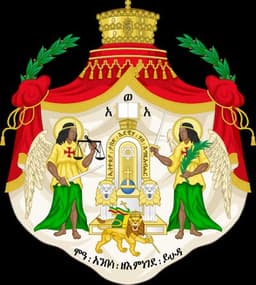
Wedem Arad
Emperor · Medieval
48.5Total
Basic Information
Born
-100
1270
Died
-44
1314
Era
Ancient
Medieval
Nationality
Roman Republic
Ethiopia
Occupation
General
Emperor
Civilization
Western
Other
Score Comparison
Military (10%)
88.0
50.0
Political (20%)
78.0
35.1
Influence (20%)
85.0
58.0
Legacy (20%)
82.0
45.8
Leadership (15%)
80.0
55.3
Strategy (15%)
85.0
39.6
TOTAL
82.8
48.5
Julius Caesar — Complete Timeline
58 BC
Gallic WarsWar◆ Major
Caesar, as proconsul of Gaul, launched a series of campaigns that conquered all of Gaul (modern France, Belgium, and parts of Switzerland). He fought numerous battles, including against the Helvetii, the Belgae, and the Gallic chieftain Vercingetorix. The wars brought immense wealth and a loyal army to Caesar.
Gallic WarsConquestRoman Expansion
Impact: regional
49 BC
Crossing the RubiconPolitical Action◆ Major
Caesar led Legio XIII across the Rubicon River into Italy, defying the Roman Senate's order to disband his army. This act triggered a civil war against Pompey and the Optimates, ultimately leading to Caesar's dictatorship and the end of the Roman Republic.
Roman Civil WarEnd of RepublicPower Struggle
Impact: global
48 BC
Battle of PharsalusWar◆ Major
Caesar's outnumbered army defeated the larger forces of Pompey the Great at Pharsalus in Greece. Caesar's tactical use of a reserve line to counter Pompey's cavalry charge proved decisive. Pompey fled to Egypt, where he was assassinated, leaving Caesar as the undisputed master of the Roman world.
Roman Civil WarBattleDecisive Victory
Impact: regional
44 BC
Appointment as Dictator for LifePolitical Action◆ Major
The Roman Senate appointed Caesar dictator perpetuo (dictator for life), granting him unprecedented personal power. This move concentrated military, legislative, and judicial authority in one person, effectively ending the Roman Republic's traditional system of checks and balances and alarming many senators.
DictatorshipEnd of RepublicPower Consolidation
Impact: regionaldestructive
Assassination on the Ides of MarchPolitical Action◆ Major
A group of Roman senators, led by Marcus Junius Brutus and Gaius Cassius Longinus, stabbed Caesar to death at a meeting of the Senate in the Theatre of Pompey. The assassination was intended to restore the Republic, but instead triggered another civil war that led to the rise of the Roman Empire.
AssassinationRoman PoliticsEnd of Republic
Impact: globaldestructive
Wedem Arad — Complete Timeline
1306 AD
First Contact with EuropePolitical Action◆ Major
Wedem Arad sent an embassy to Europe, likely to the court of Pope Clement V in Avignon. This was the first recorded diplomatic contact between Ethiopia and a European power since antiquity, establishing a precedent for future Ethiopian-European relations.
Impact: regional
Expert Analysis
Julius Caesar vs Wedem Arad
# The Emperor Who Wrote a Letter, and the General Who Rewrote History
On a winter morning in 1306, a messenger from the Horn of Africa arrived at the papal court in Avignon, bearing a letter from an emperor few in Europe had ever heard of. Wedem Arad of Ethiopia sought an alliance with Christendom, reaching across seas and centuries in a gesture of diplomacy that would bear little fruit. Two thousand miles to the north, another man was being born into a world of civil strife and senatorial ambition—a child who would one day cross a river and change the meaning of power forever. Both men ruled. Both men reached beyond their borders. But the distance between them is not measured in geography alone.
Origins
Julius Caesar was born into the patrician Julian clan in 100 BCE, a time when the Roman Republic was tearing itself apart. His family was ancient but not wealthy, and his aunt had married Gaius Marius, the populist general who had reformed the army and defied the Senate. Caesar grew up surrounded by the smell of civil war and the memory of proscriptions. He learned early that in Rome, survival meant maneuvering, and that the old rules no longer applied.
Wedem Arad came to power in the Solomonic dynasty of Ethiopia, a kingdom that traced its lineage to the Queen of Sheba and King Solomon. His world was one of highland fortresses, Coptic Christianity, and isolation. Ethiopia had been cut off from much of the outside world for centuries, surrounded by Muslim sultanates and rival Christian kingdoms. Wedem Arad inherited a throne that was stable but bounded—his authority rested on tradition, not conquest.
Rise to Power
Caesar’s path was a ladder of calculated gambles. He fled Rome to avoid Sulla’s purges, served as a military tribune, and then as a young lawyer won fame by prosecuting corrupt governors. He borrowed fortunes to secure the office of pontifex maximus, then used his command in Spain to pay off debts with plunder. The First Triumvirate with Pompey and Crassus was a masterpiece of political engineering—an alliance of ambition that controlled Rome for a decade. When it collapsed, Caesar crossed the Rubicon in 49 BCE, an act of war against the Republic itself.
Wedem Arad’s rise was quieter. He was likely the son of a previous emperor, Yekuno Amlak, who had restored the Solomonic line. Little is recorded of his early life. He did not seize power through military coup or popular revolution; he inherited it. The great drama of his reign was not a civil war but a diplomatic mission. In 1306, he sent an embassy to Europe—the first known contact between Ethiopia and the West. The envoys carried letters to Pope Clement V, proposing an alliance against their common Muslim enemies. It was a bold move for a king whose kingdom had been invisible to Europe for a millennium.
Leadership & Governance
Caesar governed as he fought—swiftly, personally, and without sentiment. As dictator, he reformed the calendar, granted citizenship to Gauls, launched public works, and centralized tax collection. He pardoned former enemies and elevated talented men regardless of birth. His military genius was unmatched: the conquest of Gaul (58–50 BCE) was a masterpiece of logistics, siegecraft, and psychological warfare. He wrote his own commentaries, framing every campaign as a just war. His leadership was a paradox—generous to soldiers, ruthless to rivals, and utterly convinced of his own destiny.
Wedem Arad governed within the constraints of Ethiopian tradition. The emperor was a sacred figure, bound by the church and the feudal nobility. His most significant act—the embassy to Europe—was less a military alliance than a diplomatic overture. The mission failed: the Pope was preoccupied with the Avignon papacy and the Crusades had lost momentum. Wedem Arad’s reign left no battlefield epics or legal reforms. His governance was maintenance, not transformation.
Triumph & Tragedy
Caesar’s greatest triumph was Gaul—a decade of war that added a vast province to Rome and made him the richest man in the Republic. His victory at Alesia (52 BCE) against Vercingetorix is still studied in military academies. But his tragedy was the Ides of March, 44 BCE. Surrounded by senators he had pardoned, he fell to twenty-three dagger blows. His last act was not a battle but a betrayal.
Wedem Arad’s triumph was the embassy itself. It proved that Ethiopia could speak to the wider world. His tragedy was that no one listened. The letters were filed away, and Ethiopia returned to its highland isolation. He died in 1314, and his name faded from European memory.
Character & Destiny
Caesar was restless, ambitious, and calculating. He wept over Alexander’s statue, lamenting that he had conquered nothing at an age when Alexander had conquered the world. He took risks that would have destroyed lesser men—crossing the Rubicon, facing Pompey at Pharsalus with inferior numbers, walking unarmed into the Senate on that final day. His character was his destiny: he could not stop moving forward, and that momentum carried him to both glory and death.
Wedem Arad was cautious, diplomatic, and patient. He did not seek to expand his borders or crush his enemies. He sought recognition—a place for Ethiopia in the map of Christendom. His character was shaped by isolation, not ambition. He reached out, but the world did not reach back.
Legacy
Caesar’s legacy is the Roman Empire. His adopted heir, Octavian, became Augustus, and the Republic died with Caesar’s name. For two millennia, European rulers styled themselves Caesar—Kaiser, Tsar, Czar. His writings survive; his reforms echo; his assassination is a cautionary tale about power and trust.
Wedem Arad’s legacy is thinner but not trivial. His embassy was the first thread in a long, frayed rope that would eventually connect Ethiopia to Europe. It would be another two centuries before the Portuguese arrived, and another five before Ethiopia became a symbol of African independence. His name is known to historians, but not to the world.
Conclusion
We remember Caesar because he broke the world and remade it in his image. We forget Wedem Arad because he tried to enter a world that had no room for him. Both men reached across boundaries—one with a sword, the other with a letter. The sword rewrote history; the letter was lost in an archive. But in the long arc of time, the quiet emperor who sent a message across the sea may have been the more hopeful figure. He believed that words could bridge empires. Caesar believed that only force could. And perhaps, in that difference, lies the truest measure of what each man left behind.
Rankings
🥇
Julius CaesarLeader
Mil: 88.0Pol: 78.0Inf: 85.0
82.8
🥈
Wedem Arad
Mil: 50.0Pol: 35.1Inf: 58.0
48.5
+34.3 behind
How This Comparison Works
Algorithm
Each figure is scored on 6 dimensions (0—100 scale) based on structured historical data: Military (10%), Political (20%), Influence (20%), Legacy (20%), Leadership (15%), Strategy (15%). The weighted total produces the final ranking.
Data Sources
Scores are computed from structured sub-indicators in the database. Scale factors adjust for era (Ancient ×0.85, Modern ×1.0) and civilization size (Eastern ×1.05, Other ×0.80) to account for differences in population and military scale.
Maximum 3 Figures
Comparisons are limited to 2—3 figures to ensure readability and statistical meaningfulness.
Error Margins
±5 points per dimension — Sub-scores are derived from historical records with inherent uncertainty. Two figures within 5 points on a dimension should be considered roughly equivalent in that area.
Total Score Accuracy
±3 points overall — The weighted combination of 6 dimensions produces a total score with approximately ±3 points of uncertainty. Differences of less than 3 points are not statistically significant— the figures are effectively tied.
Known Limitations
- Historical records are incomplete and uneven across civilizations
- Figures from oral-tradition societies may be underrepresented
- Occupation labels can misclassify multi-role figures
- Scores measure capability and impact, not moral character
- Quantitative scoring is a comparison tool, not absolute truth
Capability Radar
Military (10%) — Battles & Warfare
Battles
95
15
Win Rate
92
20
Expansion
97
10
Political (20%) — Governance & Reform
Reform
90
20
Diplomacy
85
55
Economy
82
15
Influence (20%) — Cultural & Global Reach
Cultural
88
20
Global
94
40
Legacy (20%) — Historical Impact
Historical
95
35
Longevity
96
30
Leadership (15%) — Power & Stability
Tenure
75
40
Stability
60
30
Strategy (15%) — Tactics & Innovation
Strategy
94
10
Tactics
96
10
Reform
88
5
Similar Comparisons
Comments & Discussion
AXE-AND-TOGA6/16/2026
Caesar didn't just cross the Rubicon—he *rewrote the rules of history* in a way Wedem Arad never could. One wrote a desperate letter begging for help; the other wrote the *Commentaries*, a masterpiece of propaganda that still shapes how we see Gaul and Rome. Wedem Arad's diplomatic feeler to Avignon is a fascinating footnote, but it's a footnote. Caesar gave us a template for autocracy, a literary genre, and a new calendar. Let's be real: one man changed the world; the other's reach died at the
沙漠指挥官6/16/2026
非洲之角的皇帝?算了吧。Wedem Arad 写那封乞求信时,他身边有像第十军团那样的职业军队吗?没有。他有的只是孤立的高地和摇摇欲坠的基督教王国。而恺撒在高卢杀了百万之众,把自己的债务变成了一场征服。不,别把他们放在一起比。一个是在玩权力的游戏,另一个只是在摸黑走钢丝,妄图拉住一根远方的稻草。
SPQR_Skeptic6/16/2026
Look, I respect the diplomatic hustle, but this comparison is a classic case of "two things existed at different times, so they must be equally important." Wedem Arad ruled a largely static, isolated kingdom whose main foreign policy achievement was a letter that went nowhere. Caesar fundamentally restructured the entire Mediterranean world, from Spain to Syria, and his actions directly led to the end of the Republic. A letter is not a legion. A Christian plea is not a political revolution. Let'
历史传真员6/16/2026
关键问题不在“谁更伟大”,而在“我们用什么尺度衡量”。恺撒的罗马是世界帝国的中心,有书写的历史、持续的内战与扩张。而Wedem Arad 的埃塞俄比亚是一个孤岛,一个自成体系的基督教文明,他与欧洲的联系几乎被伊斯兰扩张切断。这场比较本身就不公平:你把核动力航母和独木舟放在同一水面上讨论航行速度。更深入的观察不是比谁强,而是理解两种完全不同的统治逻辑。
The_Scribe's_Shadow6/16/2026
Caesar's pen was as sharp as his sword; Wedem Arad's might have been sharper by necessity. Caesar wrote to control a narrative, to fashion himself for Roman audiences. Wedem Arad wrote to a pope across a continent and a sea, crafting a diplomatic persona from a position of extreme isolation and need. That's a far more impressive act of intellectual reconstruction. The Roman had time, money, and a literate class; the Ethiopian emperor had faith and a fragile hope. I'd argue the letter is a greate