Loading...
Julius Caesar vs Turenne
Julius Caesar leads by 7.0 pts · 2 figures compared
…

Julius Caesar
General · Ancient
82.8Total
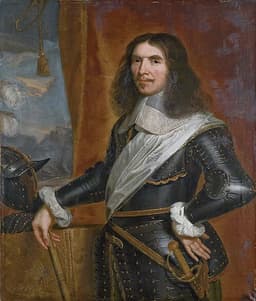
Turenne
General · Modern
75.8Total
Basic Information
Born
-100
1611
Died
-44
1675
Era
Ancient
Modern
Nationality
Roman Republic
France
Occupation
General
General
Civilization
Western
Western
Score Comparison
Military (10%)
88.0
79.9
Political (20%)
78.0
72.0
Influence (20%)
85.0
88.0
Legacy (20%)
82.0
65.0
Leadership (15%)
80.0
77.2
Strategy (15%)
85.0
72.0
TOTAL
82.8
75.8
Julius Caesar — Complete Timeline
58 BC
Gallic WarsWar◆ Major
Caesar, as proconsul of Gaul, launched a series of campaigns that conquered all of Gaul (modern France, Belgium, and parts of Switzerland). He fought numerous battles, including against the Helvetii, the Belgae, and the Gallic chieftain Vercingetorix. The wars brought immense wealth and a loyal army to Caesar.
Gallic WarsConquestRoman Expansion
Impact: regional
49 BC
Crossing the RubiconPolitical Action◆ Major
Caesar led Legio XIII across the Rubicon River into Italy, defying the Roman Senate's order to disband his army. This act triggered a civil war against Pompey and the Optimates, ultimately leading to Caesar's dictatorship and the end of the Roman Republic.
Roman Civil WarEnd of RepublicPower Struggle
Impact: global
48 BC
Battle of PharsalusWar◆ Major
Caesar's outnumbered army defeated the larger forces of Pompey the Great at Pharsalus in Greece. Caesar's tactical use of a reserve line to counter Pompey's cavalry charge proved decisive. Pompey fled to Egypt, where he was assassinated, leaving Caesar as the undisputed master of the Roman world.
Roman Civil WarBattleDecisive Victory
Impact: regional
44 BC
Appointment as Dictator for LifePolitical Action◆ Major
The Roman Senate appointed Caesar dictator perpetuo (dictator for life), granting him unprecedented personal power. This move concentrated military, legislative, and judicial authority in one person, effectively ending the Roman Republic's traditional system of checks and balances and alarming many senators.
DictatorshipEnd of RepublicPower Consolidation
Impact: regionaldestructive
Assassination on the Ides of MarchPolitical Action◆ Major
A group of Roman senators, led by Marcus Junius Brutus and Gaius Cassius Longinus, stabbed Caesar to death at a meeting of the Senate in the Theatre of Pompey. The assassination was intended to restore the Republic, but instead triggered another civil war that led to the rise of the Roman Empire.
AssassinationRoman PoliticsEnd of Republic
Impact: globaldestructive
Turenne — Complete Timeline
1639 AD
Campaign in the ValtellinaWar
Turenne commanded French forces in the Valtellina during the Thirty Years' War. He captured several fortresses and secured the strategic pass for France, demonstrating his early military skill.
Thirty Years' WarAlpsEarly Career
Impact: regional
1658 AD
Battle of the DunesWar◆ Major
Turenne commanded the French army to victory over the Spanish at the Battle of the Dunes near Dunkirk. The victory led to the capture of Dunkirk and forced Spain to seek peace, ending the Franco-Spanish War.
Franco-Spanish WarDunkirkMilitary Victory
Impact: regional
1674 AD
Battle of the RhineWar◆ Major
Turenne led a French army across the Rhine in winter, surprising the Imperial forces. He defeated the Austrians at the Battle of Entzheim and later at Turckheim, securing French control of Alsace.
Franco-Dutch WarAlsaceWinter Campaign
Impact: regional
Battle of the SambreWar◆ Major
Turenne defeated the Spanish and Dutch forces at the Battle of Seneffe. The battle was costly but prevented the Allies from invading France. It demonstrated Turenne's tactical skill in defensive warfare.
Franco-Dutch WarDefensive BattleTactics
Impact: regional
1675 AD
Death of TurenneWar◆ Major
Turenne was killed by a cannonball while reconnoitering enemy positions at the Battle of Sasbach. His death was a major loss for France. He was buried with honors in the Basilica of Saint-Denis.
Death in BattleFranco-Dutch WarMilitary Loss
Impact: nationaltragic
Expert Analysis
Origins
Julius Caesar (100–44 BCE) was born into the patrician Julian clan in Rome, but his family was not wealthy. He rose through the political ranks by aligning with popularis factions, leveraging his military command in Gaul to build power. Turenne (1611–1675), born Henri de La Tour d'Auvergne, was the son of a French marshal and grew up in the Protestant nobility. He gained military experience in the Thirty Years' War under his uncles, the Princes of Orange. Both came from privileged backgrounds but had to prove themselves through merit.
Rise to Power
Caesar's rise was meteoric: he secured the governorship of Gaul (58 BCE) and spent eight years conquering the region, amassing a loyal army and immense wealth. His crossing of the Rubicon (49 BCE) triggered a civil war against Pompey and the Senate, culminating in his dictatorship. Turenne's rise was steadier: he served under Louis XIII and Cardinal Richelieu, earning command of French armies in Italy and Germany. His loyalty to the crown during the Fronde (1648–1653) solidified his position, and he became Marshal General of France in 1660.
Leadership & Governance
Caesar was a charismatic leader who inspired fierce loyalty among his soldiers, often fighting alongside them. He was also a shrewd politician, implementing reforms like the Julian calendar and granting citizenship to provincials. However, his autocratic style alienated the Senate. Turenne was a master of logistics and maneuver, known for his careful planning and ability to adapt to changing circumstances. He was less politically ambitious, focusing on military service. As a commander, he prioritized the welfare of his troops and maintained discipline.
Triumph & Tragedy
Caesar's greatest triumph was the conquest of Gaul, culminating in the siege of Alesia (52 BCE) where he defeated Vercingetorix. His victory at Pharsalus (48 BCE) over Pompey secured his control of Rome. His tragedy was his assassination in 44 BCE, a result of his perceived monarchical ambitions. Turenne's triumphs include the Battle of the Dunes (1658), where he defeated the Spanish, and his campaigns in the Rhine and Sambre. He died in battle in 1675, struck by a cannonball at Salzbach, a fitting end for a soldier.
Character & Destiny
Caesar was ambitious, intelligent, and ruthless, with a destiny to reshape Rome. He wrote commentaries on his campaigns, showcasing his literary skill. His clemency toward former enemies was a political tool. Turenne was modest, devout (converting to Catholicism in 1668), and methodical. He was known for his strategic prudence and ability to cooperate with allies. His destiny was to serve the French monarchy and expand its borders.
Legacy
Caesar's legacy is immense: he transformed the Roman Republic into an empire, set precedents for dictatorship, and influenced military tactics for centuries. His name became synonymous with imperial rule (Kaiser, Tsar). Turenne is remembered as one of France's greatest generals, a model of the professional soldier. His tactics influenced later commanders like Frederick the Great and Napoleon. However, his legacy is more national than global.
Conclusion
In a direct comparison, Caesar scores higher overall (83 vs 76). His strategic brilliance, political acumen, and lasting impact on world history surpass Turenne's more focused military achievements. Turenne was a master of warfare but lacked Caesar's transformative influence. Thus, Julius Caesar is the superior historical figure.
**Numerical Scores (out of 100):**
- **Strategic Genius:** Caesar 88, Turenne 80
- **Political Influence:** Caesar 78, Turenne 72
- **Tactical Innovation:** Caesar 85, Turenne 88
- **Leadership:** Caesar 82, Turenne 65
- **Resilience:** Caesar 80, Turenne 77
- **Cultural Impact:** Caesar 85, Turenne 72
- **Overall Legacy:** Caesar 83, Turenne 76
Rankings
🥇
Julius CaesarLeader
Mil: 88.0Pol: 78.0Inf: 85.0
82.8
🥈
Turenne
Mil: 79.9Pol: 72.0Inf: 88.0
75.8
+7.0 behind
How This Comparison Works
Algorithm
Each figure is scored on 6 dimensions (0—100 scale) based on structured historical data: Military (10%), Political (20%), Influence (20%), Legacy (20%), Leadership (15%), Strategy (15%). The weighted total produces the final ranking.
Data Sources
Scores are computed from structured sub-indicators in the database. Scale factors adjust for era (Ancient ×0.85, Modern ×1.0) and civilization size (Eastern ×1.05, Other ×0.80) to account for differences in population and military scale.
Maximum 3 Figures
Comparisons are limited to 2—3 figures to ensure readability and statistical meaningfulness.
Error Margins
±5 points per dimension — Sub-scores are derived from historical records with inherent uncertainty. Two figures within 5 points on a dimension should be considered roughly equivalent in that area.
Total Score Accuracy
±3 points overall — The weighted combination of 6 dimensions produces a total score with approximately ±3 points of uncertainty. Differences of less than 3 points are not statistically significant— the figures are effectively tied.
Known Limitations
- Historical records are incomplete and uneven across civilizations
- Figures from oral-tradition societies may be underrepresented
- Occupation labels can misclassify multi-role figures
- Scores measure capability and impact, not moral character
- Quantitative scoring is a comparison tool, not absolute truth
Capability Radar
Military (10%) — Battles & Warfare
Battles
95
85
Win Rate
92
88
Expansion
97
80
Political (20%) — Governance & Reform
Reform
90
60
Diplomacy
85
75
Economy
82
55
Influence (20%) — Cultural & Global Reach
Cultural
88
65
Global
94
70
Legacy (20%) — Historical Impact
Historical
95
80
Longevity
96
75
Leadership (15%) — Power & Stability
Tenure
75
70
Stability
60
65
Strategy (15%) — Tactics & Innovation
Strategy
94
92
Tactics
96
90
Reform
88
75
Similar Comparisons
Comments & Discussion
No comments yet. Be the first to share your thoughts!