Loading...
Julius Caesar vs Toussaint Louverture
Julius Caesar leads by 4.3 pts · 2 figures compared
…

Julius Caesar
General · Ancient
82.8Total
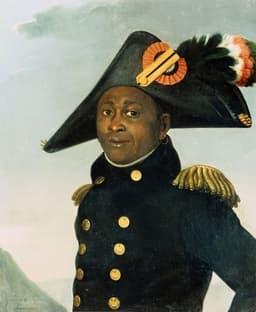
Toussaint Louverture
General · Modern
78.5Total
Basic Information
Born
-100
1743
Died
-44
1803
Era
Ancient
Modern
Nationality
Roman Republic
Haiti
Occupation
General
General
Civilization
Western
Western
Score Comparison
Military (10%)
88.0
85.0
Political (20%)
78.0
70.3
Influence (20%)
85.0
84.0
Legacy (20%)
82.0
82.0
Leadership (15%)
80.0
72.0
Strategy (15%)
85.0
72.0
TOTAL
82.8
78.5
Julius Caesar — Complete Timeline
58 BC
Gallic WarsWar◆ Major
Caesar, as proconsul of Gaul, launched a series of campaigns that conquered all of Gaul (modern France, Belgium, and parts of Switzerland). He fought numerous battles, including against the Helvetii, the Belgae, and the Gallic chieftain Vercingetorix. The wars brought immense wealth and a loyal army to Caesar.
Gallic WarsConquestRoman Expansion
Impact: regional
49 BC
Crossing the RubiconPolitical Action◆ Major
Caesar led Legio XIII across the Rubicon River into Italy, defying the Roman Senate's order to disband his army. This act triggered a civil war against Pompey and the Optimates, ultimately leading to Caesar's dictatorship and the end of the Roman Republic.
Roman Civil WarEnd of RepublicPower Struggle
Impact: global
48 BC
Battle of PharsalusWar◆ Major
Caesar's outnumbered army defeated the larger forces of Pompey the Great at Pharsalus in Greece. Caesar's tactical use of a reserve line to counter Pompey's cavalry charge proved decisive. Pompey fled to Egypt, where he was assassinated, leaving Caesar as the undisputed master of the Roman world.
Roman Civil WarBattleDecisive Victory
Impact: regional
44 BC
Appointment as Dictator for LifePolitical Action◆ Major
The Roman Senate appointed Caesar dictator perpetuo (dictator for life), granting him unprecedented personal power. This move concentrated military, legislative, and judicial authority in one person, effectively ending the Roman Republic's traditional system of checks and balances and alarming many senators.
DictatorshipEnd of RepublicPower Consolidation
Impact: regionaldestructive
Assassination on the Ides of MarchPolitical Action◆ Major
A group of Roman senators, led by Marcus Junius Brutus and Gaius Cassius Longinus, stabbed Caesar to death at a meeting of the Senate in the Theatre of Pompey. The assassination was intended to restore the Republic, but instead triggered another civil war that led to the rise of the Roman Empire.
AssassinationRoman PoliticsEnd of Republic
Impact: globaldestructive
Toussaint Louverture — Complete Timeline
1791 AD
Haitian Revolution LeadershipWar
Louverture joined the slave revolt in Saint-Domingue, quickly rising to leadership. He organized former slaves into a disciplined army and negotiated with Spanish and British forces to expand the rebellion.
Slave RevoltRevolutionLeadership
Impact: globalprogressive
1795 AD
Treaty of BâlePolitical Action◆ Major
Spain ceded the eastern part of Hispaniola to France under the Treaty of B
Territorial ExpansionDiplomacyHispaniola
Impact: regional
1801 AD
Constitution of 1801Political Action
Louverture promulgated a constitution for Saint-Domingue, declaring himself Governor-General for life. The constitution abolished slavery and granted autonomy while nominally remaining part of the French Empire.
ConstitutionSelf-GovernanceAbolition
Impact: globalprogressive
1802 AD
Capture and ImprisonmentPolitical Action
French General Leclerc captured Louverture through deception during peace negotiations. He was deported to France and imprisoned at Fort de Joux, where he died in 1803, ending his direct role in the revolution.
BetrayalImprisonmentFrench Repression
Impact: globaltragic
Expert Analysis
Origins
Julius Caesar was born into a patrician family in Rome around 100 BCE, claiming descent from the goddess Venus. His early life was marked by political turmoil, as the Roman Republic faced internal strife between populares and optimates. Caesar aligned with the populares, gaining popularity through military service and public office. In contrast, Toussaint Louverture was born into slavery around 1743 in Saint-Domingue (now Haiti). He gained freedom around age 33 and became a prosperous planter. While Caesar inherited privilege, Louverture rose from bondage, shaping their worldviews and methods.
Rise to Power
Caesar's rise was meteoric. He formed the First Triumvirate with Pompey and Crassus, secured the governorship of Gaul, and launched the Gallic Wars (58–50 BCE), conquering vast territories and building a loyal army. His Commentarii de Bello Gallico publicized his exploits, enhancing his reputation. Crossing the Rubicon in 49 BCE sparked a civil war, culminating in his victory at Pharsalus and appointment as dictator. Louverture's rise began during the Haitian Revolution in 1791. He initially helped his former master escape, then joined the rebel forces. His military acumen and diplomacy led him to become the leader of the revolution, negotiating with Spanish, British, and French forces. By 1801, he controlled the entire island of Hispaniola, drafting a constitution that abolished slavery and made him governor-for-life.
Leadership & Governance
Caesar centralized power, enacting reforms: land redistribution, debt relief, calendar reform (Julian calendar), and extending citizenship to provinces. He reduced the Senate's influence and packed it with supporters, but his rule was short-lived (dictator for life in 44 BCE). Louverture governed Saint-Domingue with a mix of authoritarianism and pragmatism. He restored plantation agriculture using paid labor, maintained racial harmony, and established diplomatic relations. His 1801 constitution granted him broad powers but preserved French sovereignty. Both leaders were effective administrators, but Caesar's reforms had lasting impact on Rome, while Louverture's governance was cut short by French invasion.
Triumph & Tragedy
Caesar's greatest triumph was the conquest of Gaul, securing Rome's borders and his own wealth. His tragedy was his assassination on the Ides of March in 44 BCE by senators fearing his monarchy. Louverture's triumph was leading the only successful slave revolt, defeating European powers. His tragedy came in 1802 when French forces under Napoleon invaded. Despite a truce, Louverture was captured, deported to France, and died in prison in 1803. His successor Jean-Jacques Dessalines completed the revolution, declaring Haitian independence in 1804.
Character & Destiny
Caesar was ambitious, charismatic, and ruthless. He cultivated an image of clemency but crushed enemies. His desire for glory drove him to expand Rome's empire and his own power. Louverture was pragmatic, disciplined, and strategic. He maintained strict control over his forces and sought to build a stable, multiracial society. Both believed in their destinies: Caesar saw himself as a divine figure; Louverture saw his role as liberator. Their fates were sealed by their ambitions—Caesar's led to betrayal, Louverture's to betrayal by the French.
Legacy
Caesar's legacy is monumental: his name became synonymous with imperial rule (Kaiser, Tsar). His reforms paved the way for the Roman Empire. However, his dictatorship undermined the Republic and sparked centuries of autocracy. Louverture's legacy is revolutionary: he inspired abolitionists and anti-colonial movements worldwide. He is celebrated as a founding father of Haiti and a symbol of black resistance. Yet, his compromises and authoritarianism have been criticized. In historical impact, Caesar reshaped Western civilization; Louverture reshaped the Atlantic world and challenged racial hierarchies.
Conclusion
Julius Caesar (score: 83.1) narrowly edges Toussaint Louverture (score: 78.8) in this analysis. Caesar's military conquests and political reforms had a broader and longer-lasting impact on world history. However, Louverture's achievements are arguably more remarkable given his origins and the odds he overcame. Both were exceptional leaders, but Caesar's influence on the structure of Western governance and his role in the transition from Republic to Empire give him a slight edge. Louverture remains a towering figure for his liberation of a people and his challenge to colonialism and slavery. Ultimately, Caesar wins the matchup, but Louverture's moral victory resonates powerfully.
Rankings
🥇
Julius CaesarLeader
Mil: 88.0Pol: 78.0Inf: 85.0
82.8
🥈
Toussaint Louverture
Mil: 85.0Pol: 70.3Inf: 84.0
78.5
+4.3 behind
How This Comparison Works
Algorithm
Each figure is scored on 6 dimensions (0—100 scale) based on structured historical data: Military (10%), Political (20%), Influence (20%), Legacy (20%), Leadership (15%), Strategy (15%). The weighted total produces the final ranking.
Data Sources
Scores are computed from structured sub-indicators in the database. Scale factors adjust for era (Ancient ×0.85, Modern ×1.0) and civilization size (Eastern ×1.05, Other ×0.80) to account for differences in population and military scale.
Maximum 3 Figures
Comparisons are limited to 2—3 figures to ensure readability and statistical meaningfulness.
Error Margins
±5 points per dimension — Sub-scores are derived from historical records with inherent uncertainty. Two figures within 5 points on a dimension should be considered roughly equivalent in that area.
Total Score Accuracy
±3 points overall — The weighted combination of 6 dimensions produces a total score with approximately ±3 points of uncertainty. Differences of less than 3 points are not statistically significant— the figures are effectively tied.
Known Limitations
- Historical records are incomplete and uneven across civilizations
- Figures from oral-tradition societies may be underrepresented
- Occupation labels can misclassify multi-role figures
- Scores measure capability and impact, not moral character
- Quantitative scoring is a comparison tool, not absolute truth
Capability Radar
Military (10%) — Battles & Warfare
Battles
95
85
Win Rate
92
80
Expansion
97
70
Political (20%) — Governance & Reform
Reform
90
85
Diplomacy
85
80
Economy
82
60
Influence (20%) — Cultural & Global Reach
Cultural
88
85
Global
94
85
Legacy (20%) — Historical Impact
Historical
95
95
Longevity
96
90
Leadership (15%) — Power & Stability
Tenure
75
65
Stability
60
55
Strategy (15%) — Tactics & Innovation
Strategy
94
85
Tactics
96
90
Reform
88
75
Similar Comparisons
Comments & Discussion
No comments yet. Be the first to share your thoughts!