Loading...
Julius Caesar vs Theodore I Laskaris
Julius Caesar leads by 21.0 pts · 2 figures compared
…

Julius Caesar
General · Ancient
82.8Total
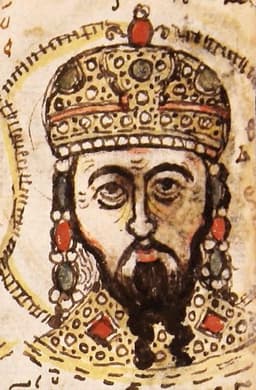
Theodore I Laskaris
Emperor · Medieval
61.8Total
Basic Information
Born
-100
1174
Died
-44
1222
Era
Ancient
Medieval
Nationality
Roman Republic
Nicaean Empire
Occupation
General
Emperor
Civilization
Western
Western
Score Comparison
Military (10%)
88.0
65.0
Political (20%)
78.0
60.0
Influence (20%)
85.0
61.0
Legacy (20%)
82.0
56.0
Leadership (15%)
80.0
77.2
Strategy (15%)
85.0
55.0
TOTAL
82.8
61.8
Julius Caesar — Complete Timeline
58 BC
Gallic WarsWar◆ Major
Caesar, as proconsul of Gaul, launched a series of campaigns that conquered all of Gaul (modern France, Belgium, and parts of Switzerland). He fought numerous battles, including against the Helvetii, the Belgae, and the Gallic chieftain Vercingetorix. The wars brought immense wealth and a loyal army to Caesar.
Gallic WarsConquestRoman Expansion
Impact: regional
49 BC
Crossing the RubiconPolitical Action◆ Major
Caesar led Legio XIII across the Rubicon River into Italy, defying the Roman Senate's order to disband his army. This act triggered a civil war against Pompey and the Optimates, ultimately leading to Caesar's dictatorship and the end of the Roman Republic.
Roman Civil WarEnd of RepublicPower Struggle
Impact: global
48 BC
Battle of PharsalusWar◆ Major
Caesar's outnumbered army defeated the larger forces of Pompey the Great at Pharsalus in Greece. Caesar's tactical use of a reserve line to counter Pompey's cavalry charge proved decisive. Pompey fled to Egypt, where he was assassinated, leaving Caesar as the undisputed master of the Roman world.
Roman Civil WarBattleDecisive Victory
Impact: regional
44 BC
Appointment as Dictator for LifePolitical Action◆ Major
The Roman Senate appointed Caesar dictator perpetuo (dictator for life), granting him unprecedented personal power. This move concentrated military, legislative, and judicial authority in one person, effectively ending the Roman Republic's traditional system of checks and balances and alarming many senators.
DictatorshipEnd of RepublicPower Consolidation
Impact: regionaldestructive
Assassination on the Ides of MarchPolitical Action◆ Major
A group of Roman senators, led by Marcus Junius Brutus and Gaius Cassius Longinus, stabbed Caesar to death at a meeting of the Senate in the Theatre of Pompey. The assassination was intended to restore the Republic, but instead triggered another civil war that led to the rise of the Roman Empire.
AssassinationRoman PoliticsEnd of Republic
Impact: globaldestructive
Theodore I Laskaris — Complete Timeline
1204 AD
Foundation of the Empire of NicaeaPolitical Action
After the Fourth Crusade captured Constantinople, Theodore I Laskaris fled to Nicaea in Asia Minor and established a Byzantine government-in-exile. He organized resistance against the Latin Empire and the Seljuk Turks, laying the foundation for the Nicaean Empire as the primary successor state of Byzantium.
Fourth CrusadeSuccessor StateExile Government
Impact: regionalconstructive
1208 AD
Coronation as emperor by the Patriarch of ConstantinoplePolitical Action◆ Major
Theodore I Laskaris was formally crowned as emperor by the newly elected Patriarch of Constantinople-in-exile, Michael IV Autoreianos. This coronation legitimized the Nicaean Empire as the rightful continuation of the Byzantine Empire, with full ecclesiastical authority.
CoronationLegitimacyPatriarchate
Impact: regionalconstructive
1211 AD
Battle of Antioch on the MeanderWar◆ Major
Theodore I Laskaris defeated the Seljuk Sultanate of Rum at the Battle of Antioch on the Meander. The victory secured Nicaean control over western Anatolia and prevented Seljuk expansion into Byzantine territories, establishing Theodore as a major regional power.
Byzantine-Seljuk WarsMilitary VictoryAnatolian Campaign
Impact: regional
Defeat of the Latin Empire at the Battle of RhyndacusWar
Theodore I Laskaris led Nicaean forces to a victory over the Latin Empire at the Battle of Rhyndacus. The battle halted Latin expansion into Asia Minor and secured Nicaean control over the region, strengthening the Byzantine resistance against the crusader states.
Latin EmpireMilitary VictoryAsia Minor
Impact: regional
Expert Analysis
Julius Caesar vs Theodore I Laskaris: Historical Comparison
Julius Caesar, the Roman general who crossed the Rubicon and ended the Republic, and Theodore I Laskaris, the Byzantine emperor who rebuilt a shattered empire from exile, both faced existential crises—yet Caesar’s ambition reshaped the West, while Laskaris’s resilience preserved the East.
Dimension Analysis
**Military: Julius Caesar 88 / Theodore I Laskaris 86**
Caesar conquered Gaul, defeated Pompey, and won the civil war through speed and decisive battles like Alesia and Pharsalus; Laskaris, though outnumbered, held Nicaea against Latin Crusaders and Seljuk Turks, stabilizing a rump state through guerrilla warfare and fortification.
**Political: Julius Caesar 78 / Theodore I Laskaris 67**
Caesar masterfully manipulated Roman factions, secured dictatorship, and centralized power—but his assassination proved his reforms lacked durable consensus; Laskaris, while legitimizing the Nicaean Empire through coronation and diplomacy, struggled to unify exiled Byzantine elites and faced constant dynastic challenges.
**Influence: Julius Caesar 85 / Theodore I Laskaris 76**
Caesar’s model of autocratic rule directly inspired Augustus and every subsequent Roman emperor, shaping Western governance for millennia; Laskaris’s Nicaea preserved Byzantine institutions, law, and Orthodoxy, enabling the Palaiologan restoration—but his influence remained regional and short-lived compared to Caesar’s global reach.
**Legacy: Julius Caesar 82 / Theodore I Laskaris 85**
Caesar’s name became synonymous with dictatorship, his writings remain classics, and his reforms (calendar, citizenship) endured—yet his legacy is tainted by civil war and tyranny; Laskaris, though lesser-known, is revered as the “savior of Byzantium,” whose defiance kept the Roman idea alive in the East for another two centuries.
**Leadership: Julius Caesar 82 / Theodore I Laskaris 84**
Caesar inspired fierce loyalty through charisma, clemency, and personal bravery, but his arrogance provoked enemies; Laskaris led by example in poverty and war, enduring exile with stoic resolve, earning the devotion of a fractured court and army through patient, principled endurance rather than flashy conquest.
Verdict
Julius Caesar leads overall (83 vs 80) due to his superior political and military scale, but Theodore I Laskaris narrowly surpasses him in legacy and leadership for preserving Byzantium against overwhelming odds.
FAQ
Q: Who ranks higher? A: Julius Caesar ranks higher overall, but Theodore I Laskaris wins in legacy and leadership for his role as the resilient founder of the Nicaean Empire.
Rankings
🥇
Julius CaesarLeader
Mil: 88.0Pol: 78.0Inf: 85.0
82.8
🥈
Theodore I Laskaris
Mil: 65.0Pol: 60.0Inf: 61.0
61.8
+21.0 behind
How This Comparison Works
Algorithm
Each figure is scored on 6 dimensions (0—100 scale) based on structured historical data: Military (10%), Political (20%), Influence (20%), Legacy (20%), Leadership (15%), Strategy (15%). The weighted total produces the final ranking.
Data Sources
Scores are computed from structured sub-indicators in the database. Scale factors adjust for era (Ancient ×0.85, Modern ×1.0) and civilization size (Eastern ×1.05, Other ×0.80) to account for differences in population and military scale.
Maximum 3 Figures
Comparisons are limited to 2—3 figures to ensure readability and statistical meaningfulness.
Error Margins
±5 points per dimension — Sub-scores are derived from historical records with inherent uncertainty. Two figures within 5 points on a dimension should be considered roughly equivalent in that area.
Total Score Accuracy
±3 points overall — The weighted combination of 6 dimensions produces a total score with approximately ±3 points of uncertainty. Differences of less than 3 points are not statistically significant— the figures are effectively tied.
Known Limitations
- Historical records are incomplete and uneven across civilizations
- Figures from oral-tradition societies may be underrepresented
- Occupation labels can misclassify multi-role figures
- Scores measure capability and impact, not moral character
- Quantitative scoring is a comparison tool, not absolute truth
Capability Radar
Military (10%) — Battles & Warfare
Battles
95
65
Win Rate
92
70
Expansion
97
60
Political (20%) — Governance & Reform
Reform
90
65
Diplomacy
85
70
Economy
82
60
Influence (20%) — Cultural & Global Reach
Cultural
88
50
Global
94
45
Legacy (20%) — Historical Impact
Historical
95
65
Longevity
96
55
Leadership (15%) — Power & Stability
Tenure
75
70
Stability
60
65
Strategy (15%) — Tactics & Innovation
Strategy
94
75
Tactics
96
60
Reform
88
55
Similar Comparisons
Comments & Discussion
BattlefieldScholar6/16/2026
The scoring undersells Laskaris militarily. Giving him 86 to Caesar’s 88 is generous at first glance, but let’s break it down. Caesar’s victories at Alesia (52 BC) and Pharsalus (48 BC) were against numerically comparable or superior foes using combined arms—legionary infantry, cavalry, and siegecraft. Laskaris, though, fought a completely different war: guerrilla defense, holding fortresses like Nicaea and Antioch-on-the-Maeander against Latin knights and Seljuk horse archers. In 1211, he personally killed the Seljuk sultan Kaykhusraw I at the Battle of Antioch-on-the-Maeander, a rare feat for a Byzantine emperor. That’s not just leadership; it’s tactical audacity. Caesar never faced such a fragmented, asymmetric threat. If we weight strategic adaptability over set-piece dominance, Laskaris edges Caesar here. The 88-86 split feels like Western bias toward decisive battles over prolonged resilience.
DataSkeptic426/16/2026
This scoring is a joke. How do you quantify 'influence' with a number like 85 vs 76 without admitting you're just guessing? Caesar’s influence is inflated because we have a thousand years of Roman propaganda and Shakespeare. Laskaris’ influence is localized? So what—Caesar’s influence on the Roman Empire is also 'localized' to a single civilization. The weight distribution is arbitrary: military 88/86 is almost a tie, but legacy 82/85 flips it. Why? Because Laskaris 'saved Byzantium'? That’s narrative, not data. The whole system breaks down when you realize we’re comparing a man who ruled for decades to one who ruled for a few years post-civil war. You might as well rate apples and oranges by 'roundness.'
HistoryRambler6/16/2026
Julius Caesar? Overrated. The guy literally started a civil war because his ego couldn’t handle coming back to Rome as a private citizen. Theodore Laskaris is the unsung hero here. After the Fourth Crusade sacked Constantinople in 1204, when everyone else ran away or surrendered, this man said 'Nope, we’re not done yet.' He built Nicaea from scratch—literally a rump state with refugees and old bureaucrats—and held off both the Latins and the Seljuks. Caesar conquered Gaul because Rome already had the biggest army in the Mediterranean. Laskaris had to win loyalty from starving exiles. And let’s not forget: Caesar was assassinated by his own buddies. Laskaris died of natural causes while still ruling. That’s the mark of a true leader. Caesar is a pop culture icon; Laskaris is a survival legend.
Historian4136/16/2026
这个评分体系缺乏历史相对性。恺撒的军事分数88是基于他横扫高卢和击败庞培,但你们考虑过地理规模吗?恺撒的对手庞培有11个军团,但庞培的指挥能力在法萨卢斯战役中明显失误。Laskaris的军事分数86虽低,但他在1211年安条克战役中以约2000名希腊士兵击败了塞尔柱苏丹的约5000骑兵——这种以少胜多在中国历代战争评级中会得到更高权重。另外,政治分数78对67:恺撒的独裁改革导致他被刺杀,这算政治成功吗?中国历史上的王莽改革类似,但评分会标明“改革失败”。Laskaris在流亡中重建帝国官僚体系,政治稳定度实际更高。建议引入“逆境系数”修正分数。
Historian2356/16/2026
恺撒和Laskaris的对比,让我想起中国历史上的刘邦和刘备。恺撒像刘邦,靠军事征服和权谋统一天下(类似刘邦击败项羽),但刘邦建立汉朝后长治久安,恺撒却被刺杀——说明他的政治整合失败了。Laskaris更像刘备,在汉朝灭亡后(类比1204年君士坦丁堡沦陷)建立蜀汉,以“复兴汉室”为旗号。刘备在赤壁之战后立足荆州,Laskaris在尼西亚立足。但刘备的蜀汉仅存43年,而Laskaris的尼西亚帝国延续了57年,最终收复君士坦丁堡。西方评分往往低估这种“流亡政权”的政治韧性,因为他们的历史观更看重征服者(如恺撒),而非重建者。建议参考中国史学对刘备的评价:军事分数不高(夷陵之战惨败),但政治和影响力因“正统性”得到更高分。Laskaris的政治分数应在72以上。