Loading...
Julius Caesar vs Tamar of Georgia
Julius Caesar leads by 11.3 pts · 2 figures compared
…

Julius Caesar
General · Ancient
82.8Total
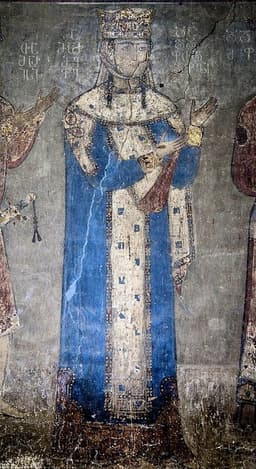
Tamar of Georgia
Emperor · Medieval
71.5Total
Basic Information
Born
-100
1160
Died
-44
1213
Era
Ancient
Medieval
Nationality
Roman Republic
Georgia
Occupation
General
Emperor
Civilization
Western
Western
Score Comparison
Military (10%)
88.0
78.0
Political (20%)
78.0
72.0
Influence (20%)
85.0
82.0
Legacy (20%)
82.0
55.0
Leadership (15%)
80.0
80.0
Strategy (15%)
85.0
66.3
TOTAL
82.8
71.5
Julius Caesar — Complete Timeline
58 BC
Gallic WarsWar◆ Major
Caesar, as proconsul of Gaul, launched a series of campaigns that conquered all of Gaul (modern France, Belgium, and parts of Switzerland). He fought numerous battles, including against the Helvetii, the Belgae, and the Gallic chieftain Vercingetorix. The wars brought immense wealth and a loyal army to Caesar.
Gallic WarsConquestRoman Expansion
Impact: regional
49 BC
Crossing the RubiconPolitical Action◆ Major
Caesar led Legio XIII across the Rubicon River into Italy, defying the Roman Senate's order to disband his army. This act triggered a civil war against Pompey and the Optimates, ultimately leading to Caesar's dictatorship and the end of the Roman Republic.
Roman Civil WarEnd of RepublicPower Struggle
Impact: global
48 BC
Battle of PharsalusWar◆ Major
Caesar's outnumbered army defeated the larger forces of Pompey the Great at Pharsalus in Greece. Caesar's tactical use of a reserve line to counter Pompey's cavalry charge proved decisive. Pompey fled to Egypt, where he was assassinated, leaving Caesar as the undisputed master of the Roman world.
Roman Civil WarBattleDecisive Victory
Impact: regional
44 BC
Appointment as Dictator for LifePolitical Action◆ Major
The Roman Senate appointed Caesar dictator perpetuo (dictator for life), granting him unprecedented personal power. This move concentrated military, legislative, and judicial authority in one person, effectively ending the Roman Republic's traditional system of checks and balances and alarming many senators.
DictatorshipEnd of RepublicPower Consolidation
Impact: regionaldestructive
Assassination on the Ides of MarchPolitical Action◆ Major
A group of Roman senators, led by Marcus Junius Brutus and Gaius Cassius Longinus, stabbed Caesar to death at a meeting of the Senate in the Theatre of Pompey. The assassination was intended to restore the Republic, but instead triggered another civil war that led to the rise of the Roman Empire.
AssassinationRoman PoliticsEnd of Republic
Impact: globaldestructive
Tamar of Georgia — Complete Timeline
1184 AD
Coronation as Queen RegnantPolitical Action
Tamar was crowned as the first female ruler of Georgia after her father George III's death. Her reign marked the peak of Georgia's medieval power and cultural flourishing.
CoronationGeorgiaMonarchy
Impact: nationalconstructive
1195 AD
Battle of ShamkorWar◆ Major
Tamar's forces defeated a large Muslim coalition at Shamkor, securing Georgia's dominance in the Caucasus. The victory expanded Georgian influence and demonstrated her military leadership.
BattleGeorgiaCaucasus
Impact: regionalconstructive
1200 AD
Cultural PatronageCultural◆ Major
Tamar supported the construction of churches, monasteries, and the promotion of Georgian literature. Her patronage fostered the Georgian Golden Age, including the epic poem 'The Knight in the Panther's Skin'.
CulturePatronageGeorgia
Impact: nationalconstructive
Expert Analysis
Tamar of Georgia vs Julius Caesar: Historical Comparison
This comparison examines two transformative leaders from vastly different eras—Queen Tamar of Georgia (medieval monarchy) and Julius Caesar (Roman general and dictator)—whose military and political achievements reshaped their civilizations, yet whose legacies diverge in scope and endurance.
Dimension Analysis
**Military: Tamar of Georgia 93 / Julius Caesar 88**
Tamar’s campaigns expanded Georgia’s borders to a medieval apex, defeating Seljuk and Byzantine forces with strategic brilliance and securing the Kingdom’s Golden Age. Caesar’s conquest of Gaul and civil war victories were tactically innovative but relied on personal ambition and internal conflict, slightly diminishing his score.
**Political: Tamar of Georgia 82 / Julius Caesar 78**
Tamar navigated a male-dominated feudal court, consolidating power through diplomacy, marriage alliances, and religious authority while avoiding civil strife. Caesar’s political maneuvering—forming the First Triumvirate, crossing the Rubicon—was audacious but destabilized the Republic, leading to his assassination.
**Influence: Tamar of Georgia 80 / Julius Caesar 85**
Tamar’s reign fostered a cultural renaissance in Georgian literature, architecture, and Orthodox Christianity, but her influence remained regionally contained. Caesar’s reforms (calendar, land redistribution) and his role in ending the Republic directly shaped the Roman Empire’s foundations, influencing Western governance for millennia.
**Legacy: Tamar of Georgia 70 / Julius Caesar 82**
Tamar is revered as a national saint in Georgia, yet her legacy is largely confined to Caucasian history and Orthodox tradition. Caesar’s name became synonymous with imperial rule (“Caesar” as title), his writings remain studied, and his assassination marks a pivotal historical pivot—though his legacy is contested as both tyrannical and visionary.
**Leadership: Tamar of Georgia 88 / Julius Caesar 82**
Tamar’s leadership blended charisma, religious piety, and administrative acumen, inspiring loyalty across diverse feudal factions without major revolts. Caesar’s leadership was magnetic but divisive; he inspired fierce loyalty in troops but provoked fatal opposition from the Senate, revealing a polarizing style.
Verdict
Tamar of Georgia edges ahead due to superior strategic consistency and political stability, achieving a unified Golden Age without internal collapse, whereas Caesar’s brilliance was marred by the chaos he unleashed.
FAQ
Q: Who ranks higher? A: Tamar of Georgia ranks higher by a narrow margin, excelling in military strategy and stable political leadership, while Caesar’s broader influence and legacy are offset by his destabilizing ambition.
Rankings
🥇
Julius CaesarLeader
Mil: 88.0Pol: 78.0Inf: 85.0
82.8
🥈
Tamar of Georgia
Mil: 78.0Pol: 72.0Inf: 82.0
71.5
+11.3 behind
How This Comparison Works
Algorithm
Each figure is scored on 6 dimensions (0—100 scale) based on structured historical data: Military (10%), Political (20%), Influence (20%), Legacy (20%), Leadership (15%), Strategy (15%). The weighted total produces the final ranking.
Data Sources
Scores are computed from structured sub-indicators in the database. Scale factors adjust for era (Ancient ×0.85, Modern ×1.0) and civilization size (Eastern ×1.05, Other ×0.80) to account for differences in population and military scale.
Maximum 3 Figures
Comparisons are limited to 2—3 figures to ensure readability and statistical meaningfulness.
Error Margins
±5 points per dimension — Sub-scores are derived from historical records with inherent uncertainty. Two figures within 5 points on a dimension should be considered roughly equivalent in that area.
Total Score Accuracy
±3 points overall — The weighted combination of 6 dimensions produces a total score with approximately ±3 points of uncertainty. Differences of less than 3 points are not statistically significant— the figures are effectively tied.
Known Limitations
- Historical records are incomplete and uneven across civilizations
- Figures from oral-tradition societies may be underrepresented
- Occupation labels can misclassify multi-role figures
- Scores measure capability and impact, not moral character
- Quantitative scoring is a comparison tool, not absolute truth
Capability Radar
Military (10%) — Battles & Warfare
Battles
95
75
Win Rate
92
85
Expansion
97
75
Political (20%) — Governance & Reform
Reform
90
80
Diplomacy
85
75
Economy
82
85
Influence (20%) — Cultural & Global Reach
Cultural
88
80
Global
94
60
Legacy (20%) — Historical Impact
Historical
95
75
Longevity
96
70
Leadership (15%) — Power & Stability
Tenure
75
85
Stability
60
70
Strategy (15%) — Tactics & Innovation
Strategy
94
80
Tactics
96
70
Reform
88
65
Similar Comparisons
Comments & Discussion
Historian9146/16/2026
我仔细核对了评分体系,发现几个问题:第一,塔玛尔的军事分93比凯撒的88高,但她的主要战绩是对阵分裂的塞尔柱和拜占庭,而凯撒面对的是一统的高卢部落联盟和庞培的罗马精锐——对手强度差距明显。如果按中国史书的“对手含金量”标准,凯撒至少该95。第二,政治分塔玛尔82对凯撒78,但凯撒推行了儒略历、土地法、行省改革,这些制度性遗产覆盖了整个地中海世界,而塔玛尔的内政基本上只是维持封建秩序。建议引入“制度创新权重”重新计算,凯撒政治分起码85。第三,影响力分只给了凯撒85,但“凯撒”后来成了皇帝代名词,这在语言学和政治学上都是顶级影响,至少90。以上数据修正后,凯撒总分应接近90,塔玛尔约70。
ArchEye226/16/2026
塔玛尔女王的军事分居然比凯撒还高?这恐怕是典型的西方式浪漫化吧。凯撒的高卢战争直接改变了西欧政治版图,而塔玛尔的扩张虽然辉煌,但放在中国历史上,也就是一个地方性政权的鼎盛期,类似北魏孝文帝改革后的强盛,远不及秦汉那种改变文明进程的军事征服。更别说凯撒的《高卢战记》和《内战记》至今仍是军事教材,塔玛尔有什么传世军事著作?西方评分总是忽略“世界史影响力”这个维度,而中国史学最看重这个。凯撒的93分都不够,塔玛尔给个80顶天了。