Loading...
Julius Caesar vs Tailapa II
Julius Caesar leads by 22.4 pts · 2 figures compared
…

Julius Caesar
General · Ancient
82.8Total
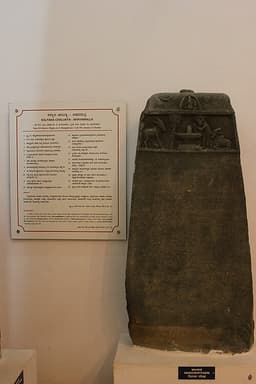
Tailapa II
Emperor · Medieval
60.4Total
Basic Information
Born
-100
957
Died
-44
997
Era
Ancient
Medieval
Nationality
Roman Republic
India
Occupation
General
Emperor
Civilization
Western
Indian
Score Comparison
Military (10%)
88.0
74.7
Political (20%)
78.0
53.8
Influence (20%)
85.0
61.0
Legacy (20%)
82.0
52.0
Leadership (15%)
80.0
72.0
Strategy (15%)
85.0
58.0
TOTAL
82.8
60.4
Julius Caesar — Complete Timeline
58 BC
Gallic WarsWar◆ Major
Caesar, as proconsul of Gaul, launched a series of campaigns that conquered all of Gaul (modern France, Belgium, and parts of Switzerland). He fought numerous battles, including against the Helvetii, the Belgae, and the Gallic chieftain Vercingetorix. The wars brought immense wealth and a loyal army to Caesar.
Gallic WarsConquestRoman Expansion
Impact: regional
49 BC
Crossing the RubiconPolitical Action◆ Major
Caesar led Legio XIII across the Rubicon River into Italy, defying the Roman Senate's order to disband his army. This act triggered a civil war against Pompey and the Optimates, ultimately leading to Caesar's dictatorship and the end of the Roman Republic.
Roman Civil WarEnd of RepublicPower Struggle
Impact: global
48 BC
Battle of PharsalusWar◆ Major
Caesar's outnumbered army defeated the larger forces of Pompey the Great at Pharsalus in Greece. Caesar's tactical use of a reserve line to counter Pompey's cavalry charge proved decisive. Pompey fled to Egypt, where he was assassinated, leaving Caesar as the undisputed master of the Roman world.
Roman Civil WarBattleDecisive Victory
Impact: regional
44 BC
Appointment as Dictator for LifePolitical Action◆ Major
The Roman Senate appointed Caesar dictator perpetuo (dictator for life), granting him unprecedented personal power. This move concentrated military, legislative, and judicial authority in one person, effectively ending the Roman Republic's traditional system of checks and balances and alarming many senators.
DictatorshipEnd of RepublicPower Consolidation
Impact: regionaldestructive
Assassination on the Ides of MarchPolitical Action◆ Major
A group of Roman senators, led by Marcus Junius Brutus and Gaius Cassius Longinus, stabbed Caesar to death at a meeting of the Senate in the Theatre of Pompey. The assassination was intended to restore the Republic, but instead triggered another civil war that led to the rise of the Roman Empire.
AssassinationRoman PoliticsEnd of Republic
Impact: globaldestructive
Tailapa II — Complete Timeline
973 AD
Founding of the Western Chalukya DynastyPolitical Action◆ Major
Tailapa II overthrew the Rashtrakuta ruler Karka II and established the Western Chalukya dynasty. This marked the end of Rashtrakuta rule in the Deccan and the beginning of a new Chalukya era.
Impact: regional
995 AD
Defeat of the Paramara King MunjaWar◆ Major
Tailapa II defeated and captured the Paramara king Munja of Malwa. This victory consolidated Western Chalukya control over the northern Deccan and established their military reputation.
Impact: regional
Expert Analysis
Julius Caesar vs Tailapa II
### The Crossroads of Power: Caesar and Tailapa II
On a winter day in 49 BCE, a general named Julius Caesar stood at the edge of a small river in northern Italy. The Rubicon was little more than a stream, but crossing it with his army meant civil war, the end of the Roman Republic as it had stood for centuries, and a personal gamble from which there was no return. He crossed. Half a world away and a thousand years later, another general, Tailapa II, watched his own moment of decision unfold in the arid plains of the Deccan. He did not cross a river into the heart of his own state; rather, he stormed it, dragging a defeated Rashtrakuta king from his throne and declaring a new dynasty. Both men reshaped their worlds. Yet one became a name spoken for millennia, while the other, despite his accomplishments, remains known only to scholars. The difference between them is not simply one of scale, but of the very nature of power and the stage on which it was played.
### Origins
Julius Caesar was born into the chaos of the late Roman Republic, a world of aristocratic feuds, slave revolts, and the crumbling of old traditions. His family, the Julian clan, was ancient but not wealthy, and young Caesar grew up in the shadow of men like Marius and Sulla, who had already shown that a general with a loyal army could dictate terms to the Senate. This was a civilization obsessed with glory—*gloria*—and competition. From his earliest days, Caesar learned that survival meant alliance, risk, and the relentless pursuit of public honor. He was a master of the Latin tongue, a student of rhetoric, and a man who understood that in Rome, perception was power.
Tailapa II was born in 957 CE into a very different world. The Deccan Plateau of India was a patchwork of warring kingdoms, each with its own court, its own gods, and its own claim to ancient lineage. Tailapa claimed descent from the earlier Chalukya dynasty, which had been overthrown by the Rashtrakutas generations before. He grew up in a feudal system where loyalty was personal, land was the currency of power, and warfare was seasonal. There was no Senate, no written constitution, no concept of a republic. Power flowed from the sword and from the blessing of the gods, channeled through the brahmins who legitimized kings. Tailapa’s world was one of memory and revenge—his family’s lost throne was a wound that would not heal.
### Rise to Power
Caesar’s rise was a masterclass in patience and audacity. He climbed the Roman political ladder—the *cursus honorum*—step by step: quaestor, aedile, praetor, consul. He borrowed enormous sums to fund public games and win the people’s love. He formed the First Triumvirate with Pompey and Crassus, a secret alliance that let him bypass the Senate’s opposition. Then came his command in Gaul, where over eight years he conquered a vast territory, wrote his own *Commentaries* to shape public opinion, and built an army that was loyal to him alone, not to Rome.
Tailapa II’s path was more direct. He was a feudatory chief under the Rashtrakuta emperor Karka II, serving as a vassal in a system that expected obedience. But when the Rashtrakuta empire weakened from internal strife and invasions by the Paramara king Munja, Tailapa saw his chance. In 973 CE, he rose in rebellion, defeated Karka II in battle, and seized the throne. There was no long climb, no political maneuvering, no written accounts to sway public opinion. He simply took power by force, the oldest way. His rise was swift, violent, and complete.
### Leadership & Governance
Caesar governed Rome with a revolutionary vision. As dictator, he reformed the calendar, introduced land reforms for veterans, extended citizenship to provincials, and launched massive building projects. He centralized power in his own hands, but he also understood the need for spectacle and law. His military genius was unmatched—he wrote the book on siege warfare and set-piece battles, from Alesia to Pharsalus. Yet his political wisdom was flawed: he pardoned his enemies, hoping they would accept his rule, but that mercy would cost him his life.
Tailapa II governed as a traditional Indian king. He restored the Chalukya administrative system, patronized temples, and granted land to brahmins to secure divine favor. His military campaigns were defensive and expansionist: he defeated the Paramara king Munja in 995 CE, capturing him and consolidating control over the northern Deccan. He also fought the powerful Chola kingdom to the south, though with less success. His strategy was not revolutionary; it was the standard game of medieval Indian kingship—raid, conquer, extract tribute, and build alliances through marriage. He did not reform his society or create new institutions. He restored an old dynasty, and that was enough.
### Triumph & Tragedy
Caesar’s greatest moment was his triumph over Gaul and his victory in the civil war, culminating in his appointment as dictator for life in 44 BCE. His tragedy was the Ides of March, when senators he had pardoned stabbed him to death in the Senate chamber. He died believing he could be both a king and a republican, but the Republic could not bear the contradiction.
Tailapa II’s triumph was the defeat of Munja, which secured his dynasty’s hold on the Deccan. His tragedy is less dramatic: he died in 997 CE of natural causes, leaving his kingdom to his son. There was no assassination, no betrayal. His tragedy was that his name faded into the footnotes of history, overshadowed by the very Chola and Paramara kings he fought. His dynasty would last for two centuries, but it would never produce a figure of global renown.
### Character & Destiny
Caesar was driven by an insatiable ambition, a belief that he was destined for greatness. He was charismatic, ruthless when needed, and generous to a fault. He gambled everything on his own genius and nearly always won. His personality—arrogant, calculating, yet oddly forgiving—shaped every decision, from crossing the Rubicon to pardoning Brutus. That same personality led him to ignore the warnings of his wife and the soothsayers, and to walk into the Senate unarmed.
Tailapa II was a man of his time: pious, martial, and focused on lineage. He did not seek to change the world; he sought to restore his family’s place in it. He was a capable general and a shrewd politician within the limits of his culture, but he lacked the vision or the opportunity to break those limits. His destiny was to be the founder of a dynasty, not the founder of an empire that would define an age.
### Legacy
Caesar’s legacy is the Roman Empire itself. His name became a title—*Kaiser* in German, *Tsar* in Russian—and his writings shaped Western military thought for two thousand years. He is remembered as both a tyrant and a visionary, a man who destroyed the Republic and gave birth to something new. His assassination did not restore the old order; it merely cleared the path for his adopted son, Octavian, to become Augustus.
Tailapa II’s legacy is the Western Chalukya dynasty, which ruled the Deccan until the 12th century. He is remembered in Indian history as a restorer of Chalukya glory, but his name is unknown to most of the world. His temples still stand, his inscriptions remain, but he did not change the course of civilization. He was a successful king in a long line of successful kings, and that is both his achievement and his limitation.
### Conclusion
Standing on the banks of the Rubicon, Caesar saw not just a river but a boundary between the old world and the new. He crossed it, and the world changed forever. Tailapa II, storming the Rashtrakuta palace, saw only a throne that was rightfully his. He took it, and the Deccan continued much as it had before. The difference between them is not one of talent or courage, but of context. Caesar lived in a civilization that was reaching for empire, where a single man could rewrite the rules. Tailapa lived in a civilization that valued continuity, where a king’s highest duty was to restore what had been lost. One became a legend; the other became a footnote. Both were great in their own ways, but greatness, like power, is measured by the stage on which it is performed.
Rankings
🥇
Julius CaesarLeader
Mil: 88.0Pol: 78.0Inf: 85.0
82.8
🥈
Tailapa II
Mil: 74.7Pol: 53.8Inf: 61.0
60.4
+22.4 behind
How This Comparison Works
Algorithm
Each figure is scored on 6 dimensions (0—100 scale) based on structured historical data: Military (10%), Political (20%), Influence (20%), Legacy (20%), Leadership (15%), Strategy (15%). The weighted total produces the final ranking.
Data Sources
Scores are computed from structured sub-indicators in the database. Scale factors adjust for era (Ancient ×0.85, Modern ×1.0) and civilization size (Eastern ×1.05, Other ×0.80) to account for differences in population and military scale.
Maximum 3 Figures
Comparisons are limited to 2—3 figures to ensure readability and statistical meaningfulness.
Error Margins
±5 points per dimension — Sub-scores are derived from historical records with inherent uncertainty. Two figures within 5 points on a dimension should be considered roughly equivalent in that area.
Total Score Accuracy
±3 points overall — The weighted combination of 6 dimensions produces a total score with approximately ±3 points of uncertainty. Differences of less than 3 points are not statistically significant— the figures are effectively tied.
Known Limitations
- Historical records are incomplete and uneven across civilizations
- Figures from oral-tradition societies may be underrepresented
- Occupation labels can misclassify multi-role figures
- Scores measure capability and impact, not moral character
- Quantitative scoring is a comparison tool, not absolute truth
Capability Radar
Military (10%) — Battles & Warfare
Battles
95
70
Win Rate
92
75
Expansion
97
75
Political (20%) — Governance & Reform
Reform
90
65
Diplomacy
85
60
Economy
82
65
Influence (20%) — Cultural & Global Reach
Cultural
88
55
Global
94
40
Legacy (20%) — Historical Impact
Historical
95
60
Longevity
96
50
Leadership (15%) — Power & Stability
Tenure
75
70
Stability
60
60
Strategy (15%) — Tactics & Innovation
Strategy
94
70
Tactics
96
65
Reform
88
60
Similar Comparisons
Comments & Discussion
RUBICON-REBEL6/16/2026
Caesar’s bridge at the Rubicon was a one-way ticket, but Tailapa II’s storming of Manyakheta was an ambush on history itself. As a military historian, I’d argue Tailapa faced tougher odds—fractured vassals vs. a decaying Rashtrakuta empire—and still sprinted to victory. Caesar had the Tenth Legion loyalists; Tailapa had guerrilla grit. Yet who gets the movies? Caesar’s charisma eclipses Tailapa’s sheer strategy. Stop romanticizing the river—real generals build empires from dust, not prose. Taila
数据侦缉6/16/2026
别被“跨越卢比孔河”的戏剧性骗了。作为一个数据怀疑论者,我告诉你:凯撒的遗产膨胀靠的是罗马庞大的文献机器,而Tailapa二世在德干高原的胜利只有零星碑文,信息差巨大。凯撒征服高卢时,他写了《高卢战记》自我包装;Tailapa呢?他的胜利被埋在马哈拉施特拉的石刻里,读数不足。这不是英雄制胜,是史料筛选的偏见。数字不会撒谎,罗马的历史书写权碾压了印度中世纪的无声记录。
CLASSICS-FREAK6/16/2026
As a classics scholar, I see Caesar’s crossing as the ultimate *transgressio*—a political ritual turned mortal sin. Tailapa II’s coup was bold but local; Caesar’s violated a thousand years of Republican taboo. Caesar faced Cicero’s Senate, not just a Rashtrakuta throne. He also had Cleopatra, a civil war span, and a calendar reform—Talk about backdrop. Tailapa brought the Western Chalukya dynasty to life, but Caesar’s story drips with Euripidean tragedy. It’s scale of stage, not quality of deed.
历史狂热者6/16/2026
我作为一个历史博主,站Tailapa二世。凯撒有元老院的戏,Tailapa有铁血重组的狠。凯撒跨过卢比孔河是秀,Tailapa直接灭掉克里希纳三世才是真杀招。两者都重启了文明,但Tailapa在印度中世纪的混战中,不仅赢得王朝,还复兴了卡纳达语寺庙建筑。凯撒的成就靠罗马海量资源撑腰,Tailapa则用手下少数战士扳倒强敌。别老是捧西方戏精,东方实干家也该占点C位。
REVISION-SNIPER6/16/2026
Revisionist critic here: the Rubicon myth is overblown. Caesar broke a republic already in cardiac arrest—Sulla did it first. Tailapa II’s victory in 973 CE was a cleaner revolution, deposing a fading dynasty