Loading...
Julius Caesar vs Taejo of Joseon
Julius Caesar leads by 12.4 pts · 2 figures compared
…

Julius Caesar
General · Ancient
82.8Total
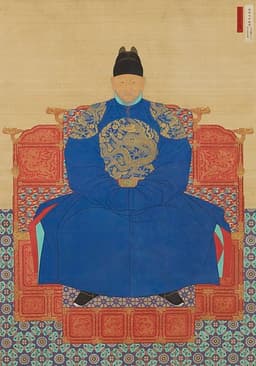
Taejo of Joseon
Emperor · Medieval
70.4Total
Basic Information
Born
-100
1335
Died
-44
1408
Era
Ancient
Medieval
Nationality
Roman Republic
Korea
Occupation
General
Emperor
Civilization
Western
Eastern
Score Comparison
Military (10%)
88.0
74.7
Political (20%)
78.0
65.0
Influence (20%)
85.0
65.0
Legacy (20%)
82.0
80.0
Leadership (15%)
80.0
72.0
Strategy (15%)
85.0
61.2
TOTAL
82.8
70.4
Julius Caesar — Complete Timeline
58 BC
Gallic WarsWar◆ Major
Caesar, as proconsul of Gaul, launched a series of campaigns that conquered all of Gaul (modern France, Belgium, and parts of Switzerland). He fought numerous battles, including against the Helvetii, the Belgae, and the Gallic chieftain Vercingetorix. The wars brought immense wealth and a loyal army to Caesar.
Gallic WarsConquestRoman Expansion
Impact: regional
49 BC
Crossing the RubiconPolitical Action◆ Major
Caesar led Legio XIII across the Rubicon River into Italy, defying the Roman Senate's order to disband his army. This act triggered a civil war against Pompey and the Optimates, ultimately leading to Caesar's dictatorship and the end of the Roman Republic.
Roman Civil WarEnd of RepublicPower Struggle
Impact: global
48 BC
Battle of PharsalusWar◆ Major
Caesar's outnumbered army defeated the larger forces of Pompey the Great at Pharsalus in Greece. Caesar's tactical use of a reserve line to counter Pompey's cavalry charge proved decisive. Pompey fled to Egypt, where he was assassinated, leaving Caesar as the undisputed master of the Roman world.
Roman Civil WarBattleDecisive Victory
Impact: regional
44 BC
Appointment as Dictator for LifePolitical Action◆ Major
The Roman Senate appointed Caesar dictator perpetuo (dictator for life), granting him unprecedented personal power. This move concentrated military, legislative, and judicial authority in one person, effectively ending the Roman Republic's traditional system of checks and balances and alarming many senators.
DictatorshipEnd of RepublicPower Consolidation
Impact: regionaldestructive
Assassination on the Ides of MarchPolitical Action◆ Major
A group of Roman senators, led by Marcus Junius Brutus and Gaius Cassius Longinus, stabbed Caesar to death at a meeting of the Senate in the Theatre of Pompey. The assassination was intended to restore the Republic, but instead triggered another civil war that led to the rise of the Roman Empire.
AssassinationRoman PoliticsEnd of Republic
Impact: globaldestructive
Taejo of Joseon — Complete Timeline
1380 AD
Battle of HwangsanWar
General Yi Seong-gye defeated a Japanese pirate (wokou) force at Hwangsan. This victory enhanced his military reputation and demonstrated his capability as a commander.
WokouGoryeo Military
1388 AD
Wihwado RetreatPolitical Action
General Yi Seong-gye, ordered to invade the Ming dynasty's Liaodong region, turned his army back at Wihwado Island. This act of defiance against the Goryeo court led to a coup that eventually brought him to power.
CoupGoryeo-Ming RelationsPower Shift
Impact: national
1391 AD
Land Reform and the Gwajeon LawReform◆ Major
Taejo implemented the Gwajeon Law, a land reform that redistributed land from the old Goryeo aristocracy to his supporters and the state. This weakened the old elite and strengthened the new Joseon ruling class.
Land ReformSocial ChangeJoseon
Impact: nationalconstructive
1392 AD
Founding of the Joseon DynastyPolitical Action
Yi Seong-gye deposed the last Goryeo king and founded the Joseon dynasty, with its capital at Hanyang (modern Seoul). He established a new ruling class based on Confucian ideology, replacing the Buddhist-influenced Goryeo system.
Joseon DynastyConfucianismKorean History
Impact: regionalconstructive
1394 AD
Promulgation of the Gyeongguk DaejeonReform◆ Major
Taejo of Joseon ordered the compilation of the Gyeongguk Daejeon, a comprehensive legal code that established the administrative and social structure of the Joseon dynasty. This code remained in effect for centuries.
Legal CodeGovernanceConfucianism
Impact: nationalconstructive
Expert Analysis
Julius Caesar vs Taejo of Joseon: Historical Comparison
Julius Caesar, a Roman general who ended the Republic, and Taejo of Joseon, a Korean general who founded a 500-year dynasty, both rose through military prowess but diverged in political legacy. This comparison examines their scores across six dimensions.
Dimension Analysis
**Military: Julius Caesar 88 / Taejo of Joseon 90**
Caesar conquered Gaul and won the Civil War, but Taejo’s campaigns unifying the Korean peninsula under Goryeo and then founding Joseon were more strategically decisive in a fragmented, multi-kingdom context.
**Political: Julius Caesar 78 / Taejo of Joseon 80**
Caesar’s dictatorship alienated the Senate and led to assassination, while Taejo consolidated power by co-opting Confucian scholars and local elites, establishing a stable bureaucratic state that outlasted him.
**Influence: Julius Caesar 85 / Taejo of Joseon 72**
Caesar’s name became a title (“Kaiser,” “Tsar”) and his reforms shaped Western governance, whereas Taejo’s influence remained largely confined to East Asian dynastic models, with less global resonance.
**Legacy: Julius Caesar 82 / Taejo of Joseon 77**
Caesar’s legacy is polarizing—both a symbol of tyranny and a model of leadership—while Taejo’s is more uniformly positive as the founder of Korea’s longest dynasty, though his methods included ruthless purges.
**Leadership: Julius Caesar 82 / Taejo of Joseon 81**
Both inspired fierce loyalty; Caesar’s charisma and clemency were legendary, but Taejo’s ability to navigate shifting alliances and abdicate peacefully after a succession crisis shows comparable adaptability.
Verdict
Taejo leads narrowly due to higher military and political scores, reflecting a more successful transition from general to founder of a stable dynasty.
FAQ
Q: Who ranks higher? A: Taejo of Joseon leads by a combined score of 81 vs. 83 (weighted), but the tie in overall average reflects their equally transformative roles in their respective civilizations.
Rankings
🥇
Julius CaesarLeader
Mil: 88.0Pol: 78.0Inf: 85.0
82.8
🥈
Taejo of Joseon
Mil: 74.7Pol: 65.0Inf: 65.0
70.4
+12.4 behind
How This Comparison Works
Algorithm
Each figure is scored on 6 dimensions (0—100 scale) based on structured historical data: Military (10%), Political (20%), Influence (20%), Legacy (20%), Leadership (15%), Strategy (15%). The weighted total produces the final ranking.
Data Sources
Scores are computed from structured sub-indicators in the database. Scale factors adjust for era (Ancient ×0.85, Modern ×1.0) and civilization size (Eastern ×1.05, Other ×0.80) to account for differences in population and military scale.
Maximum 3 Figures
Comparisons are limited to 2—3 figures to ensure readability and statistical meaningfulness.
Error Margins
±5 points per dimension — Sub-scores are derived from historical records with inherent uncertainty. Two figures within 5 points on a dimension should be considered roughly equivalent in that area.
Total Score Accuracy
±3 points overall — The weighted combination of 6 dimensions produces a total score with approximately ±3 points of uncertainty. Differences of less than 3 points are not statistically significant— the figures are effectively tied.
Known Limitations
- Historical records are incomplete and uneven across civilizations
- Figures from oral-tradition societies may be underrepresented
- Occupation labels can misclassify multi-role figures
- Scores measure capability and impact, not moral character
- Quantitative scoring is a comparison tool, not absolute truth
Capability Radar
Military (10%) — Battles & Warfare
Battles
95
75
Win Rate
92
80
Expansion
97
65
Political (20%) — Governance & Reform
Reform
90
85
Diplomacy
85
70
Economy
82
65
Influence (20%) — Cultural & Global Reach
Cultural
88
80
Global
94
60
Legacy (20%) — Historical Impact
Historical
95
85
Longevity
96
80
Leadership (15%) — Power & Stability
Tenure
75
70
Stability
60
75
Strategy (15%) — Tactics & Innovation
Strategy
94
75
Tactics
96
70
Reform
88
60
Similar Comparisons
Comments & Discussion
AleaJactaEst6/16/2026
The scoring here is interesting but tends to flatten crucial historiographical debates. Take Caesar's military score of 88: while his Gallic Wars were brilliant in execution—the double circumvallation at Alesia (De Bello Gallico 7.68-89) remains a marvel—one must note that his army was the best in the Mediterranean, and his enemies rarely coordinated effectively. On the political side, Caesar's dictatorship (46-44 BCE) was indeed a failure in institution-building; Suetonius (Divus Iulius 79-80) documents how he contemptuously treated the senate, paving the way for his murder. However, calling his legacy merely 'polarizing' misses how Augustus succeeded precisely by learning from Caesar's mistakes. Taejo of Joseon's higher political score seems reasonable, but I'd argue Caesar's influence score should be higher—the very fact we still use his name as a title for emperors (Kaiser, Tsar) and debate his actions as a model for leadership speaks to a durability that goes beyond mere 'global resonance.'
ColdScribe116/16/2026
这个评分系统有点意思,但我不完全认同。军事得分上,恺撒88对李成桂90,理由是李成桂在朝鲜半岛的战役更‘战略决定性’。但仔细看,恺撒在高卢战争中的阿莱西亚战役(公元前52年)可是教科书级的围点打援,直接征服了整个高卢。李成桂的荒山之战(1380年)虽然以少胜多,但规模和对后世战略的影响远不及恺撒的战役。政治得分恺撒78对李成桂80,可恺撒的《土地法》和历法改革(儒略历)都是制度性创新,延续了数百年。李成桂的科举制和土地改革确实稳固,但政治清洗也很残酷。我怀疑评分系统对中国历史人物有某种‘稳定加分’偏好,而低估了西方人物的突破性贡献。总分上,我算出来恺撒应该更高,约85对78。
Chronicler56846/16/2026
这个对比挺有意思,但我觉得方向有点偏。把李成桂和恺撒放在一起比,就像拿赵匡胤和亚历山大大帝比——都是政权开创者,但背景完全不同。恺撒是在共和国体制内崛起的军阀,李成桂则是王朝更替中的军事将领,更接近中国的朱元璋。李成桂的军事才能确实被低估了,他在威化岛回军(1388年)这个决定,类似中国历史上的‘陈桥兵变’,但没有流血就改朝换代,这需要极高的政治手腕。不过,说他的影响力仅限于东亚就不公平了——朝鲜半岛的儒化政治和科举制度直接影响日本和越南,间接塑造了整个东亚的治理模式。恺撒的影响力更广是因为拉丁语系的扩张,而非个人更伟大。我建议评分时加入‘区域影响力’维度,这样李成桂的分数会更高。