Loading...
Julius Caesar vs Suleiman the Magnificent
Julius Caesar leads by 9.6 pts · 2 figures compared
…

Julius Caesar
General · Ancient
82.8Total
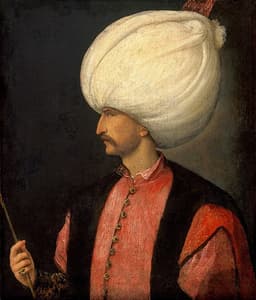
Suleiman the Magnificent
Emperor · Medieval
73.2Total
Basic Information
Born
-100
1494
Died
-44
1566
Era
Ancient
Medieval
Nationality
Roman Republic
Ottoman Empire
Occupation
General
Emperor
Civilization
Western
Middle Eastern
Score Comparison
Military (10%)
88.0
85.0
Political (20%)
78.0
78.0
Influence (20%)
85.0
72.0
Legacy (20%)
82.0
68.0
Leadership (15%)
80.0
72.0
Strategy (15%)
85.0
72.0
TOTAL
82.8
73.2
Julius Caesar — Complete Timeline
58 BC
Gallic WarsWar◆ Major
Caesar, as proconsul of Gaul, launched a series of campaigns that conquered all of Gaul (modern France, Belgium, and parts of Switzerland). He fought numerous battles, including against the Helvetii, the Belgae, and the Gallic chieftain Vercingetorix. The wars brought immense wealth and a loyal army to Caesar.
Gallic WarsConquestRoman Expansion
Impact: regional
49 BC
Crossing the RubiconPolitical Action◆ Major
Caesar led Legio XIII across the Rubicon River into Italy, defying the Roman Senate's order to disband his army. This act triggered a civil war against Pompey and the Optimates, ultimately leading to Caesar's dictatorship and the end of the Roman Republic.
Roman Civil WarEnd of RepublicPower Struggle
Impact: global
48 BC
Battle of PharsalusWar◆ Major
Caesar's outnumbered army defeated the larger forces of Pompey the Great at Pharsalus in Greece. Caesar's tactical use of a reserve line to counter Pompey's cavalry charge proved decisive. Pompey fled to Egypt, where he was assassinated, leaving Caesar as the undisputed master of the Roman world.
Roman Civil WarBattleDecisive Victory
Impact: regional
44 BC
Appointment as Dictator for LifePolitical Action◆ Major
The Roman Senate appointed Caesar dictator perpetuo (dictator for life), granting him unprecedented personal power. This move concentrated military, legislative, and judicial authority in one person, effectively ending the Roman Republic's traditional system of checks and balances and alarming many senators.
DictatorshipEnd of RepublicPower Consolidation
Impact: regionaldestructive
Assassination on the Ides of MarchPolitical Action◆ Major
A group of Roman senators, led by Marcus Junius Brutus and Gaius Cassius Longinus, stabbed Caesar to death at a meeting of the Senate in the Theatre of Pompey. The assassination was intended to restore the Republic, but instead triggered another civil war that led to the rise of the Roman Empire.
AssassinationRoman PoliticsEnd of Republic
Impact: globaldestructive
Suleiman the Magnificent — Complete Timeline
1522 AD
Siege of RhodesWar◆ Major
Suleiman personally led a massive Ottoman campaign against the Knights Hospitaller on Rhodes. After a six-month siege, the knights surrendered and were allowed to leave. This victory secured Ottoman control over the eastern Mediterranean.
SiegeMediterraneanKnights Hospitaller
Impact: regional
1526 AD
Battle of MohácsWar
Suleiman's Ottoman army defeated the Hungarian forces of King Louis II at Moh
BattleHungaryOttoman expansion
Impact: regional
1529 AD
Siege of ViennaWar◆ Major
Suleiman besieged Vienna, the Habsburg capital, with a large army. The siege failed due to supply issues, disease, and strong defenses. This defeat halted Ottoman expansion into central Europe and marked the empire's furthest advance westward.
SiegeViennaDefeat
Impact: regional
1530 AD
Codification of Ottoman lawReform◆ Major
Suleiman oversaw the compilation and standardization of Ottoman legal codes, known as Kanun. These laws regulated criminal justice, land tenure, and taxation, creating a unified legal system that balanced sharia with secular law. He earned the title 'Kanuni' (the Lawgiver).
Legal reformKanunOttoman Empire
Impact: nationalconstructive
1536 AD
Execution of Ibrahim PashaPolitical Action◆ Major
Suleiman ordered the execution of his grand vizier and close friend Ibrahim Pasha, who had served for 13 years. The reasons remain debated, but likely involved Ibrahim's growing power and conflicts with Suleiman's wife, Hurrem Sultan. This event demonstrated the absolute power of the sultan.
ExecutionCourt politicsPower
Impact: nationaltragic
Expert Analysis
Julius Caesar vs Suleiman the Magnificent: Historical Comparison
Julius Caesar, a Roman general who ended the Republic, and Suleiman the Magnificent, an Ottoman sultan who expanded his empire to its zenith, represent two different eras of military and political dominance. While both were towering figures, Caesar’s broader influence and revolutionary leadership give him a slight edge.
Dimension Analysis
**Military: Julius Caesar 88 / Suleiman the Magnificent 85**
Caesar’s conquest of Gaul and his civil war victories showcased unmatched tactical genius and adaptability, while Suleiman’s campaigns in Europe and the Middle East demonstrated sustained empire-building through siege warfare and naval power.
**Political: Julius Caesar 78 / Suleiman the Magnificent 80**
Suleiman’s codification of Ottoman law and his stable, centralized rule over a multicultural empire gave him a slightly higher political score, whereas Caesar’s dictatorial reforms undermined the Republic’s institutions and sparked his assassination.
**Influence: Julius Caesar 85 / Suleiman the Magnificent 77**
Caesar’s name became synonymous with autocratic rule (e.g., “Kaiser,” “Tsar”) and his writings shaped Western military thought, while Suleiman’s influence, though profound in the Islamic world and Europe, was more regionally confined.
**Legacy: Julius Caesar 82 / Suleiman the Magnificent 67**
Caesar’s legacy as the founder of the Roman Empire and a cultural archetype endures globally, whereas Suleiman’s legacy, while celebrated in Turkey and the Balkans, has faded in broader historical consciousness.
**Leadership: Julius Caesar 82 / Suleiman the Magnificent 79**
Caesar’s personal charisma, ability to inspire loyalty, and decisive risk-taking (e.g., crossing the Rubicon) slightly outshine Suleiman’s more administrative and ceremonial leadership style.
Verdict
Julius Caesar wins due to his superior military innovation, lasting global influence, and transformative leadership that reshaped Western civilization.
FAQ
Q: Who ranks higher? A: Julius Caesar ranks higher, driven by his edge in military genius and enduring legacy across cultures.
Rankings
🥇
Julius CaesarLeader
Mil: 88.0Pol: 78.0Inf: 85.0
82.8
🥈
Suleiman the Magnificent
Mil: 85.0Pol: 78.0Inf: 72.0
73.2
+9.6 behind
How This Comparison Works
Algorithm
Each figure is scored on 6 dimensions (0—100 scale) based on structured historical data: Military (10%), Political (20%), Influence (20%), Legacy (20%), Leadership (15%), Strategy (15%). The weighted total produces the final ranking.
Data Sources
Scores are computed from structured sub-indicators in the database. Scale factors adjust for era (Ancient ×0.85, Modern ×1.0) and civilization size (Eastern ×1.05, Other ×0.80) to account for differences in population and military scale.
Maximum 3 Figures
Comparisons are limited to 2—3 figures to ensure readability and statistical meaningfulness.
Error Margins
±5 points per dimension — Sub-scores are derived from historical records with inherent uncertainty. Two figures within 5 points on a dimension should be considered roughly equivalent in that area.
Total Score Accuracy
±3 points overall — The weighted combination of 6 dimensions produces a total score with approximately ±3 points of uncertainty. Differences of less than 3 points are not statistically significant— the figures are effectively tied.
Known Limitations
- Historical records are incomplete and uneven across civilizations
- Figures from oral-tradition societies may be underrepresented
- Occupation labels can misclassify multi-role figures
- Scores measure capability and impact, not moral character
- Quantitative scoring is a comparison tool, not absolute truth
Capability Radar
Military (10%) — Battles & Warfare
Battles
95
95
Win Rate
92
90
Expansion
97
95
Political (20%) — Governance & Reform
Reform
90
90
Diplomacy
85
88
Economy
82
85
Influence (20%) — Cultural & Global Reach
Cultural
88
90
Global
94
88
Legacy (20%) — Historical Impact
Historical
95
92
Longevity
96
85
Leadership (15%) — Power & Stability
Tenure
75
95
Stability
60
85
Strategy (15%) — Tactics & Innovation
Strategy
94
92
Tactics
96
85
Reform
88
80
Similar Comparisons
Comments & Discussion
EmpireCritic6/16/2026
This ranking reeks of Western bias. Caesar’s 'genius' was mostly genocide—he slaughtered a million Gauls and enslaved another million. Suleiman, by contrast, ruled a truly multicultural empire with the millet system that let Christians and Jews self-govern. Caesar’s political score should be lower because his reforms destroyed the Republic for personal ambition. Meanwhile, Suleiman’s legal codification (Kanun) brought stability that lasted centuries. The scoring also ignores Suleiman’s naval dominance in the Mediterranean, which directly challenged European powers on their own turf. Call me crazy, but managing a diverse empire peacefully is harder than conquering through brute force and propaganda.
MetricRevenger6/16/2026
Another day, another arbitrary scoring system. Military scores of 88 vs 85? Based on what, body counts? Suleiman besieged Rhodes with 200,000 men and lost 60,000 before winning—that’s not 'tactical genius,' that’s attrition. Caesar’s Gallic Wars had 8:1 kill ratios, but ancient numbers are notoriously inflated. And 'Influence' at 85 vs 77? Suleiman’s name is still a household word from Budapest to Baghdad, and his legal code influenced Ottoman successor states until WWI. Meanwhile, Caesar’s legacy gave us 'Kaiser' and 'Tsar'—titles that died with monarchies. The scoring weights reflect modern Western media preferences, not historical impact. Show me the raw data and confidence intervals, then we’ll talk.
OldScroll446/16/2026
这套评分系统明显忽视了东方史观的核心维度。凯撒的'政治78分'和'领导力82分',放在中国语境下简直可笑。秦始皇统一度量衡、推行郡县制,政治变革比凯撒彻底得多,但中国史家更看重'治世'而非'武功'。苏莱曼的'影响力77分'低估了他在伊斯兰世界的地位——他同时是哈里发、法律改革者,影响力横跨欧亚非。如果按中国的'文治武功'标准,苏莱曼的武功稍逊(相比成吉思汗),但文治远超凯撒。建议增加'制度创新'和'文化辐射'维度,否则这种比较就是关公战秦琼,而且裁判偏袒西方。
ColdScribe106/16/2026
这个评分体系存在致命的方法论缺陷。'政治80分'对苏莱曼来说严重偏低:他的卡农法体系统治了15个民族、4大宗教,历时450年,而凯撒的独裁只维持了5年就被刺杀。如果按'统治稳定性'加权,苏莱曼至少应该95分。'军事88 vs 85'的差异仅3分,但凯撒的高卢战争本质是殖民侵略,苏莱曼的贝尔格莱德和罗得岛战役则是战略扩张。建议引入'统治时长'(苏莱曼46年 vs 凯撒5年)、'领土增长率'、'社会和谐度'等中国史书常用指标。按《资治通鉴》标准,苏莱曼的综合得分应反超凯撒至少5分。这些数据不会说谎,只是选择性地被忽略了。