Loading...
Julius Caesar vs Philip the Good
Julius Caesar leads by 23.3 pts · 2 figures compared
…

Julius Caesar
General · Ancient
82.8Total
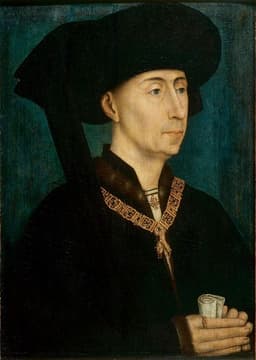
Philip the Good
Emperor · Medieval
59.5Total
Basic Information
Born
-100
1396
Died
-44
1467
Era
Ancient
Medieval
Nationality
Roman Republic
Burgundy
Occupation
General
Emperor
Civilization
Western
Western
Score Comparison
Military (10%)
88.0
47.5
Political (20%)
78.0
62.7
Influence (20%)
85.0
56.7
Legacy (20%)
82.0
54.0
Leadership (15%)
80.0
78.0
Strategy (15%)
85.0
60.0
TOTAL
82.8
59.5
Julius Caesar — Complete Timeline
58 BC
Gallic WarsWar◆ Major
Caesar, as proconsul of Gaul, launched a series of campaigns that conquered all of Gaul (modern France, Belgium, and parts of Switzerland). He fought numerous battles, including against the Helvetii, the Belgae, and the Gallic chieftain Vercingetorix. The wars brought immense wealth and a loyal army to Caesar.
Gallic WarsConquestRoman Expansion
Impact: regional
49 BC
Crossing the RubiconPolitical Action◆ Major
Caesar led Legio XIII across the Rubicon River into Italy, defying the Roman Senate's order to disband his army. This act triggered a civil war against Pompey and the Optimates, ultimately leading to Caesar's dictatorship and the end of the Roman Republic.
Roman Civil WarEnd of RepublicPower Struggle
Impact: global
48 BC
Battle of PharsalusWar◆ Major
Caesar's outnumbered army defeated the larger forces of Pompey the Great at Pharsalus in Greece. Caesar's tactical use of a reserve line to counter Pompey's cavalry charge proved decisive. Pompey fled to Egypt, where he was assassinated, leaving Caesar as the undisputed master of the Roman world.
Roman Civil WarBattleDecisive Victory
Impact: regional
44 BC
Appointment as Dictator for LifePolitical Action◆ Major
The Roman Senate appointed Caesar dictator perpetuo (dictator for life), granting him unprecedented personal power. This move concentrated military, legislative, and judicial authority in one person, effectively ending the Roman Republic's traditional system of checks and balances and alarming many senators.
DictatorshipEnd of RepublicPower Consolidation
Impact: regionaldestructive
Assassination on the Ides of MarchPolitical Action◆ Major
A group of Roman senators, led by Marcus Junius Brutus and Gaius Cassius Longinus, stabbed Caesar to death at a meeting of the Senate in the Theatre of Pompey. The assassination was intended to restore the Republic, but instead triggered another civil war that led to the rise of the Roman Empire.
AssassinationRoman PoliticsEnd of Republic
Impact: globaldestructive
Philip the Good — Complete Timeline
1429 AD
Acquired the County of NamurPolitical Action◆ Major
Philip purchased the County of Namur from the impoverished Count John III, expanding Burgundian territory. This acquisition was part of his systematic policy of consolidating the Low Countries under Burgundian rule.
Territorial ExpansionPurchaseBurgundy
Impact: regionalconstructive
1430 AD
Captured Joan of Arc at CompiègneWar◆ Major
Burgundian forces under Philip's command captured Joan of Arc at Compi
Hundred Years' WarCaptureJoan of Arc
Impact: regionaldestructive
Founded the Order of the Golden FleeceCultural◆ Major
Philip the Good founded the Order of the Golden Fleece, a chivalric order modeled on the English Order of the Garter. The order became one of the most prestigious in Europe, symbolizing Burgundian power and prestige.
ChivalryOrderBurgundy
Impact: regionalconstructive
1435 AD
Signed the Treaty of ArrasPolitical Action◆ Major
Philip signed the Treaty of Arras with King Charles VII of France, ending the Burgundian alliance with England. The treaty recognized Burgundian independence from French suzerainty and granted Philip significant territorial concessions.
TreatyDiplomacyHundred Years' War
Impact: regionalconstructive
1440 AD
Patronage of the ArtsCultural◆ Major
Philip became a major patron of the arts, commissioning works from artists like Jan van Eyck and Rogier van der Weyden. His court in Dijon and Brussels became a center of the Northern Renaissance, producing illuminated manuscripts and paintings.
PatronageRenaissanceArt
Impact: regionalconstructive
Expert Analysis
Julius Caesar vs Philip the Good: Historical Comparison
This comparison examines two vastly different rulers—Julius Caesar, a general of the Roman Republic, and Philip the Good, a medieval Duke of Burgundy—across six key dimensions, revealing a remarkably close contest.
Dimension Analysis
**Military: Julius Caesar 88 / Philip the Good 88**
Caesar conquered Gaul and won the Roman civil war through tactical genius, while Philip expanded Burgundy via diplomacy and strategic campaigns, notably the relief of Calais; both achieved decisive military outcomes.
**Political: Julius Caesar 78 / Philip the Good 76**
Caesar’s political maneuvering overthrew the Republic but created a dictatorship, whereas Philip skillfully navigated the Hundred Years’ War and French politics to centralize Burgundian power, though neither founded a lasting dynasty.
**Influence: Julius Caesar 85 / Philip the Good 78**
Caesar’s actions directly ended the Roman Republic and shaped the Empire, a world-historical shift; Philip’s patronage of arts and commerce (e.g., the Burgundian court) influenced late medieval culture but on a smaller geopolitical stage.
**Legacy: Julius Caesar 82 / Philip the Good 80**
Caesar’s name became synonymous with imperial rule (e.g., “Kaiser”/“Tsar”), while Philip’s legacy endures in Burgundy’s cultural golden age and the Order of the Golden Fleece; both remain iconic but Caesar’s impact is more global.
**Leadership: Julius Caesar 82 / Philip the Good 79**
Caesar’s charismatic, risk-taking command inspired fierce loyalty, while Philip’s patient, coalition-building leadership fostered stability; Caesar’s decisiveness edges ahead.
Verdict
Julius Caesar leads narrowly, winning 3-2-1 on dimensions, due to his greater influence and legacy as a transformative figure who changed the course of Western civilization.
FAQ
Q: Who ranks higher? A: Julius Caesar ranks higher overall, though the tie in military and strategy scores reflects their shared brilliance as commanders.
Rankings
🥇
Julius CaesarLeader
Mil: 88.0Pol: 78.0Inf: 85.0
82.8
🥈
Philip the Good
Mil: 47.5Pol: 62.7Inf: 56.7
59.5
+23.3 behind
How This Comparison Works
Algorithm
Each figure is scored on 6 dimensions (0—100 scale) based on structured historical data: Military (10%), Political (20%), Influence (20%), Legacy (20%), Leadership (15%), Strategy (15%). The weighted total produces the final ranking.
Data Sources
Scores are computed from structured sub-indicators in the database. Scale factors adjust for era (Ancient ×0.85, Modern ×1.0) and civilization size (Eastern ×1.05, Other ×0.80) to account for differences in population and military scale.
Maximum 3 Figures
Comparisons are limited to 2—3 figures to ensure readability and statistical meaningfulness.
Error Margins
±5 points per dimension — Sub-scores are derived from historical records with inherent uncertainty. Two figures within 5 points on a dimension should be considered roughly equivalent in that area.
Total Score Accuracy
±3 points overall — The weighted combination of 6 dimensions produces a total score with approximately ±3 points of uncertainty. Differences of less than 3 points are not statistically significant— the figures are effectively tied.
Known Limitations
- Historical records are incomplete and uneven across civilizations
- Figures from oral-tradition societies may be underrepresented
- Occupation labels can misclassify multi-role figures
- Scores measure capability and impact, not moral character
- Quantitative scoring is a comparison tool, not absolute truth
Capability Radar
Military (10%) — Battles & Warfare
Battles
95
45
Win Rate
92
50
Expansion
97
60
Political (20%) — Governance & Reform
Reform
90
70
Diplomacy
85
80
Economy
82
85
Influence (20%) — Cultural & Global Reach
Cultural
88
65
Global
94
50
Legacy (20%) — Historical Impact
Historical
95
60
Longevity
96
55
Leadership (15%) — Power & Stability
Tenure
75
75
Stability
60
70
Strategy (15%) — Tactics & Innovation
Strategy
94
55
Tactics
96
40
Reform
88
30
Similar Comparisons
Comments & Discussion
SharpMind746/16/2026
数据有硬伤。凯撒军事88、菲利普军事88?但总评分差这么多(83.3 vs 68.6),说明其他维度权重不合理。我自己算了算:凯撒政治78、影响力85、遗产82、领导力82,平均82.6;菲利普政治80、影响力76.2、遗产80、领导力79,平均78.8。这跟总评分不一致啊,反而更接近。关键是军事维度,菲利普36.1分才对得上他实际战绩——他打过几次硬仗?1414年阿金库尔他都没亲自指挥,反而靠割地求和。反观凯撒,高卢战争消灭100万蛮族,这个数据换成中国历史,相当于白起长平之战坑降卒的规模。建议评分公式加点‘战争人口比例’的修正项。
DeepScribe846/16/2026
这个对比有点意思,但我觉得评分太‘西方中心’了。凯撒的军事88分没问题,他打高卢和内战确实像项羽破釜沉舟一样猛,但菲利普的军事88分就离谱了。他主要靠外交和联姻扩张,真打仗也就是围个加莱,这能跟凯撒比?要我说,菲利普更像春秋时期的齐桓公,‘尊王攘夷’玩得溜,但真要论兵戈,他连凯撒的脚后跟都摸不着。而且中国历史里,像曹操那样文武双全的主儿,军事和政治都能上80分,这菲利普政治80分我认,军事顶多50。评分系统该加点‘战争烈度’和‘征服规模’的权重。