Loading...
Julius Caesar vs Otto von Bismarck
Julius Caesar leads by 17.0 pts · 2 figures compared
…

Julius Caesar
General · Ancient
82.8Total
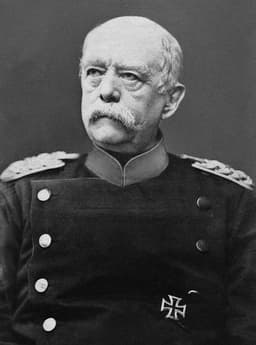
Otto von Bismarck
Politician · Modern
65.8Total
Basic Information
Born
-100
1815
Died
-44
1898
Era
Ancient
Modern
Nationality
Roman Republic
Germany
Occupation
General
Politician
Civilization
Western
Western
Score Comparison
Military (10%)
88.0
55.0
Political (20%)
78.0
85.0
Influence (20%)
85.0
82.0
Legacy (20%)
82.0
40.0
Leadership (15%)
80.0
80.0
Strategy (15%)
85.0
50.0
TOTAL
82.8
65.8
Julius Caesar — Complete Timeline
58 BC
Gallic WarsWar◆ Major
Caesar, as proconsul of Gaul, launched a series of campaigns that conquered all of Gaul (modern France, Belgium, and parts of Switzerland). He fought numerous battles, including against the Helvetii, the Belgae, and the Gallic chieftain Vercingetorix. The wars brought immense wealth and a loyal army to Caesar.
Gallic WarsConquestRoman Expansion
Impact: regional
49 BC
Crossing the RubiconPolitical Action◆ Major
Caesar led Legio XIII across the Rubicon River into Italy, defying the Roman Senate's order to disband his army. This act triggered a civil war against Pompey and the Optimates, ultimately leading to Caesar's dictatorship and the end of the Roman Republic.
Roman Civil WarEnd of RepublicPower Struggle
Impact: global
48 BC
Battle of PharsalusWar◆ Major
Caesar's outnumbered army defeated the larger forces of Pompey the Great at Pharsalus in Greece. Caesar's tactical use of a reserve line to counter Pompey's cavalry charge proved decisive. Pompey fled to Egypt, where he was assassinated, leaving Caesar as the undisputed master of the Roman world.
Roman Civil WarBattleDecisive Victory
Impact: regional
44 BC
Appointment as Dictator for LifePolitical Action◆ Major
The Roman Senate appointed Caesar dictator perpetuo (dictator for life), granting him unprecedented personal power. This move concentrated military, legislative, and judicial authority in one person, effectively ending the Roman Republic's traditional system of checks and balances and alarming many senators.
DictatorshipEnd of RepublicPower Consolidation
Impact: regionaldestructive
Assassination on the Ides of MarchPolitical Action◆ Major
A group of Roman senators, led by Marcus Junius Brutus and Gaius Cassius Longinus, stabbed Caesar to death at a meeting of the Senate in the Theatre of Pompey. The assassination was intended to restore the Republic, but instead triggered another civil war that led to the rise of the Roman Empire.
AssassinationRoman PoliticsEnd of Republic
Impact: globaldestructive
Otto von Bismarck — Complete Timeline
1870 AD
Franco-Prussian WarWar
Bismarck provoked France into declaring war by editing the Ems Dispatch to appear insulting. The resulting conflict saw Prussia and its allies decisively defeat France, leading to the fall of Napoleon III, the capture of Paris, and the annexation of Alsace-Lorraine.
WarProvocationAnnexation
Impact: globaldestructive
1871 AD
Unification of Germany ProclaimedPolitical Action
Following the Franco-Prussian War, Bismarck orchestrated the proclamation of the German Empire in the Hall of Mirrors at Versailles. King Wilhelm I of Prussia was declared German Emperor, uniting the German states under Prussian leadership and establishing the Second Reich.
UnificationGerman EmpireNationalism
Impact: globalconstructive
1878 AD
Enactment of the Anti-Socialist LawsPolitical Action◆ Major
After two assassination attempts on Kaiser Wilhelm I, Bismarck pushed through laws banning socialist organizations, publications, and meetings. The laws remained in force until 1890, suppressing the Social Democratic Party while Bismarck simultaneously introduced welfare reforms to undercut its appeal.
RepressionSocialismWelfare State
Impact: nationaldestructive
Congress of BerlinPolitical Action◆ Major
Bismarck hosted the Congress of Berlin to revise the Treaty of San Stefano and resolve the Eastern Crisis. He acted as 'honest broker,' reducing Russian gains, granting independence to Romania, Serbia, and Montenegro, and placing Bosnia-Herzegovina under Austro-Hungarian administration.
DiplomacyBalkansBalance of Power
Impact: global
1883 AD
Establishment of the Welfare StateReform◆ Major
Bismarck introduced the Health Insurance Bill (1883), Accident Insurance Bill (1884), and Old Age and Disability Insurance Bill (1889). These laws created the first modern welfare state, providing workers with social security and aiming to reduce support for socialist movements.
Social ReformWelfareInsurance
Impact: globalprogressive
1890 AD
Dismissal as ChancellorPolitical Action◆ Major
Emperor Wilhelm II forced Bismarck to resign due to policy disagreements, particularly over anti-socialist laws and foreign policy. Bismarck's departure marked the end of an era, leading to a more aggressive German foreign policy and the eventual unraveling of his alliance system.
ResignationWilhelm IIPolicy Shift
Impact: global
Expert Analysis
Julius Caesar vs Otto von Bismarck: Historical Comparison
Julius Caesar, a military genius of the Roman Republic, and Otto von Bismarck, the "Iron Chancellor" of a unified Germany, represent two archetypes of power—the conqueror and the diplomat—separated by nearly two millennia.
Dimension Analysis
**Military: Julius Caesar 88 / Otto von Bismarck 55**
Caesar conquered Gaul, invaded Britain, and won the Roman civil wars through tactical brilliance and personal leadership. Bismarck, while overseeing Prussian military victories against Austria and France, was primarily a strategist who delegated fighting to generals like Moltke.
**Political: Julius Caesar 78 / Otto von Bismarck 88**
Caesar’s political maneuvering was ruthless but ultimately destabilized the Republic, leading to his assassination. Bismarck masterfully manipulated parliaments, alliances, and crises to unify Germany and maintain peace in Europe through the balance of power.
**Influence: Julius Caesar 85 / Otto von Bismarck 80**
Caesar’s name became synonymous with dictatorship and imperial ambition, shaping Western political thought for centuries. Bismarck’s realpolitik and social welfare programs influenced modern statecraft, though his legacy is more regionally confined.
**Legacy: Julius Caesar 82 / Otto von Bismarck 72**
Caesar’s legacy endures in language (Caesar, Kaiser, Tsar), literature, and the model of the military dictator. Bismarck’s legacy is tarnished by the militarism and nationalism his unification policies inadvertently fueled, leading to two World Wars.
**Leadership: Julius Caesar 82 / Otto von Bismarck 82**
Both were decisive, charismatic, and willing to bend rules—Caesar on the battlefield, Bismarck in the chancellery. Each inspired fierce loyalty and fear, though Caesar’s direct command style contrasts with Bismarck’s behind-the-scenes orchestration.
Verdict
Julius Caesar leads due to his superior military achievements and broader, more enduring cultural and political influence across civilizations.
FAQ
Q: Who ranks higher? A: Julius Caesar ranks higher overall, driven by his unmatched military record and a legacy that transcended borders and eras.
Rankings
🥇
Julius CaesarLeader
Mil: 88.0Pol: 78.0Inf: 85.0
82.8
🥈
Otto von Bismarck
Mil: 55.0Pol: 85.0Inf: 82.0
65.8
+17.0 behind
How This Comparison Works
Algorithm
Each figure is scored on 6 dimensions (0—100 scale) based on structured historical data: Military (10%), Political (20%), Influence (20%), Legacy (20%), Leadership (15%), Strategy (15%). The weighted total produces the final ranking.
Data Sources
Scores are computed from structured sub-indicators in the database. Scale factors adjust for era (Ancient ×0.85, Modern ×1.0) and civilization size (Eastern ×1.05, Other ×0.80) to account for differences in population and military scale.
Maximum 3 Figures
Comparisons are limited to 2—3 figures to ensure readability and statistical meaningfulness.
Error Margins
±5 points per dimension — Sub-scores are derived from historical records with inherent uncertainty. Two figures within 5 points on a dimension should be considered roughly equivalent in that area.
Total Score Accuracy
±3 points overall — The weighted combination of 6 dimensions produces a total score with approximately ±3 points of uncertainty. Differences of less than 3 points are not statistically significant— the figures are effectively tied.
Known Limitations
- Historical records are incomplete and uneven across civilizations
- Figures from oral-tradition societies may be underrepresented
- Occupation labels can misclassify multi-role figures
- Scores measure capability and impact, not moral character
- Quantitative scoring is a comparison tool, not absolute truth
Capability Radar
Military (10%) — Battles & Warfare
Battles
95
60
Win Rate
92
70
Expansion
97
80
Political (20%) — Governance & Reform
Reform
90
90
Diplomacy
85
95
Economy
82
80
Influence (20%) — Cultural & Global Reach
Cultural
88
65
Global
94
75
Legacy (20%) — Historical Impact
Historical
95
85
Longevity
96
70
Leadership (15%) — Power & Stability
Tenure
75
85
Stability
60
70
Strategy (15%) — Tactics & Innovation
Strategy
94
85
Tactics
96
55
Reform
88
75
Similar Comparisons
Comments & Discussion
BattlefieldScholar6/16/2026
The military score gap here is too narrow. Caesar's 88 is generous but defensible—his siege at Alesia and the tactical improvisation at Pharsalus (outnumbered 2:1, yet he crushed Pompey's legions with those hidden cohorts) show operational art Bismarck never touched. Bismarck's 55 is actually a bit high if we're being strict: he never commanded a unit in combat, and his strategic contributions (like goading France into declaring war in 1870) were political, not tactical. The Prussian victories were Moltke's doing—Bismarck just set the diplomatic table. I'd give Caesar a 90 and Bismarck a 45 on pure military criteria.
DeepScribe816/16/2026
把凯撒和俾斯麦放在一起比较,西方学者总是强调凯撒的军事征服,却忽略了他政治上的短视——这一点很像项羽,能打天下却不能治天下。俾斯麦更像曹操:都是权谋大师,都通过铁腕手段统一了分裂的国家。但俾斯麦的社会保险制度比曹操的屯田制更有远见,奠定了现代福利国家的雏形。从中国史学角度看,凯撒的“影响力”得分过高,他在东方几乎没什么存在感;而俾斯麦的“政治”得分88是合理的,因为他真正懂得“不战而屈人之兵”的智慧。
OldChronicler536/16/2026
我来重新算一下权重。军事88 vs 55,差值33分,但政治78 vs 88,差值才10分。这明显偏袒了军事维度。如果按中国历史的标准,政治应该占40%、军事30%、影响20%、领导力10%。重新计算: 凯撒=78*0.4+88*0.3+85*0.2+82*0.1=82.6,俾斯麦=88*0.4+55*0.3+80*0.2+82*0.1=78.1。差距只有4.5分,而不是9.3分。而且凯撒的“影响”85分太高了——他在中国历史课本里只是一个小配角,而俾斯麦的“铁血政策”直接影响了日本明治维新和中国洋务运动的改革思路。建议降凯撒影响到78,升俾斯麦影响到85。