Loading...
Julius Caesar vs Nurhaci
Julius Caesar leads by 11.6 pts · 2 figures compared
…

Julius Caesar
General · Ancient
82.8Total
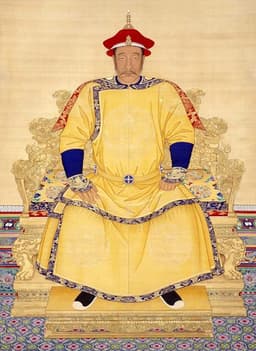
Nurhaci
Emperor · Modern
71.2Total
Basic Information
Born
-100
1559
Died
-44
1626
Era
Ancient
Modern
Nationality
Roman Republic
China
Occupation
General
Emperor
Civilization
Western
Eastern
Score Comparison
Military (10%)
88.0
79.9
Political (20%)
78.0
85.0
Influence (20%)
85.0
40.0
Legacy (20%)
82.0
84.0
Leadership (15%)
80.0
79.0
Strategy (15%)
85.0
76.0
TOTAL
82.8
71.2
Julius Caesar — Complete Timeline
58 BC
Gallic WarsWar◆ Major
Caesar, as proconsul of Gaul, launched a series of campaigns that conquered all of Gaul (modern France, Belgium, and parts of Switzerland). He fought numerous battles, including against the Helvetii, the Belgae, and the Gallic chieftain Vercingetorix. The wars brought immense wealth and a loyal army to Caesar.
Gallic WarsConquestRoman Expansion
Impact: regional
49 BC
Crossing the RubiconPolitical Action◆ Major
Caesar led Legio XIII across the Rubicon River into Italy, defying the Roman Senate's order to disband his army. This act triggered a civil war against Pompey and the Optimates, ultimately leading to Caesar's dictatorship and the end of the Roman Republic.
Roman Civil WarEnd of RepublicPower Struggle
Impact: global
48 BC
Battle of PharsalusWar◆ Major
Caesar's outnumbered army defeated the larger forces of Pompey the Great at Pharsalus in Greece. Caesar's tactical use of a reserve line to counter Pompey's cavalry charge proved decisive. Pompey fled to Egypt, where he was assassinated, leaving Caesar as the undisputed master of the Roman world.
Roman Civil WarBattleDecisive Victory
Impact: regional
44 BC
Appointment as Dictator for LifePolitical Action◆ Major
The Roman Senate appointed Caesar dictator perpetuo (dictator for life), granting him unprecedented personal power. This move concentrated military, legislative, and judicial authority in one person, effectively ending the Roman Republic's traditional system of checks and balances and alarming many senators.
DictatorshipEnd of RepublicPower Consolidation
Impact: regionaldestructive
Assassination on the Ides of MarchPolitical Action◆ Major
A group of Roman senators, led by Marcus Junius Brutus and Gaius Cassius Longinus, stabbed Caesar to death at a meeting of the Senate in the Theatre of Pompey. The assassination was intended to restore the Republic, but instead triggered another civil war that led to the rise of the Roman Empire.
AssassinationRoman PoliticsEnd of Republic
Impact: globaldestructive
Nurhaci — Complete Timeline
1616 AD
Unified the Jurchen TribesWar
Nurhaci completed the unification of the fragmented Jurchen tribes of Manchuria. He organized them into the Eight Banners system, a military and social structure that became the foundation of his power. He then proclaimed the Later Jin dynasty.
JurchenUnificationEight Banners
Impact: regionalconstructive
Proclaimed the Later Jin DynastyPolitical Action◆ Major
Nurhaci proclaimed the establishment of the Later Jin dynasty in Manchuria, claiming legitimacy as a successor to the Jin dynasty. This act formally declared his independence from the Ming dynasty and established a rival state.
Later JinDynastyFoundation
Impact: regionalconstructive
1618 AD
Issued the Seven GrievancesPolitical Action◆ Major
Nurhaci issued the Seven Grievances, a formal declaration of war against the Ming dynasty. The grievances listed alleged Ming injustices against the Jurchens, including interference in tribal affairs and killing of Jurchen leaders. This justified his invasion of Ming territory.
Ming-Qing TransitionDeclaration of WarPropaganda
Impact: regionaldestructive
1619 AD
Battle of SarhuWar
Nurhaci's forces decisively defeated a large Ming army at the Battle of Sarhu. The Ming sent four separate armies into Manchuria, but Nurhaci used interior lines to defeat them in detail. This victory secured his control over Manchuria.
Ming-Qing TransitionBattleManchuria
Impact: regionalconstructive
1626 AD
Defeated by Yuan Chonghuan at NingyuanWar◆ Major
Nurhaci led an invasion of Ming territory but was defeated at the Battle of Ningyuan by Ming general Yuan Chonghuan. The Ming used European-style cannons to repel the Later Jin forces. Nurhaci was wounded during the battle and died shortly after.
Ming-Qing TransitionBattleDefeat
Impact: regionaltragic
Expert Analysis
julius-caesar-vs-nurhaci
### Two Men Who Shaped Empires
On a winter day in 44 BCE, a group of Roman senators closed in around Gaius Julius Caesar, their daggers hidden beneath their togas. The dictator fell, bleeding at the foot of a statue of his great rival, Pompey. Across the world and seventeen centuries later, in 1626, the Manchu chieftain Nurhaci lay dying from wounds suffered at the Battle of Ningyuan, his grand dream of conquering China left unfulfilled. Both men built empires from ambition and blood. Both met violent ends. Yet the worlds they left behind could not have been more different. What drove these two founders—one who shaped the West, the other the East—along such divergent paths?
### Origins
Julius Caesar was born into the chaos of the late Roman Republic, a world of civil wars, crumbling traditions, and ruthless ambition. His family, the Julii, claimed descent from the goddess Venus, but they were politically marginalized. Caesar grew up in a Rome where the old senatorial aristocracy was being torn apart by generals like Marius and Sulla. He learned early that power came not from birthright but from military glory, popular support, and ruthless calculation.
Nurhaci, born in 1559, emerged from a very different world. He was a chieftain of the Jurchen tribes in what is now northeastern China, a region of dense forests and harsh winters. His grandfather and father were killed in a skirmish involving Ming Chinese forces. Unlike Caesar, who inherited a sophisticated civilization, Nurhaci inherited a fractured tribal society. He had to create a state from nothing, weaving together clans that had fought each other for generations.
### Rise to Power
Caesar’s path to power was paved with debt, alliances, and military command. He climbed the Roman political ladder—quaestor, aedile, praetor—but his true breakthrough came when he secured the governorship of Gaul in 58 BCE. Over eight years, he conquered a vast territory, built a loyal army, and amassed enough wealth to buy influence in Rome. The turning point came in 49 BCE when he crossed the Rubicon River with his legions, defying the Senate and plunging Rome into civil war. By 45 BCE, he was master of the Roman world.
Nurhaci’s rise was slower and more methodical. In 1616, he unified the Jurchen tribes into the Eight Banner system—a revolutionary military and social organization that turned every man into a soldier and every family into a unit of production. He then proclaimed the Later Jin dynasty, framing himself as the rightful successor to the ancient Jin emperors. But his real genius was political: in 1618, he issued the Seven Grievances, a list of Ming abuses that gave him a moral justification for war. The decisive moment came in 1619 at the Battle of Sarhu, where his forces annihilated a four-pronged Ming army by using interior lines and superior mobility.
### Leadership & Governance
Caesar ruled as a dictator, but his style was personal and improvisational. He reformed the calendar, granted citizenship to provincials, and launched massive building projects. Yet his greatest innovation was his clemency—he pardoned former enemies, hoping to bind them to his cause. His military genius lay in speed and audacity: he moved faster than his enemies expected, as at the siege of Alesia, where he built fortifications around both the Gauls and their reinforcements.
Nurhaci governed through structure. The Eight Banners were not just an army but a state apparatus—each banner was a self-contained community with its own lands, officials, and laws. He created a written script for the Manchu language and imposed a strict legal code. His military strategy was patient and adaptive: he avoided pitched battles until he had overwhelming local superiority, as at Sarhu. He understood that conquering China required not just victories but a system that could hold territory.
### Triumph & Tragedy
Caesar’s greatest triumph was the conquest of Gaul, which brought him glory, wealth, and a loyal army. His most devastating failure was his own death: on the Ides of March, 44 BCE, he was stabbed to death by senators who feared he would become king. His assassination plunged Rome into another civil war, but it also ensured his legend. He died at the height of his power, leaving a vacuum that his adopted heir, Octavian, would fill.
Nurhaci’s triumph was the unification of the Manchu tribes and the creation of a state that would conquer China. His tragedy came at Ningyuan in 1626, where Ming general Yuan Chonghuan used Western-style cannons to defeat his army. Nurhaci was wounded and died soon after. He never saw the fall of the Ming dynasty—that would be achieved by his son, Hong Taiji, and his grandson, the Shunzhi Emperor. But his system survived.
### Character & Destiny
Caesar was a gambler. He took risks that would have destroyed lesser men—crossing the Rubicon, fighting at Pharsalus with outnumbered forces, pardoning his assassins’ allies. His personality was magnetic, his ambition limitless. But his fatal flaw was his contempt for the old order: he thought he could remake Rome by sheer force of will. He could not.
Nurhaci was a builder. He thought in generations, not years. His character was patient and calculating—he spent decades unifying tribes before declaring himself emperor. His greatest strength was his ability to create institutions that outlasted him. The Eight Banners, the Manchu script, the legal code—these were his true legacy. He understood that power is not just about winning battles but about organizing people.
### Legacy
Caesar’s legacy is the Roman Empire. His name became a title—Kaiser, Tsar—and his writings, especially the *Commentaries on the Gallic War*, shaped military thought for two millennia. He is remembered as the man who ended the Republic and began the age of emperors. But his legacy is also one of instability: his assassination showed that even the greatest man could not escape the knife.
Nurhaci’s legacy is the Qing dynasty, which ruled China for nearly 270 years. He is revered as the founder of the Manchu state and a symbol of unity. His Eight Banner system became the backbone of Qing military and social organization. But his legacy is also one of conquest: the Qing brought prosperity but also ethnic hierarchy, with Manchus at the top and Han Chinese below.
### Conclusion
Caesar and Nurhaci both built empires from ambition and blood. But Caesar’s empire was personal, built on his own genius and destroyed by his own arrogance. Nurhaci’s empire was institutional, built on systems that survived his death. One was a comet that burned bright and short; the other was a fire that smoldered for centuries. In the end, the difference between them is the difference between a man who wanted to be a god and a man who wanted to build a dynasty. Both succeeded. Both failed. And both remind us that the greatest leaders are not those who conquer, but those who create structures that outlast them.
Rankings
🥇
Julius CaesarLeader
Mil: 88.0Pol: 78.0Inf: 85.0
82.8
🥈
Nurhaci
Mil: 79.9Pol: 85.0Inf: 40.0
71.2
+11.6 behind
How This Comparison Works
Algorithm
Each figure is scored on 6 dimensions (0—100 scale) based on structured historical data: Military (10%), Political (20%), Influence (20%), Legacy (20%), Leadership (15%), Strategy (15%). The weighted total produces the final ranking.
Data Sources
Scores are computed from structured sub-indicators in the database. Scale factors adjust for era (Ancient ×0.85, Modern ×1.0) and civilization size (Eastern ×1.05, Other ×0.80) to account for differences in population and military scale.
Maximum 3 Figures
Comparisons are limited to 2—3 figures to ensure readability and statistical meaningfulness.
Error Margins
±5 points per dimension — Sub-scores are derived from historical records with inherent uncertainty. Two figures within 5 points on a dimension should be considered roughly equivalent in that area.
Total Score Accuracy
±3 points overall — The weighted combination of 6 dimensions produces a total score with approximately ±3 points of uncertainty. Differences of less than 3 points are not statistically significant— the figures are effectively tied.
Known Limitations
- Historical records are incomplete and uneven across civilizations
- Figures from oral-tradition societies may be underrepresented
- Occupation labels can misclassify multi-role figures
- Scores measure capability and impact, not moral character
- Quantitative scoring is a comparison tool, not absolute truth
Capability Radar
Military (10%) — Battles & Warfare
Battles
95
85
Win Rate
92
90
Expansion
97
88
Political (20%) — Governance & Reform
Reform
90
85
Diplomacy
85
80
Economy
82
70
Influence (20%) — Cultural & Global Reach
Cultural
88
85
Global
94
80
Legacy (20%) — Historical Impact
Historical
95
90
Longevity
96
88
Leadership (15%) — Power & Stability
Tenure
75
75
Stability
60
78
Strategy (15%) — Tactics & Innovation
Strategy
94
85
Tactics
96
88
Reform
88
92
Similar Comparisons
Comments & Discussion
IronCedar6/15/2026
Fascinating comparison between Julius Caesar and Nurhaci. The data shows how different leadership styles produce different historical outcomes.
LostWarlord6/15/2026
Quantitative scoring can't fully capture historical complexity, but this is a solid framework for structured comparison.
江南书生6/15/2026
Julius Caesar和Nurhaci都是各自时代的巨人。数据化的比较提供了一个很好的讨论起点。