Loading...
Julius Caesar vs Mustafa Kemal Ataturk
Julius Caesar leads by 2.8 pts · 2 figures compared
…

Julius Caesar
General · Ancient
82.8Total
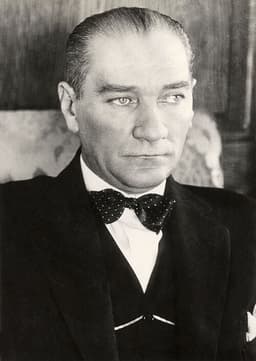
Mustafa Kemal Ataturk
Politician · Modern
80.0Total
Basic Information
Born
-100
1881
Died
-44
1938
Era
Ancient
Modern
Nationality
Roman Republic
Turkey
Occupation
General
Politician
Civilization
Western
Middle Eastern
Score Comparison
Military (10%)
88.0
75.0
Political (20%)
78.0
85.0
Influence (20%)
85.0
75.0
Legacy (20%)
82.0
90.0
Leadership (15%)
80.0
80.0
Strategy (15%)
85.0
65.0
TOTAL
82.8
80.0
Julius Caesar — Complete Timeline
58 BC
Gallic WarsWar◆ Major
Caesar, as proconsul of Gaul, launched a series of campaigns that conquered all of Gaul (modern France, Belgium, and parts of Switzerland). He fought numerous battles, including against the Helvetii, the Belgae, and the Gallic chieftain Vercingetorix. The wars brought immense wealth and a loyal army to Caesar.
Gallic WarsConquestRoman Expansion
Impact: regional
49 BC
Crossing the RubiconPolitical Action◆ Major
Caesar led Legio XIII across the Rubicon River into Italy, defying the Roman Senate's order to disband his army. This act triggered a civil war against Pompey and the Optimates, ultimately leading to Caesar's dictatorship and the end of the Roman Republic.
Roman Civil WarEnd of RepublicPower Struggle
Impact: global
48 BC
Battle of PharsalusWar◆ Major
Caesar's outnumbered army defeated the larger forces of Pompey the Great at Pharsalus in Greece. Caesar's tactical use of a reserve line to counter Pompey's cavalry charge proved decisive. Pompey fled to Egypt, where he was assassinated, leaving Caesar as the undisputed master of the Roman world.
Roman Civil WarBattleDecisive Victory
Impact: regional
44 BC
Appointment as Dictator for LifePolitical Action◆ Major
The Roman Senate appointed Caesar dictator perpetuo (dictator for life), granting him unprecedented personal power. This move concentrated military, legislative, and judicial authority in one person, effectively ending the Roman Republic's traditional system of checks and balances and alarming many senators.
DictatorshipEnd of RepublicPower Consolidation
Impact: regionaldestructive
Assassination on the Ides of MarchPolitical Action◆ Major
A group of Roman senators, led by Marcus Junius Brutus and Gaius Cassius Longinus, stabbed Caesar to death at a meeting of the Senate in the Theatre of Pompey. The assassination was intended to restore the Republic, but instead triggered another civil war that led to the rise of the Roman Empire.
AssassinationRoman PoliticsEnd of Republic
Impact: globaldestructive
Mustafa Kemal Ataturk — Complete Timeline
1915 AD
Battle of GallipoliWar
As a colonel, Mustafa Kemal commanded Ottoman forces at Gallipoli, successfully repelling Allied landings. His leadership at critical points like Chunuk Bair made him a national hero and laid the foundation for his political career.
World War IOttoman EmpireMilitary Victory
Impact: regional
1919 AD
Turkish War of IndependenceWar
Kemal organized and led the Turkish National Movement against the Allied occupation of Anatolia and the Treaty of S
Independence WarNational MovementAnkara
Impact: nationalconstructive
1922 AD
Abolition of the SultanatePolitical Action◆ Major
The Grand National Assembly of Turkey, under Kemal's leadership, abolished the Ottoman Sultanate, ending 600 years of imperial rule. This severed the link with the old regime and paved the way for the proclamation of the Republic.
SultanateRepublicPolitical Reform
Impact: nationalprogressive
1923 AD
Proclamation of the Republic of TurkeyPolitical Action
Kemal declared Turkey a republic, becoming its first president. He moved the capital to Ankara and initiated a series of radical reforms to modernize and secularize the state, including the adoption of a new legal code and the Latin alphabet.
RepublicModernizationSecularism
Impact: globalprogressive
1925 AD
Adoption of the Hat LawReform◆ Major
Kemal introduced the Hat Law, banning the fez and encouraging Western-style hats. This was part of his broader cultural revolution to secularize and Westernize Turkish society, symbolizing the break with Ottoman traditions.
Cultural ReformSecularismWesternization
Impact: nationalprogressive
1934 AD
Granting of Women's SuffrageReform◆ Major
Kemal's government granted women the right to vote and stand for election in national elections, ahead of many European countries. This reform was part of his commitment to gender equality and modernization of Turkish society.
Women's RightsSuffrageModernization
Impact: nationalprogressive
Expert Analysis
Origins
Julius Caesar was born into a patrician family in Rome around 100 BCE. His family claimed descent from the goddess Venus, but they were not wealthy or politically dominant. Caesar’s early life was marked by political turmoil, including the dictatorship of Sulla, which forced him into exile. He rose through military and political ranks, leveraging his charisma and alliances.
Mustafa Kemal Ataturk was born in 1881 in Salonika (then Ottoman Empire). His father was a minor official, and his mother was a devout Muslim. He attended military schools, excelling in mathematics and strategy. His early career was shaped by the declining Ottoman Empire and exposure to Western ideas.
Rise to Power
Caesar’s rise was meteoric. He formed the First Triumvirate with Pompey and Crassus, securing the governorship of Gaul. Through the Gallic Wars (58–50 BCE), he conquered vast territories, built a loyal army, and amassed immense wealth. His political enemies in the Senate, led by Pompey, demanded his return without his army. Caesar famously crossed the Rubicon River in 49 BCE, triggering a civil war. He defeated Pompey at Pharsalus and later secured sole power.
Ataturk’s rise came through military distinction in World War I. As a commander at Gallipoli (1915), he repelled Allied forces, earning national fame. After the Ottoman defeat, he organized resistance against foreign occupation. He led the Turkish War of Independence (1919–1923), defeating Greek, Armenian, and French forces. In 1923, he proclaimed the Republic of Turkey and became its first president.
Leadership & Governance
Caesar’s rule as dictator (49–44 BCE) was transformative. He implemented land reforms, reorganized the calendar (Julian calendar), granted citizenship to provincials, and initiated public works. He centralized power, reducing the Senate’s authority, and planned campaigns against Parthia. His reforms were popular with commoners but alienated the aristocracy.
Ataturk’s presidency (1923–1938) was a radical modernization project. He abolished the Sultanate and Caliphate, adopted a secular constitution, introduced European legal codes, and reformed education. He promoted women’s rights, including suffrage. Culturally, he replaced the Arabic script with the Latin alphabet and encouraged Western dress. His policies aimed to create a secular, nationalist state.
Triumph & Tragedy
Caesar’s greatest triumph was his military conquests, especially Gaul, which enriched Rome and expanded its influence. His tragic end came on the Ides of March (44 BCE) when senators, including Brutus, assassinated him. His death led to another civil war and the rise of Augustus, ending the Republic.
Ataturk’s triumph was founding a modern, independent Turkey from the ruins of the Ottoman Empire. His tragedy may be the authoritarian means used to enforce reforms, suppressing dissent and religious expression. He died in 1938 from cirrhosis, but his legacy endured.
Character & Destiny
Caesar was ambitious, ruthless, and charismatic. He cultivated an image as a man of the people, but his drive for personal power undermined the Republic. His destiny seemed tied to his own myth-making; he believed in his divine ancestry and fate.
Ataturk was disciplined, visionary, and authoritarian. He saw himself as the savior of the Turkish nation, willing to impose change from above. His destiny was to shape a new national identity, often erasing Ottoman and Islamic heritage.
Legacy
Caesar’s legacy is immense. His name became synonymous with imperial rule (Kaiser, Tsar). His military campaigns and writings (e.g., Commentarii de Bello Gallico) are studied. He set the stage for the Roman Empire, but his actions also destroyed the Republic.
Ataturk’s legacy is equally profound. He is revered in Turkey as the father of the nation (Ataturk). His secular, nationalist model influenced other developing countries. However, his policies remain controversial, especially regarding minorities and political freedoms.
Conclusion
Both leaders were transformative figures who reshaped their worlds. Caesar’s military genius (score 88) and political acumen (78) are undeniable, but his ambition led to his downfall and the end of the Republic. Ataturk’s leadership (90) and political skill (85) created a modern state, though his methods were top-down. Numerically, Caesar edges ahead with a total score of 2.8 higher, but Ataturk’s lasting impact on a nation’s identity is arguably more enduring. Caesar’s score: 83. Ataturk’s score: 80.2. The choice depends on whether one values military conquest and immediate impact (Caesar) or nation-building and long-term reform (Ataturk).
Rankings
🥇
Julius CaesarLeader
Mil: 88.0Pol: 78.0Inf: 85.0
82.8
🥈
Mustafa Kemal Ataturk
Mil: 75.0Pol: 85.0Inf: 75.0
80.0
+2.8 behind
How This Comparison Works
Algorithm
Each figure is scored on 6 dimensions (0—100 scale) based on structured historical data: Military (10%), Political (20%), Influence (20%), Legacy (20%), Leadership (15%), Strategy (15%). The weighted total produces the final ranking.
Data Sources
Scores are computed from structured sub-indicators in the database. Scale factors adjust for era (Ancient ×0.85, Modern ×1.0) and civilization size (Eastern ×1.05, Other ×0.80) to account for differences in population and military scale.
Maximum 3 Figures
Comparisons are limited to 2—3 figures to ensure readability and statistical meaningfulness.
Error Margins
±5 points per dimension — Sub-scores are derived from historical records with inherent uncertainty. Two figures within 5 points on a dimension should be considered roughly equivalent in that area.
Total Score Accuracy
±3 points overall — The weighted combination of 6 dimensions produces a total score with approximately ±3 points of uncertainty. Differences of less than 3 points are not statistically significant— the figures are effectively tied.
Known Limitations
- Historical records are incomplete and uneven across civilizations
- Figures from oral-tradition societies may be underrepresented
- Occupation labels can misclassify multi-role figures
- Scores measure capability and impact, not moral character
- Quantitative scoring is a comparison tool, not absolute truth
Capability Radar
Military (10%) — Battles & Warfare
Battles
95
85
Win Rate
92
90
Expansion
97
60
Political (20%) — Governance & Reform
Reform
90
98
Diplomacy
85
85
Economy
82
75
Influence (20%) — Cultural & Global Reach
Cultural
88
90
Global
94
80
Legacy (20%) — Historical Impact
Historical
95
95
Longevity
96
85
Leadership (15%) — Power & Stability
Tenure
75
85
Stability
60
70
Strategy (15%) — Tactics & Innovation
Strategy
94
85
Tactics
96
88
Reform
88
80
Similar Comparisons
Comments & Discussion
No comments yet. Be the first to share your thoughts!