Loading...
Julius Caesar vs Muawiyah I
Julius Caesar leads by 6.5 pts · 2 figures compared
…

Julius Caesar
General · Ancient
82.8Total
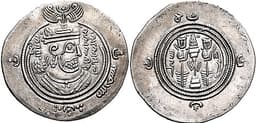
Muawiyah I
Emperor · Medieval
76.3Total
Basic Information
Born
-100
602
Died
-44
680
Era
Ancient
Medieval
Nationality
Roman Republic
Umayyad Caliphate
Occupation
General
Emperor
Civilization
Western
Middle Eastern
Score Comparison
Military (10%)
88.0
76.0
Political (20%)
78.0
75.0
Influence (20%)
85.0
75.0
Legacy (20%)
82.0
80.0
Leadership (15%)
80.0
78.0
Strategy (15%)
85.0
70.0
TOTAL
82.8
76.3
Julius Caesar — Complete Timeline
58 BC
Gallic WarsWar◆ Major
Caesar, as proconsul of Gaul, launched a series of campaigns that conquered all of Gaul (modern France, Belgium, and parts of Switzerland). He fought numerous battles, including against the Helvetii, the Belgae, and the Gallic chieftain Vercingetorix. The wars brought immense wealth and a loyal army to Caesar.
Gallic WarsConquestRoman Expansion
Impact: regional
49 BC
Crossing the RubiconPolitical Action◆ Major
Caesar led Legio XIII across the Rubicon River into Italy, defying the Roman Senate's order to disband his army. This act triggered a civil war against Pompey and the Optimates, ultimately leading to Caesar's dictatorship and the end of the Roman Republic.
Roman Civil WarEnd of RepublicPower Struggle
Impact: global
48 BC
Battle of PharsalusWar◆ Major
Caesar's outnumbered army defeated the larger forces of Pompey the Great at Pharsalus in Greece. Caesar's tactical use of a reserve line to counter Pompey's cavalry charge proved decisive. Pompey fled to Egypt, where he was assassinated, leaving Caesar as the undisputed master of the Roman world.
Roman Civil WarBattleDecisive Victory
Impact: regional
44 BC
Appointment as Dictator for LifePolitical Action◆ Major
The Roman Senate appointed Caesar dictator perpetuo (dictator for life), granting him unprecedented personal power. This move concentrated military, legislative, and judicial authority in one person, effectively ending the Roman Republic's traditional system of checks and balances and alarming many senators.
DictatorshipEnd of RepublicPower Consolidation
Impact: regionaldestructive
Assassination on the Ides of MarchPolitical Action◆ Major
A group of Roman senators, led by Marcus Junius Brutus and Gaius Cassius Longinus, stabbed Caesar to death at a meeting of the Senate in the Theatre of Pompey. The assassination was intended to restore the Republic, but instead triggered another civil war that led to the rise of the Roman Empire.
AssassinationRoman PoliticsEnd of Republic
Impact: globaldestructive
Muawiyah I — Complete Timeline
640 AD
Governorship of SyriaPolitical Action◆ Major
Muawiyah I was appointed governor of Syria by Caliph Umar. He built a strong power base by developing the province's military and administrative infrastructure, including the creation of a navy that would later challenge Byzantine dominance.
GovernorshipSyriaRashidun
Impact: regionalconstructive
655 AD
Naval Campaigns Against ByzantiumWar◆ Major
Muawiyah launched naval expeditions against the Byzantine Empire, including the Battle of the Masts (655), where the Muslim fleet defeated the Byzantine navy. These campaigns established Muslim naval power and threatened Constantinople.
Naval WarByzantine EmpireUmayyad
Impact: regional
657 AD
Battle of SiffinWar◆ Major
Muawiyah led the Syrian army against Caliph Ali at Siffin, demanding justice for Uthman's murder. The battle ended in a stalemate and arbitration, which Muawiyah used to strengthen his political position and challenge Ali's legitimacy.
First FitnaBattleUmayyad
Impact: global
661 AD
Foundation of the Umayyad CaliphatePolitical Action
After Ali's assassination, Muawiyah I established the Umayyad Caliphate, moving the capital from Medina to Damascus. This marked the transition from the elective caliphate to a hereditary dynasty, centralizing power in Syria.
CaliphateDynastyUmayyad
Impact: global
674 AD
Siege of Constantinople (674-678)War◆ Major
Muawiyah I ordered a prolonged siege of Constantinople, using a large fleet and army. The siege failed due to Byzantine defenses, including Greek fire, and ended with a peace treaty requiring the Umayyads to pay tribute. It was a rare setback.
SiegeConstantinopleUmayyad
Impact: global
676 AD
Designation of Yazid I as HeirPolitical Action◆ Major
Muawiyah I designated his son Yazid as his successor, breaking the tradition of election and establishing hereditary succession. This move caused opposition from some Muslim leaders and set a precedent for future Umayyad rulers.
SuccessionHereditaryUmayyad
Impact: global
Expert Analysis
Origins
Julius Caesar was born into the patrician Julian clan in Rome, a republic plagued by class conflict and corruption. His family claimed descent from the goddess Venus, but their political influence had waned. Caesar's early life was marked by ambition and a desire to restore his family's prestige. He aligned with populist leaders and gained military experience in Asia and Spain. Muawiyah I was born into the aristocratic Umayyad clan of the Quraysh tribe in Mecca. His father, Abu Sufyan, was a prominent leader who initially opposed Prophet Muhammad but later accepted Islam. Muawiyah grew up in a politically charged environment, learning diplomacy and leadership. After the Muslim conquest of Syria, he was appointed governor by Caliph Umar, a position that became his power base.
Rise to Power
Caesar's rise was meteoric. He formed the First Triumvirate with Pompey and Crassus, securing command in Gaul. Over nine years, he conquered Gaul (modern France, Belgium, parts of Switzerland and the Netherlands), amassing wealth, a loyal army, and popular support. The Senate, fearing his power, ordered him to disband his army. Instead, Caesar crossed the Rubicon River in 49 BCE, sparking a civil war. He defeated Pompey at Pharsalus and became dictator, eventually for life. Muawiyah's rise was more gradual. As governor of Syria for two decades, he built a strong administration and army, focusing on naval power. After Caliph Uthman's assassination, Muawiyah refused to recognize Ali as caliph, demanding justice for Uthman. This led to the First Fitna (Islamic civil war). Muawiyah's forces clashed with Ali's at the Battle of Siffin (657 CE), ending in arbitration. After Ali's assassination and his son Hasan's abdication, Muawiyah became caliph in 661 CE, founding the Umayyad dynasty.
Leadership & Governance
Caesar was a brilliant military strategist and a reformer. He centralized power, reformed the calendar (Julian calendar), initiated public works, granted citizenship to provincials, and implemented land reforms. His rule was autocratic but aimed at efficiency and stability. He reduced the Senate's power and packed it with his supporters, but also extended citizenship to Gauls and others, integrating the empire. Muawiyah was a pragmatic and efficient administrator. He moved the capital to Damascus, established a hereditary succession (against Islamic tradition), and created a professional bureaucracy and army. He used diplomacy and bribery to secure loyalty, and his reign saw relative peace and expansion. Both were master politicians, but Caesar's reforms were more radical and comprehensive, while Muawiyah's were more conservative and focused on consolidating power.
Triumph & Tragedy
Caesar's greatest triumphs were his conquest of Gaul and his victory in the civil war, which made him master of Rome. His tragic flaw was his arrogance and disregard for republican traditions. He accepted a dictatorship for life and divine honors, alienating the senatorial elite. On the Ides of March (44 BCE), a group of senators assassinated him, hoping to restore the Republic. Instead, his death led to another civil war and the rise of the Roman Empire. Muawiyah's triumph was the establishment of the Umayyad Caliphate, which lasted nearly a century. He successfully besieged Constantinople (674-678) but failed to capture it. His tragedy was the controversial nature of his rule; his appointment of his son Yazid as heir caused a major split in Islam, leading to the Battle of Karbala and the Sunni-Shia divide. His legacy is thus marred by accusations of corrupting the caliphate into a monarchy.
Character & Destiny
Caesar was charismatic, ambitious, and ruthless. He was a master propagandist, writing his own accounts of his campaigns. His destiny seemed to be that of a world conqueror, but his hubris led to his downfall. He famously refused a crown, yet his actions indicated he wanted kingship. Muawiyah was patient, cunning, and pragmatic. He was known for his diplomacy and clemency, often using money and negotiation rather than force. His destiny was to unify the Muslim world under his dynasty, but at the cost of Islamic unity. Both men were shaped by their environments: Caesar by Roman republican values (which he ultimately subverted), Muawiyah by the tribal and religious dynamics of early Islam.
Legacy
Caesar's legacy is immense. He transformed Rome from a republic into an empire, setting a template for autocratic rule. His name became synonymous with imperial power (Kaiser, Tsar). His writings, especially the Commentaries, are classics. His reforms endured, and his assassination made him a martyr for some, a tyrant for others. Muawiyah's legacy is complex. He founded the Umayyad dynasty, which expanded the Islamic empire to its greatest extent. He established administrative and military systems that lasted. However, his introduction of hereditary succession is seen by many Muslims as a betrayal of Islamic principles. The Sunni-Shia divide deepened due to his conflict with Ali. In the Muslim world, he is either praised as a wise statesman or condemned as a usurper.
Conclusion
**Numerical Scores (out of 100):**
- **Military Genius:** Caesar: 95, Muawiyah: 78. Caesar's conquest of Gaul and civil war victories are unparalleled. Muawiyah's military achievements are more administrative and naval.
- **Political Leadership:** Caesar: 88, Muawiyah: 85. Both were skilled politicians, but Caesar's reforms were more transformative.
- **Cultural Impact:** Caesar: 90, Muawiyah: 75. Caesar's name and writings resonate globally; Muawiyah's impact is mainly in Islamic history.
- **Long-term Legacy:** Caesar: 85, Muawiyah: 80. The Roman Empire outlasted the Umayyads, but both shaped their civilizations.
**Winner: Julius Caesar.** Caesar's broader impact on Western civilization, his military genius, and his transformative reforms give him a clear edge. While Muawiyah was a skilled leader who founded a dynasty, his legacy is more regionally confined and controversial. Caesar's influence on language, law, politics, and culture is universal.
---
*Analysis by HistoryVersus.com*
Rankings
🥇
Julius CaesarLeader
Mil: 88.0Pol: 78.0Inf: 85.0
82.8
🥈
Muawiyah I
Mil: 76.0Pol: 75.0Inf: 75.0
76.3
+6.5 behind
How This Comparison Works
Algorithm
Each figure is scored on 6 dimensions (0—100 scale) based on structured historical data: Military (10%), Political (20%), Influence (20%), Legacy (20%), Leadership (15%), Strategy (15%). The weighted total produces the final ranking.
Data Sources
Scores are computed from structured sub-indicators in the database. Scale factors adjust for era (Ancient ×0.85, Modern ×1.0) and civilization size (Eastern ×1.05, Other ×0.80) to account for differences in population and military scale.
Maximum 3 Figures
Comparisons are limited to 2—3 figures to ensure readability and statistical meaningfulness.
Error Margins
±5 points per dimension — Sub-scores are derived from historical records with inherent uncertainty. Two figures within 5 points on a dimension should be considered roughly equivalent in that area.
Total Score Accuracy
±3 points overall — The weighted combination of 6 dimensions produces a total score with approximately ±3 points of uncertainty. Differences of less than 3 points are not statistically significant— the figures are effectively tied.
Known Limitations
- Historical records are incomplete and uneven across civilizations
- Figures from oral-tradition societies may be underrepresented
- Occupation labels can misclassify multi-role figures
- Scores measure capability and impact, not moral character
- Quantitative scoring is a comparison tool, not absolute truth
Capability Radar
Military (10%) — Battles & Warfare
Battles
95
75
Win Rate
92
80
Expansion
97
85
Political (20%) — Governance & Reform
Reform
90
90
Diplomacy
85
95
Economy
82
85
Influence (20%) — Cultural & Global Reach
Cultural
88
75
Global
94
75
Legacy (20%) — Historical Impact
Historical
95
85
Longevity
96
80
Leadership (15%) — Power & Stability
Tenure
75
85
Stability
60
80
Strategy (15%) — Tactics & Innovation
Strategy
94
85
Tactics
96
70
Reform
88
80
Similar Comparisons
Comments & Discussion
No comments yet. Be the first to share your thoughts!