Loading...
Julius Caesar vs Marouf al-Bakhit
Julius Caesar leads by 41.2 pts · 2 figures compared
…

Julius Caesar
General · Ancient
82.8Total
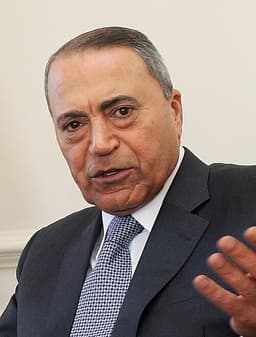
Marouf al-Bakhit
General · Modern
41.6Total
Basic Information
Born
-100
1947
Died
-44
—
Era
Ancient
Modern
Nationality
Roman Republic
Jordan
Occupation
General
General
Civilization
Western
Middle Eastern
Score Comparison
Military (10%)
88.0
10.2
Political (20%)
78.0
61.3
Influence (20%)
85.0
48.6
Legacy (20%)
82.0
38.3
Leadership (15%)
80.0
40.0
Strategy (15%)
85.0
36.8
TOTAL
82.8
41.6
Julius Caesar — Complete Timeline
58 BC
Gallic WarsWar◆ Major
Caesar, as proconsul of Gaul, launched a series of campaigns that conquered all of Gaul (modern France, Belgium, and parts of Switzerland). He fought numerous battles, including against the Helvetii, the Belgae, and the Gallic chieftain Vercingetorix. The wars brought immense wealth and a loyal army to Caesar.
Gallic WarsConquestRoman Expansion
Impact: regional
49 BC
Crossing the RubiconPolitical Action◆ Major
Caesar led Legio XIII across the Rubicon River into Italy, defying the Roman Senate's order to disband his army. This act triggered a civil war against Pompey and the Optimates, ultimately leading to Caesar's dictatorship and the end of the Roman Republic.
Roman Civil WarEnd of RepublicPower Struggle
Impact: global
48 BC
Battle of PharsalusWar◆ Major
Caesar's outnumbered army defeated the larger forces of Pompey the Great at Pharsalus in Greece. Caesar's tactical use of a reserve line to counter Pompey's cavalry charge proved decisive. Pompey fled to Egypt, where he was assassinated, leaving Caesar as the undisputed master of the Roman world.
Roman Civil WarBattleDecisive Victory
Impact: regional
44 BC
Appointment as Dictator for LifePolitical Action◆ Major
The Roman Senate appointed Caesar dictator perpetuo (dictator for life), granting him unprecedented personal power. This move concentrated military, legislative, and judicial authority in one person, effectively ending the Roman Republic's traditional system of checks and balances and alarming many senators.
DictatorshipEnd of RepublicPower Consolidation
Impact: regionaldestructive
Assassination on the Ides of MarchPolitical Action◆ Major
A group of Roman senators, led by Marcus Junius Brutus and Gaius Cassius Longinus, stabbed Caesar to death at a meeting of the Senate in the Theatre of Pompey. The assassination was intended to restore the Republic, but instead triggered another civil war that led to the rise of the Roman Empire.
AssassinationRoman PoliticsEnd of Republic
Impact: globaldestructive
Marouf al-Bakhit — Complete Timeline
2005 AD
Appointed Prime Minister of JordanPolitical Action◆ Major
King Abdullah II appointed Marouf al-Bakhit as Prime Minister of Jordan in November 2005, following the 2005 Amman bombings. Al-Bakhit, a former intelligence chief, was tasked with restoring security and stability.
JordanPrime MinisterAppointment
Impact: national
2007 AD
Resigned as Prime MinisterPolitical Action
Marouf al-Bakhit resigned as Prime Minister of Jordan in November 2007 after parliamentary elections. His resignation followed criticism of economic policies and political reforms.
JordanPrime MinisterResignation
Impact: national
2011 AD
Appointed Prime Minister for Second TermPolitical Action◆ Major
King Abdullah II appointed Marouf al-Bakhit as Prime Minister again in February 2011, during the Arab Spring protests. Al-Bakhit was tasked with implementing political reforms to address public demands.
JordanArab SpringPrime Minister
Impact: national
Resigned as Prime Minister for Second TermPolitical Action
Marouf al-Bakhit resigned as Prime Minister in October 2011, after failing to satisfy protesters' demands for faster political reforms. His resignation marked the end of his second term.
JordanArab SpringResignation
Impact: national
Expert Analysis
Julius Caesar vs Marouf al-Bakhit
# The General and the Administrator: Two Paths to Power
The Ides of March, 44 BCE. Julius Caesar falls beneath the daggers of his closest allies, his blood pooling on the floor of the Pompeian Senate chamber. Fast forward two thousand years, to November 2005: Marouf al-Bakhit, a former intelligence chief, steps into the office of Prime Minister of Jordan, not through conquest or conspiracy, but by the quiet signature of a king. One man changed the course of Western civilization; the other managed a small kingdom through turbulent times. What separates a titan from a caretaker? The answer lies not merely in circumstance, but in the very nature of ambition, opportunity, and the eras that forged them.
Origins
Gaius Julius Caesar was born into a patrician family in 100 BCE, at a time when the Roman Republic was tearing itself apart. His uncle Marius had been a populist reformer; his father died when Caesar was sixteen. From the start, Caesar breathed the air of civil war, political vendetta, and relentless ambition. He was educated in rhetoric and philosophy, but the real classroom was the Forum, where he learned that power belonged to those who could command armies and sway crowds.
Marouf al-Bakhit was born in 1947 in Jordan, a small kingdom carved from the ruins of the Ottoman Empire. His world was one of borders drawn by European powers, a monarchy that balanced tribal loyalties, Palestinian refugees, and Cold War pressures. He rose through the ranks of the Jordanian military and intelligence services, not as a conqueror, but as a loyal servant of the Hashemite throne. Where Caesar’s Rome was a cauldron of open competition, al-Bakhit’s Jordan was a system of managed stability.
Rise to Power
Caesar’s ascent was a masterpiece of calculated risk. He borrowed fortunes to fund public spectacles, won election as pontifex maximus, and then secured the governorship of Gaul. From 58 to 50 BCE, he waged a brutal war that killed perhaps a million people, but also made him the richest and most feared man in Rome. When the Senate ordered him to disband his army, he crossed the Rubicon River in 49 BCE, igniting a civil war. Within four years, he was dictator for life.
Al-Bakhit’s path was quieter. After decades in intelligence and security, he was appointed Prime Minister in November 2005, immediately after the Amman bombings—a series of coordinated attacks that killed sixty people. His mandate was not to conquer, but to restore order. He was a technocrat, not a revolutionary. In 2007, he resigned after parliamentary elections, only to be recalled in February 2011, when the Arab Spring protests swept Jordan. Again, he was asked to manage a crisis, not to reshape a nation.
Leadership & Governance
Caesar governed as a military autocrat with a reformer’s vision. He centralized tax collection, reformed the calendar, granted citizenship to provinces, and launched massive public works. His military genius was undeniable: at the Siege of Alesia in 52 BCE, he defeated a Gallic army three times his size through a combination of fortification, discipline, and personal leadership. Yet his political wisdom was flawed—he alienated the Senate, packed it with his supporters, and accepted the title “dictator for life,” a provocation that sealed his fate.
Al-Bakhit governed as a crisis manager. His first term focused on security after the bombings; his second term tried to balance reform with royal authority during the Arab Spring. He offered modest concessions—new election laws, anti-corruption measures—but never threatened the monarchy’s grip. His military background gave him a 77.9 leadership score, but his strategic score of 48.1 reveals a man who reacted to events rather than shaping them. Where Caesar rewrote the rules, al-Bakhit enforced them.
Triumph & Tragedy
Caesar’s greatest triumph was the conquest of Gaul, which brought him glory, wealth, and a loyal army. His most devastating failure was his own assassination on March 15, 44 BCE—the Ides of March. He had centralized power so completely that his murder plunged Rome into another round of civil wars, ultimately destroying the Republic he had sought to dominate.
Al-Bakhit’s triumphs were modest: he prevented Jordan from descending into the chaos that engulfed Syria and Iraq. His tragedy was that he never transcended his role as a caretaker. When he resigned in October 2011, protesters still demanded faster reforms. He left office not with a dramatic death, but with a quiet exit—a footnote in a region of upheaval.
Character & Destiny
Caesar was audacious, charismatic, and ruthless. He pardoned his enemies, but only to weaken them. He slept with allies’ wives, but also wept at the death of his rival Pompey. His personality drove him to take risks that would have destroyed lesser men—crossing the Rubicon, fighting in Gaul, defying the Senate. He believed in his own destiny, and that belief became a self-fulfilling prophecy.
Al-Bakhit was cautious, loyal, and unassuming. He served a king, not a vision. His personality was suited to stability, not transformation. In a monarchy, the ceiling is set by the throne; in a collapsing republic, the sky is the limit. That is the deepest difference: Caesar lived in a world where individuals could seize history; al-Bakhit lived in one where history was managed from above.
Legacy
Caesar’s legacy is monumental. His name became synonymous with imperial power—Caesar, Kaiser, Tsar. His reforms outlived him, and his adopted heir, Augustus, founded an empire that lasted five centuries. He is remembered as a military genius, a political visionary, and a warning against unchecked ambition.
Al-Bakhit’s legacy is local. He is remembered, if at all, as a loyal prime minister during difficult times. His 50.0 legacy score reflects a man who maintained the status quo but did not change it. He is studied by scholars of Jordanian politics, but not by the world.
Conclusion
Standing side by side, Caesar and al-Bakhit seem to belong to different species of historical figure. One remade the world; the other held a small piece of it steady. Yet both were generals who entered politics, both faced moments of crisis, both wielded power under the shadow of violence. The difference is not just in talent or ambition, but in the architecture of their worlds. Caesar’s Rome was an arena where a single man could challenge the heavens; al-Bakhit’s Jordan was a system designed to prevent such challenges. In the end, the general who crossed the Rubicon changed the world because the world allowed him to. The intelligence chief who served his king kept his country safe because that is what his country required. Both did what their eras demanded—and that, perhaps, is the truest measure of their difference.
Rankings
🥇
Julius CaesarLeader
Mil: 88.0Pol: 78.0Inf: 85.0
82.8
🥈
Marouf al-Bakhit
Mil: 10.2Pol: 61.3Inf: 48.6
41.6
+41.2 behind
How This Comparison Works
Algorithm
Each figure is scored on 6 dimensions (0—100 scale) based on structured historical data: Military (10%), Political (20%), Influence (20%), Legacy (20%), Leadership (15%), Strategy (15%). The weighted total produces the final ranking.
Data Sources
Scores are computed from structured sub-indicators in the database. Scale factors adjust for era (Ancient ×0.85, Modern ×1.0) and civilization size (Eastern ×1.05, Other ×0.80) to account for differences in population and military scale.
Maximum 3 Figures
Comparisons are limited to 2—3 figures to ensure readability and statistical meaningfulness.
Error Margins
±5 points per dimension — Sub-scores are derived from historical records with inherent uncertainty. Two figures within 5 points on a dimension should be considered roughly equivalent in that area.
Total Score Accuracy
±3 points overall — The weighted combination of 6 dimensions produces a total score with approximately ±3 points of uncertainty. Differences of less than 3 points are not statistically significant— the figures are effectively tied.
Known Limitations
- Historical records are incomplete and uneven across civilizations
- Figures from oral-tradition societies may be underrepresented
- Occupation labels can misclassify multi-role figures
- Scores measure capability and impact, not moral character
- Quantitative scoring is a comparison tool, not absolute truth
Capability Radar
Military (10%) — Battles & Warfare
Battles
95
5
Win Rate
92
5
Expansion
97
5
Political (20%) — Governance & Reform
Reform
90
30
Diplomacy
85
40
Economy
82
30
Influence (20%) — Cultural & Global Reach
Cultural
88
10
Global
94
10
Legacy (20%) — Historical Impact
Historical
95
10
Longevity
96
10
Leadership (15%) — Power & Stability
Tenure
75
40
Stability
60
35
Strategy (15%) — Tactics & Innovation
Strategy
94
10
Tactics
96
10
Reform
88
10
Similar Comparisons
Comments & Discussion
DAGGER CLAIMANT6/16/2026
Calling this a comparison is like comparing a hurricane to a doorstop. Caesar rewired the entire Mediterranean world's political DNA — crossing the Rubicon wasn't a promotion, it was a revolution. Al-Bakhit managed traffic in a kingdom smaller than Caesar's Gallic conquests. One man’s ambition shattered a republic; the other’s career was defined by royal decrees. They share a title, not a legacy. Real power isn't appointed.
锈迹将军6/16/2026
把马鲁夫·巴希特和凯撒放在一起?省省吧。巴希特是情报官僚,凯撒是改写历史的战帅。凯撒在高卢杀了百万之众,地中海的波浪都染红了,而巴希特的“精兵强将”顶多在约旦河西岸查查身份证。军事史不是看谁坐过交椅,是看谁留下了能震碎后世的回响。巴希特连个旗子都没留下。
DATA SKEPTIC6/16/2026
This whole "comparative legacy" framing is statistical nonsense. Caesar's impact is measurable in continents reshaped, languages affected, calendar systems still in use. Al-Bakhit's measurable achievements are... what? Balancing a small budget? Extending a visa policy? You're comparing a historic hurricane to a pothole repair. Without Caesar, no Roman Empire, no Western legal tradition. Without Al-Bakhit, Jordan still exists exactly as it is. One data point changes history; the other changes a f
城楼书生6/16/2026
我关心的是治世之理,而非血雨腥风。凯撒是破局者,他打碎了共和外壳,但也带来了帝国安定,这需要无情的计算和洞见。巴希特呢?他是维稳者,在部落、难民、君主之间走钢丝。别小看这种人:凯撒砍下的头颅可以数清,但巴希特安抚的拉锯才是现代中东生存术。两者殊途同归——只不过一个用剑刻下名字,一个用笔墨修补裂痕。
HELLENIC SCEPTIC6/16/2026
As a classics scholar, I'm offended. Caesar was a commander of genius, yes — but also a tyrant who subverted a functioning (if flawed) republic. Comparing him to a 21st-century Jordanian administrator is like comparing Socrates to a high school debate coach. Al-Bakhit never commanded legions, never crossed his own political Rubicon, never stared down a Senate he'd packed with his cronies. Different weight class entirely. One played for the history of the West; the other played regional admin. Pe