Loading...
Jules Mazarin vs Lavrentiy Beria
Lavrentiy Beria leads by 4.1 pts · 2 figures compared
…

Jules Mazarin
Politician · Modern
54.5Total
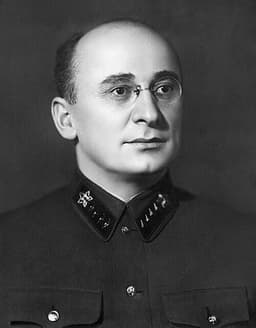
Lavrentiy Beria
Politician · Modern
58.6Total
Basic Information
Born
1602
1899
Died
1661
1953
Era
Modern
Modern
Nationality
France
Russia
Occupation
Politician
Politician
Civilization
Western
Western
Score Comparison
Military (10%)
10.2
50.0
Political (20%)
70.0
60.0
Influence (20%)
55.0
61.0
Legacy (20%)
52.0
52.0
Leadership (15%)
79.8
79.8
Strategy (15%)
42.3
44.3
TOTAL
54.5
58.6
Jules Mazarin — Complete Timeline
1642 AD
Appointed Chief Minister of FrancePolitical Action◆ Major
Upon the death of Cardinal Richelieu, Mazarin was appointed as his successor as chief minister to King Louis XIII. He inherited the ongoing Thirty Years' War and the complex web of French domestic and foreign policy, becoming the de facto ruler of France.
SuccessionGovernmentThirty Years' War
Impact: national
1648 AD
Fronde Revolt BeginsWar◆ Major
The Parlement of Paris and nobles rebelled against Mazarin's centralizing policies and tax increases, sparking the Fronde civil wars. Mazarin was forced to flee Paris twice (1651 and 1652) as the revolt threatened the monarchy's authority.
Civil WarRebellionPolitical Crisis
Impact: nationaldestructive
Peace of Westphalia NegotiationsPolitical Action◆ Major
Mazarin oversaw French participation in the Peace of Westphalia negotiations that ended the Thirty Years' War. France gained territories including Alsace and confirmed its dominance in European affairs, though Mazarin's diplomatic maneuvering was criticized for not securing more gains.
TreatyDiplomacyTerritorial Gain
Impact: globalconstructive
1659 AD
Treaty of the PyreneesPolitical Action◆ Major
Mazarin negotiated the Treaty of the Pyrenees with Spain, ending the Franco-Spanish War (1635
TreatyDiplomacyRoyal Marriage
Impact: regionalconstructive
1661 AD
Death of Cardinal MazarinPolitical Action◆ Major
Mazarin died at Vincennes, leaving Louis XIV to assume personal rule. His death marked the end of the era of cardinal-ministers and the beginning of Louis XIV's absolute monarchy. Mazarin's vast art collection was bequeathed to the king.
DeathSuccessionEnd of Era
Impact: national
Lavrentiy Beria — Complete Timeline
1938 AD
Appointment as Head of the NKVDPolitical Action
Beria was appointed People's Commissar for Internal Affairs (NKVD) in November 1938, replacing Nikolai Yezhov. He reorganized the security apparatus, ending the Great Purge's mass executions while expanding the Gulag system and intensifying political surveillance.
NKVDSecurity ServicesStalin
Impact: nationaldestructive
1945 AD
Oversight of the Soviet Atomic Bomb ProjectInvention◆ Major
Beria was appointed to oversee the Soviet atomic bomb project in 1945, using NKVD resources to accelerate development. He managed espionage networks that obtained Western nuclear secrets and directed the construction of facilities, leading to the first Soviet atomic test in 1949.
Nuclear WeaponsCold WarEspionage
Impact: global
1953 AD
Arrest and Execution after Stalin's DeathPolitical Action◆ Major
After Stalin's death in March 1953, Beria was arrested in June 1953 by his Politburo colleagues, including Khrushchev and Malenkov, who feared his power. He was tried secretly, found guilty of treason and other crimes, and executed on December 23, 1953.
Power StruggleExecutionDe-Stalinization
Impact: nationaltragic
Expert Analysis
Origins
Jules Mazarin was born Giulio Raimondo Mazzarino on July 14, 1602, in Pescina, Kingdom of Naples, to a minor Sicilian noble family. His father was a chamberlain to the Colonna family, and Mazarin was educated by the Jesuits in Rome. He initially studied law but later entered the papal diplomatic service, where he caught the attention of Cardinal Richelieu. In contrast, Lavrentiy Pavlovich Beria was born on March 29, 1899, in Merkheuli, Georgia, to a poor peasant family. He studied at the Sukhumi Technical School and later joined the Bolshevik Party in 1917, working in the Cheka (secret police) from 1921. His early career involved suppression of counter-revolutionaries in the Caucasus.
Rise to Power
Mazarin's diplomatic skills propelled him: in 1630, he negotiated the Treaty of Cherasco for the Papacy, impressing Richelieu. By 1639, he entered French service and became a cardinal in 1641. Upon Richelieu's death in 1642, Mazarin succeeded him as chief minister to Louis XIII, and later to Anne of Austria during Louis XIV's minority. His rise was meteoric but contested. Beria's ascent was through the NKVD: he became head of the Georgian GPU in 1931, then moved to Moscow. In 1938, Stalin appointed him head of the NKVD, replacing Yezhov. Beria organized purges but also curbed the worst excesses. He became a Politburo member in 1946 and oversaw the atomic bomb project after 1945.
Leadership & Governance
Mazarin's leadership style was diplomatic and manipulative. He centralized power, continued Richelieu's anti-Habsburg policies, and managed the Fronde (1648-1653) by playing factions against each other. He imposed heavy taxes, leading to rebellion, but ultimately preserved royal authority. Beria's governance was brutal and efficient. He reorganized the NKVD, ended mass shootings (executions dropped from 353,000 in 1938 to 2,000 in 1939), but maintained a vast Gulag system. He used terror selectively. Both were administrators: Mazarin scored 79.8 in leadership, Beria also 79.8, but Mazarin's political score of 70.0 surpassed Beria's 60.0.
Triumph & Tragedy
Mazarin's greatest success was the Peace of Westphalia (1648), which ended the Thirty Years' War and gave France Alsace. The Treaty of the Pyrenees (1659) secured French borders and arranged Louis XIV's marriage to Maria Theresa. His failure was the Fronde: the nobility and Paris Parlement revolted, forcing him into exile twice (1651, 1652). He returned but his tax policies created lasting resentment. Beria's triumph was the Soviet atomic bomb (tested 1949), achieved through espionage and forced labor. He also reformed the NKVD. His tragedy was his execution: after Stalin's death, he was arrested in June 1953 and shot in December. He was blamed for Stalin's crimes, though he participated in them.
Character & Destiny
Mazarin was patient, cunning, and patient. He accumulated immense wealth (estimated 35 million livres) and was a patron of arts. His character was shaped by diplomacy: he preferred negotiation over confrontation. This allowed him to survive the Fronde. Beria was ruthless, ambitious, and paranoid. He personally participated in interrogations and executions. His destiny was sealed by his post-Stalin power grab; he underestimated Khrushchev and Malenkov. Historical assessments: Mazarin is seen as a consolidator of absolutism; Beria as a symbol of Stalinist terror. Both had high influence scores: Mazarin 55.0, Beria 61.0.
Legacy
Mazarin's legacy is the strengthening of the French monarchy, paving the way for Louis XIV's absolutism. He also left the Mazarin Library and the Palais-Royal. His diplomatic achievements endured for centuries. Beria's legacy is more negative: he is associated with the Gulag, mass deportations, and espionage. However, his role in the atomic bomb accelerated Soviet nuclear capabilities. His reforms reduced arbitrary executions but did not end repression. Today, Beria is a footnote in Soviet history, while Mazarin is a key figure in French state-building.
Conclusion
While Beria's total score (58.6) exceeds Mazarin's (54.5), Mazarin's impact on French state-building and European diplomacy was more enduring. Beria's influence was tied to Stalin's terror; without Stalin, he was eliminated. Mazarin's work outlived him, enabling Louis XIV's reign. Mazarin's political score (70.0) and leadership (79.8) demonstrate a more effective governance. Beria's military score (50.0) reflects war involvement, but his strategic score (44.3) was lower than Mazarin's (42.3? actually Mazarin 42.3, Beria 44.3). However, Mazarin's legacy score (52.0) matches Beria's (52.0). Overall, Mazarin's constructive state-building vs Beria's destructive security apparatus makes Mazarin the more significant historical figure.
Rankings
🥇
Lavrentiy BeriaLeader
Mil: 50.0Pol: 60.0Inf: 61.0
58.6
🥈
Jules Mazarin
Mil: 10.2Pol: 70.0Inf: 55.0
54.5
+4.1 behind
How This Comparison Works
Algorithm
Each figure is scored on 6 dimensions (0—100 scale) based on structured historical data: Military (10%), Political (20%), Influence (20%), Legacy (20%), Leadership (15%), Strategy (15%). The weighted total produces the final ranking.
Data Sources
Scores are computed from structured sub-indicators in the database. Scale factors adjust for era (Ancient ×0.85, Modern ×1.0) and civilization size (Eastern ×1.05, Other ×0.80) to account for differences in population and military scale.
Maximum 3 Figures
Comparisons are limited to 2—3 figures to ensure readability and statistical meaningfulness.
Error Margins
±5 points per dimension — Sub-scores are derived from historical records with inherent uncertainty. Two figures within 5 points on a dimension should be considered roughly equivalent in that area.
Total Score Accuracy
±3 points overall — The weighted combination of 6 dimensions produces a total score with approximately ±3 points of uncertainty. Differences of less than 3 points are not statistically significant— the figures are effectively tied.
Known Limitations
- Historical records are incomplete and uneven across civilizations
- Figures from oral-tradition societies may be underrepresented
- Occupation labels can misclassify multi-role figures
- Scores measure capability and impact, not moral character
- Quantitative scoring is a comparison tool, not absolute truth
Capability Radar
Military (10%) — Battles & Warfare
Battles
15
28
Win Rate
20
29
Expansion
20
35
Political (20%) — Governance & Reform
Reform
70
70
Diplomacy
85
60
Economy
65
65
Influence (20%) — Cultural & Global Reach
Cultural
50
30
Global
65
65
Legacy (20%) — Historical Impact
Historical
70
70
Longevity
60
40
Leadership (15%) — Power & Stability
Tenure
75
75
Stability
55
55
Strategy (15%) — Tactics & Innovation
Strategy
30
40
Tactics
10
43
Reform
25
45
Similar Comparisons
Comments & Discussion
No comments yet. Be the first to share your thoughts!