Loading...
This comparison has not been analyzed yet.
One-time AI generation (~1 minute). Scores and timeline are already available below.
Juba I of Numidia vs Unas
Unas leads by 7.3 pts · 2 figures compared
…

Juba I of Numidia
Emperor · Ancient
39.9Total
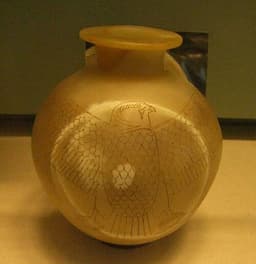
Unas
Emperor · Ancient
47.2Total
Basic Information
Born
-85
-2360
Died
-46
-2340
Era
Ancient
Ancient
Nationality
Numidia
Old Kingdom Egypt
Occupation
Emperor
Emperor
Civilization
Other
Middle Eastern
Score Comparison
Military (10%)
10.0
25.9
Political (20%)
36.5
37.9
Influence (20%)
46.3
60.0
Legacy (20%)
38.3
52.0
Leadership (15%)
51.9
48.4
Strategy (15%)
45.0
36.8
TOTAL
39.9
47.2
Juba I of Numidia — Complete Timeline
49 BC
Alliance with PompeyPolitical Action
Juba I formed a military alliance with Pompey the Great and the Optimates against Julius Caesar. He provided troops and resources to the Pompeian cause, hoping to maintain Numidian independence and expand his influence in North Africa.
Roman Civil WarAlliancePompey
Impact: regional
46 BC
Battle of ThapsusWar◆ Major
Juba I of Numidia allied with the Optimates and fought against Julius Caesar at the Battle of Thapsus. Caesar's forces decisively defeated the Pompeian-Numidian army. Juba's kingdom was annexed by Rome, and he committed suicide to avoid capture.
Caesar's Civil WarBattleNumidia
Impact: regionaltragic
Unas — Complete Timeline
2360 BC
Invention of the Pyramid Texts in the Pyramid of UnasCultural
Unas was the first pharaoh to have the Pyramid Texts inscribed in his burial chamber at Saqqara. These texts, consisting of over 200 spells and utterances, were intended to protect the king in the afterlife and ensure his resurrection. This innovation became standard for later pyramids.
ReligionPyramid TextsAfterlife
Impact: globalconstructive
Construction of the Pyramid of Unas at SaqqaraCultural◆ Major
Unas built his pyramid at Saqqara, now largely ruined. The pyramid originally stood about 43 meters high and was faced with limestone. The burial chamber contains the first known version of the Pyramid Texts, making it one of the most important archaeological discoveries in Egypt.
ArchitecturePyramidSaqqara
Impact: nationalconstructive
2340 BC
End of the Fifth DynastyPolitical Action◆ Major
Unas was the last pharaoh of the Fifth Dynasty. His death marked the transition to the Sixth Dynasty, founded by Teti. The exact circumstances of the dynastic change are unclear, but it may have involved a peaceful transfer of power or a palace coup.
Dynastic ChangeFifth DynastyTransition
Impact: national
This comparison has not been analyzed yet.
One-time AI generation (~1 minute). Scores and timeline are already available below.
Rankings
🥇
UnasLeader
Mil: 25.9Pol: 37.9Inf: 60.0
47.2
🥈
Juba I of Numidia
Mil: 10.0Pol: 36.5Inf: 46.3
39.9
+7.3 behind
How This Comparison Works
Algorithm
Each figure is scored on 6 dimensions (0—100 scale) based on structured historical data: Military (10%), Political (20%), Influence (20%), Legacy (20%), Leadership (15%), Strategy (15%). The weighted total produces the final ranking.
Data Sources
Scores are computed from structured sub-indicators in the database. Scale factors adjust for era (Ancient ×0.85, Modern ×1.0) and civilization size (Eastern ×1.05, Other ×0.80) to account for differences in population and military scale.
Maximum 3 Figures
Comparisons are limited to 2—3 figures to ensure readability and statistical meaningfulness.
Error Margins
±5 points per dimension — Sub-scores are derived from historical records with inherent uncertainty. Two figures within 5 points on a dimension should be considered roughly equivalent in that area.
Total Score Accuracy
±3 points overall — The weighted combination of 6 dimensions produces a total score with approximately ±3 points of uncertainty. Differences of less than 3 points are not statistically significant— the figures are effectively tied.
Known Limitations
- Historical records are incomplete and uneven across civilizations
- Figures from oral-tradition societies may be underrepresented
- Occupation labels can misclassify multi-role figures
- Scores measure capability and impact, not moral character
- Quantitative scoring is a comparison tool, not absolute truth
Capability Radar
Military (10%) — Battles & Warfare
Battles
45
10
Win Rate
40
10
Expansion
25
10
Political (20%) — Governance & Reform
Reform
20
40
Diplomacy
45
30
Economy
30
30
Influence (20%) — Cultural & Global Reach
Cultural
20
70
Global
15
50
Legacy (20%) — Historical Impact
Historical
30
70
Longevity
20
70
Leadership (15%) — Power & Stability
Tenure
40
30
Stability
25
30
Strategy (15%) — Tactics & Innovation
Strategy
30
10
Tactics
35
10
Reform
20
10
Similar Comparisons
Comments & Discussion
No comments yet. Be the first to share your thoughts!